It is important to get the right frame size for your body geometry. The correct frame size for you will be noticeably more comfortable and help with improved handling rather that a frame that is too large or small.
Choosing a mountain bike frame size
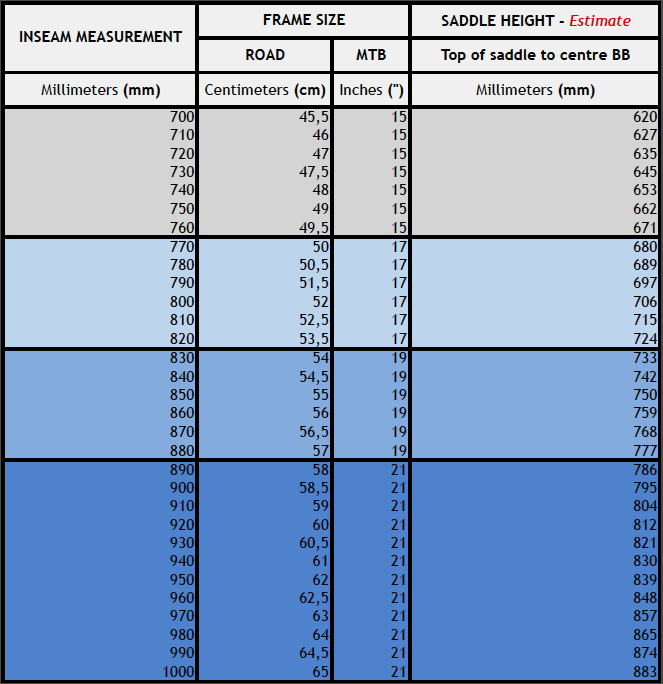
Place your feet shoulder-width apart, and measure from the bony protrusion between your legs to the floor between your feet. You’ll need to be barefoot wearing tight fitting cycling shorts for this measurement. Match your inseam measurement to the frame size. Frame sizes may be expressed either in inches,
measuring the length of the seat post tube or the more general XS, S, M, L, XL, XXL size range. Since each bike manufacturer used their own system for determining sizes, you can use the sizing chart provided below as a “general” guide to help you determine the correct frame size.
Women’s specific designs are available and will be better matched to female proportions, so choose a frame size based on gender as well as your measurements. Women’s specific bikes have narrower handlebars, shorter cranks and a lower top tube that will help you mount and dismount the bike easier.
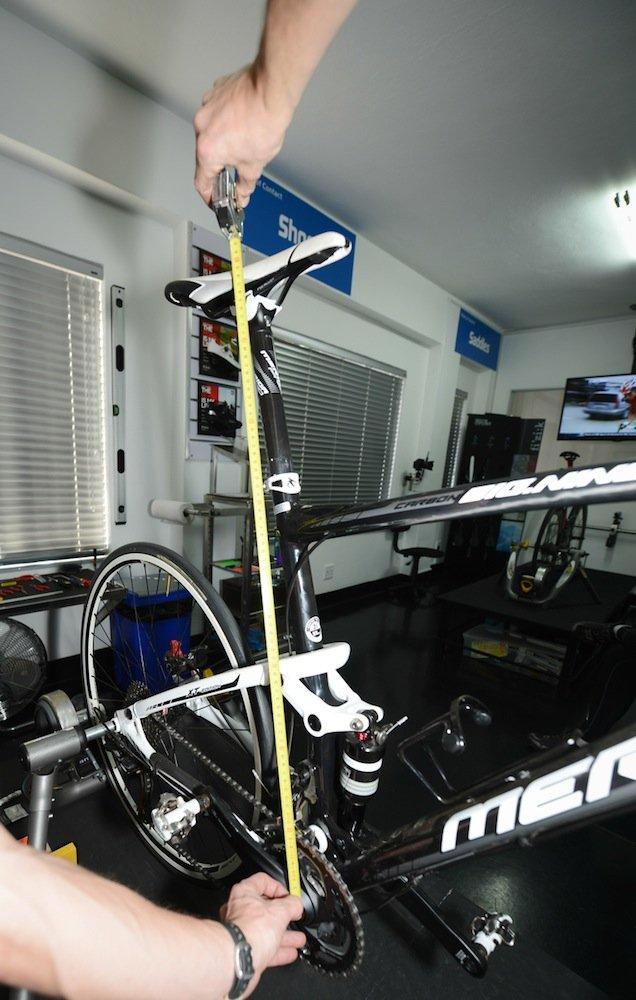
Once the frame size has been selected, you will need to determine your ideal saddle height. The leg should measure out at 150 degrees at the most extended point of the pedal stroke.
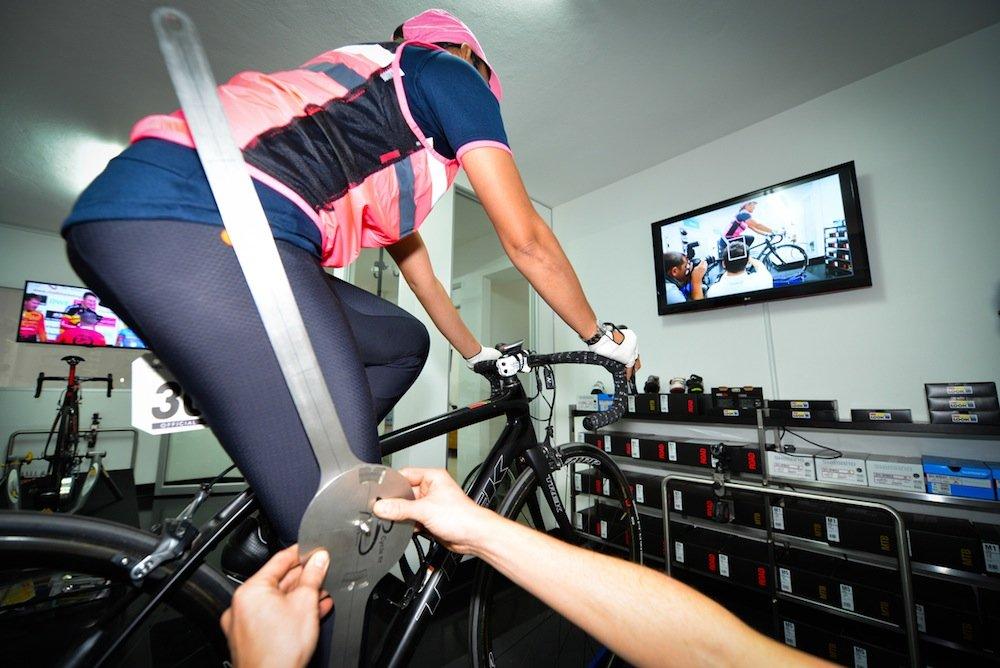
Getting your frame size right goes hand in hand with perfecting your position on the bike for optimal comfort and efficiency. Talk to a professional bike-fitting consultant to address any fitting issues you may face when choosing a frame size. Once the bike has been fitted to your unique physical structure and the frame is the correct size you, will have immediate confidence and your riding will be that much more enjoyable. If your inseam measurement falls between two frame sizes you should select the smaller option for a more aggressive, racing position (lower on the front) or the bigger option for a more comfortable, touring position (higher on the front).
Choosing a road bike frame size
Choosing the right size road frame for your body is not only the first step in achieving a comfortable and efficient position, but also ensures that your bike handles correctly. Generally, a road bike is not designed to be particularly stable or perform like a touring bike, nor should it be at the other end of the scale and handle like a very responsive track bike. Most road bikes are designed to handle in the middle ground, somewhere in between those extremes.
Frame sizes may be expressed either in centimetres, measuring the length of the seat tube or the more general S, M, L, XL, XXL size range. Be aware that women and men’s bikes with the same frame size are not the same frame. A women’s frame will be shorter along the top tube, as women typically have both a shorter torso and shorter arm length compared to that of a man of the same height. Women specific bikes also have narrower handlebars and the levers are usually closer to the handlebars for easier braking.
Trying to fit a frame that’s too big or too small by using a long or short stem, or by moving the saddle too far forward or back, can compromise the handling of the bike. The bike may feel like it’s struggling to corner, or may not want to ride straight when you’re climbing out of the saddle, or the bike can feel twitchy, many riders may experience a “wobble or shake” on a fast decent.
We hope this article has helped you gain an understanding of how best to choose the correct frame size and why it is so important to buy the correct size bike from the start.