Tech

SRAM launch new powerful Maven brakes

Supplied by SRAM

By Press Office · 48 comments

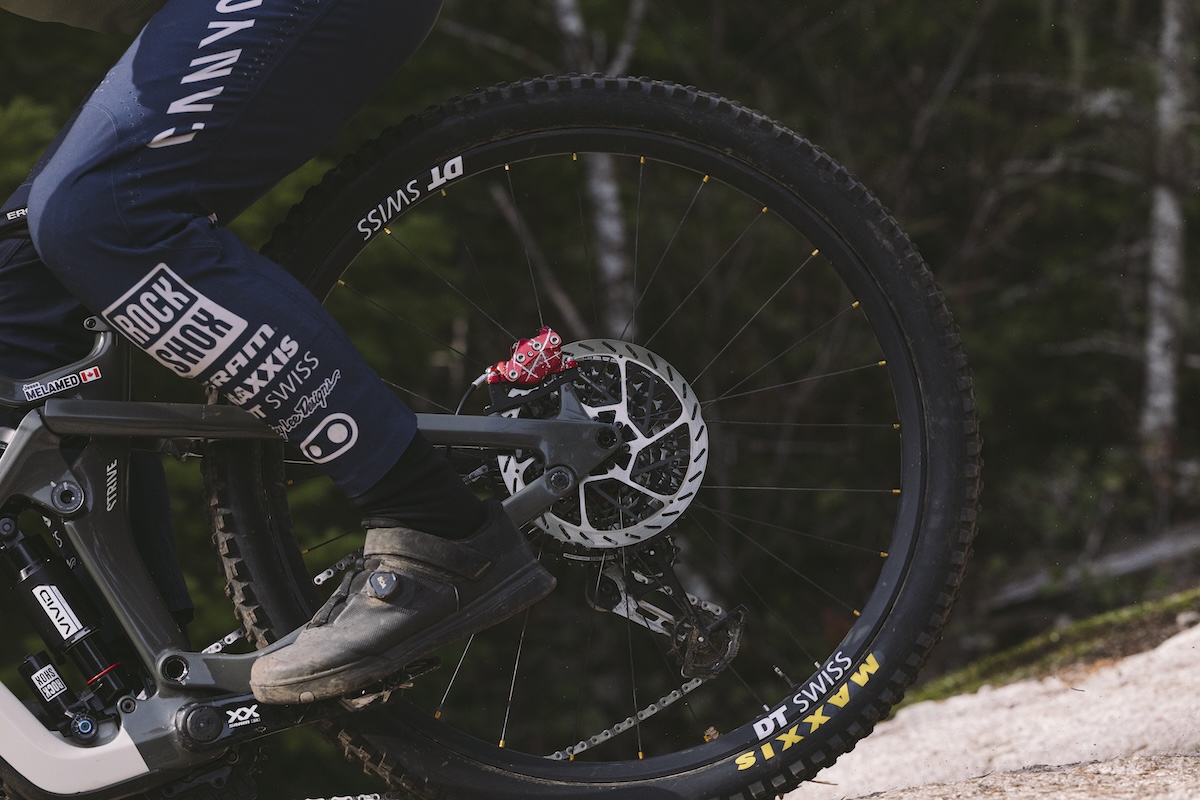
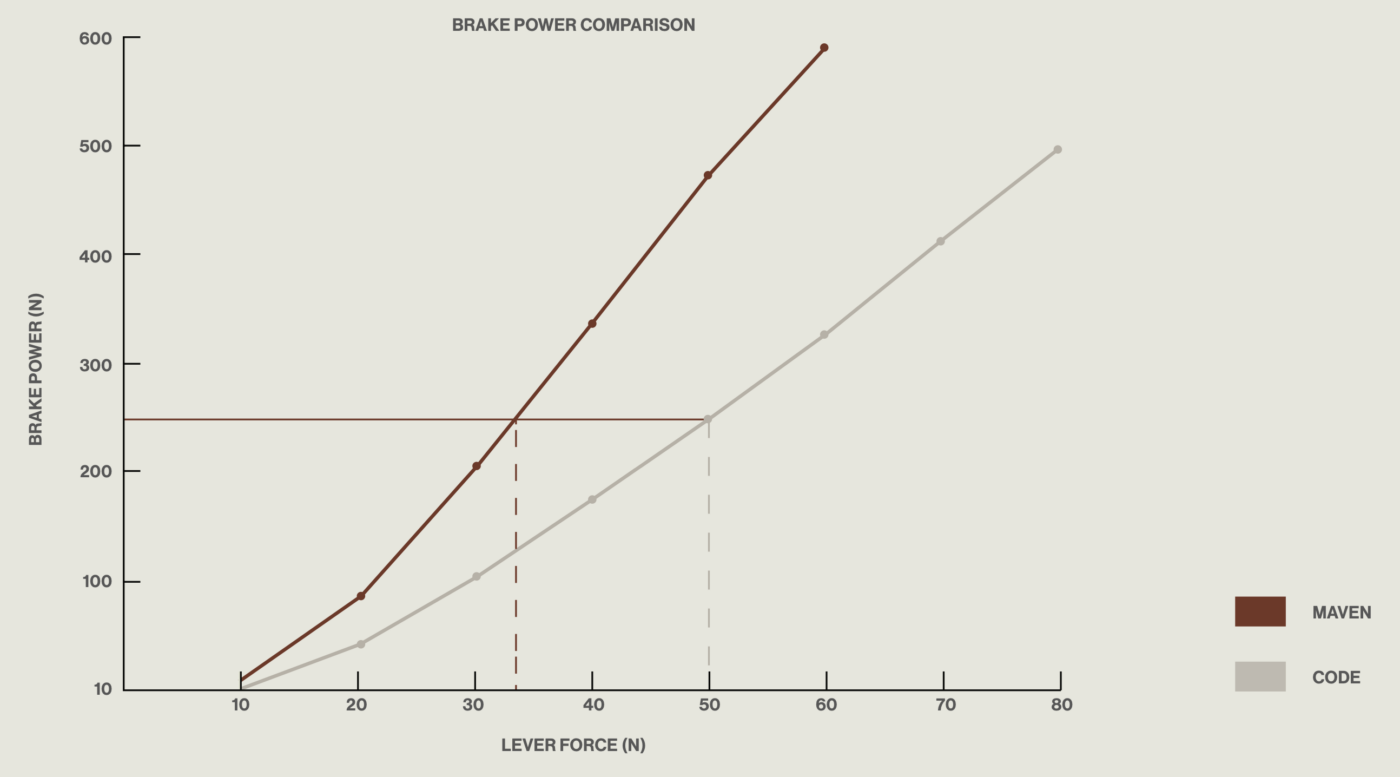
SRAM have released their most powerful brake to-date: the Maven (pun intended). Dialled for gravity riding and e-bikers, Maven produces nearly 50% more power than the SRAM Code, while requiring 32% lighter force at the lever to generate the same amount of stopping power: reducing fatigue and boosting control. get all the details in the full press release below.

Press Release

Maven is the absolute most powerful brake we’ve ever made. Usable power for efficiency and tunability. Extreme power for elevated speed and control on ever-more demanding terrain.

More Power

Maven produces nearly 50% more power than one of the most capable brakes ever, SRAM Code. While it’s tempting to focus on this fact alone, Maven is about more than brute force.

Less Effort

More important than overall power is usable power. With Maven, it takes 32% lighter force at the lever to generate the same amount of power as Code, reducing fatigue and boosting control for rowdy DH terrain, relentless e-mtb laps, and long enduro stages. Ride harder, and longer, Maven delivers the best of both worlds.

Power in Surplus

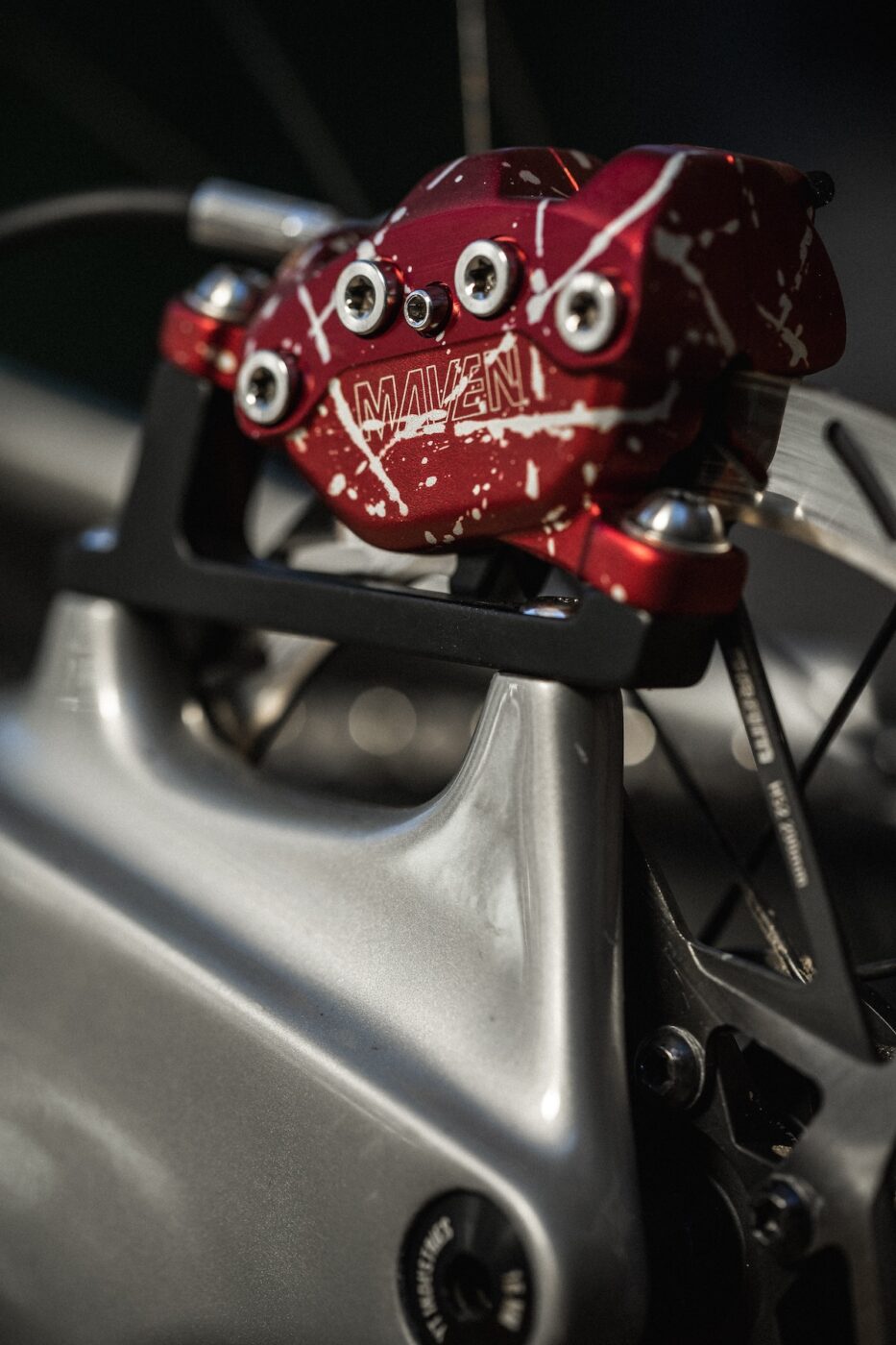
With four caliper pistons measuring 19.5mm and 18mm, there’s no way around it: Maven caliper pistons are simply huge, providing more force against the pads for more friction with less effort.
Profressive Power for Control

Optimized for Maven, SwingLink delivers a rate of leverage that changes throughout the lever stroke. The farther you pull along the arc, the more power Maven sends to the pistons. This progressive power delivery offers unrivalled control. As opposed to the binary characteristic of an “on/off” feel.

Better Ratio

Huge caliper pistons mean nothing unless the ratio of piston size in the lever is designed to work with them. Power is determined by the relationship between these piston sizes, and Maven delivers a superior optimization of this ratio.
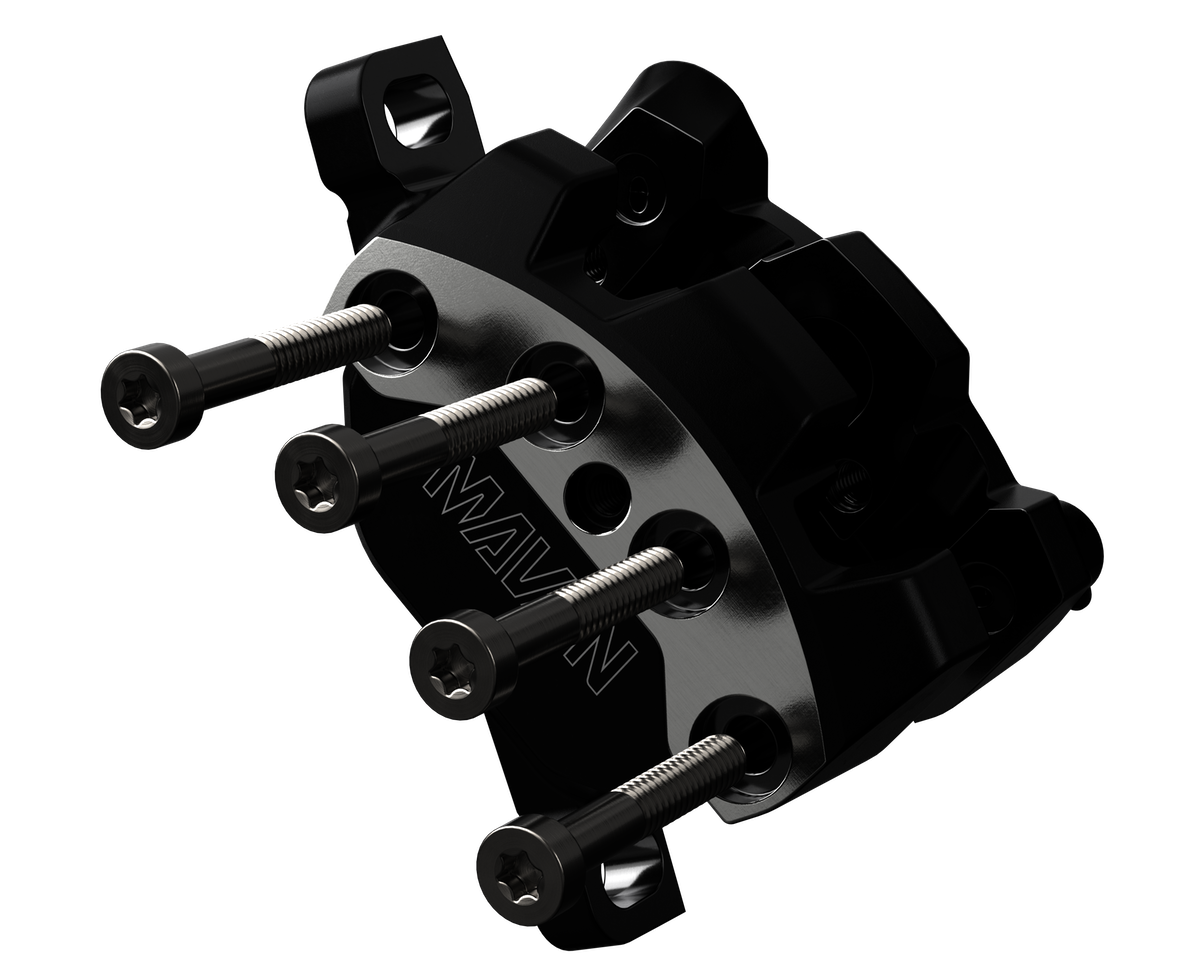
Four Bolts for Power

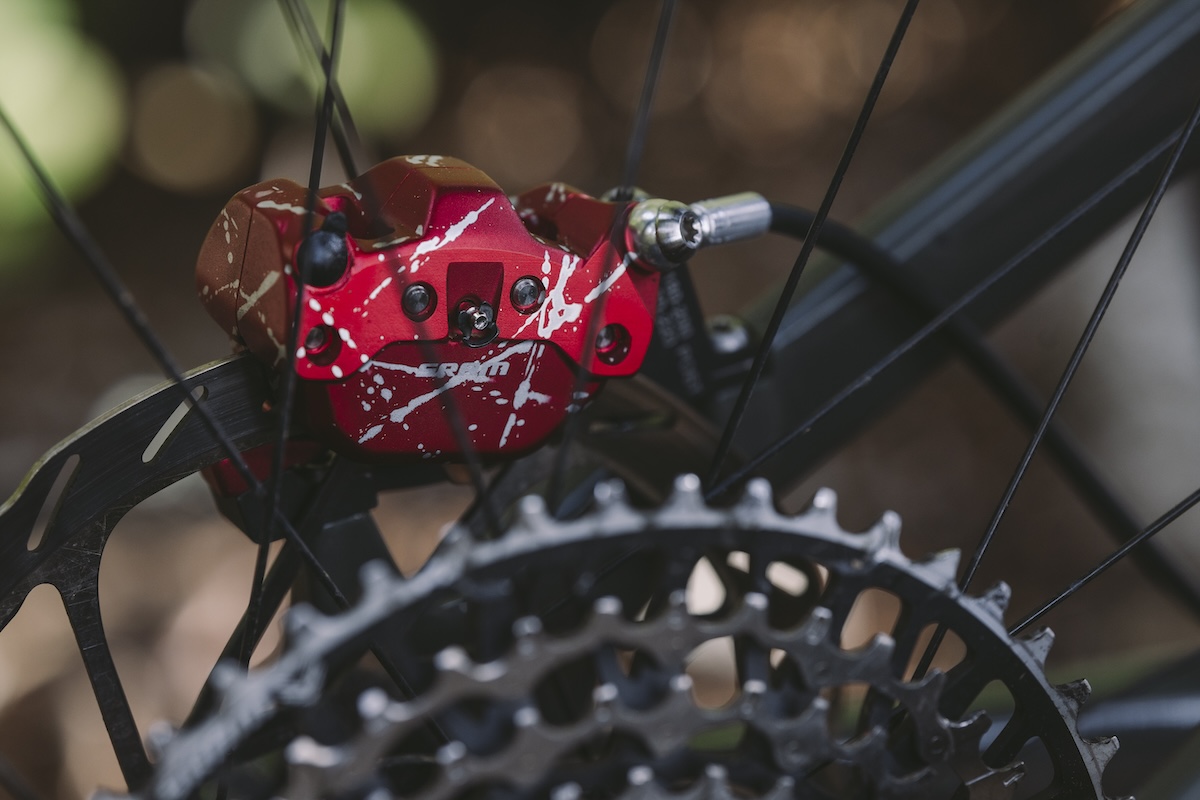
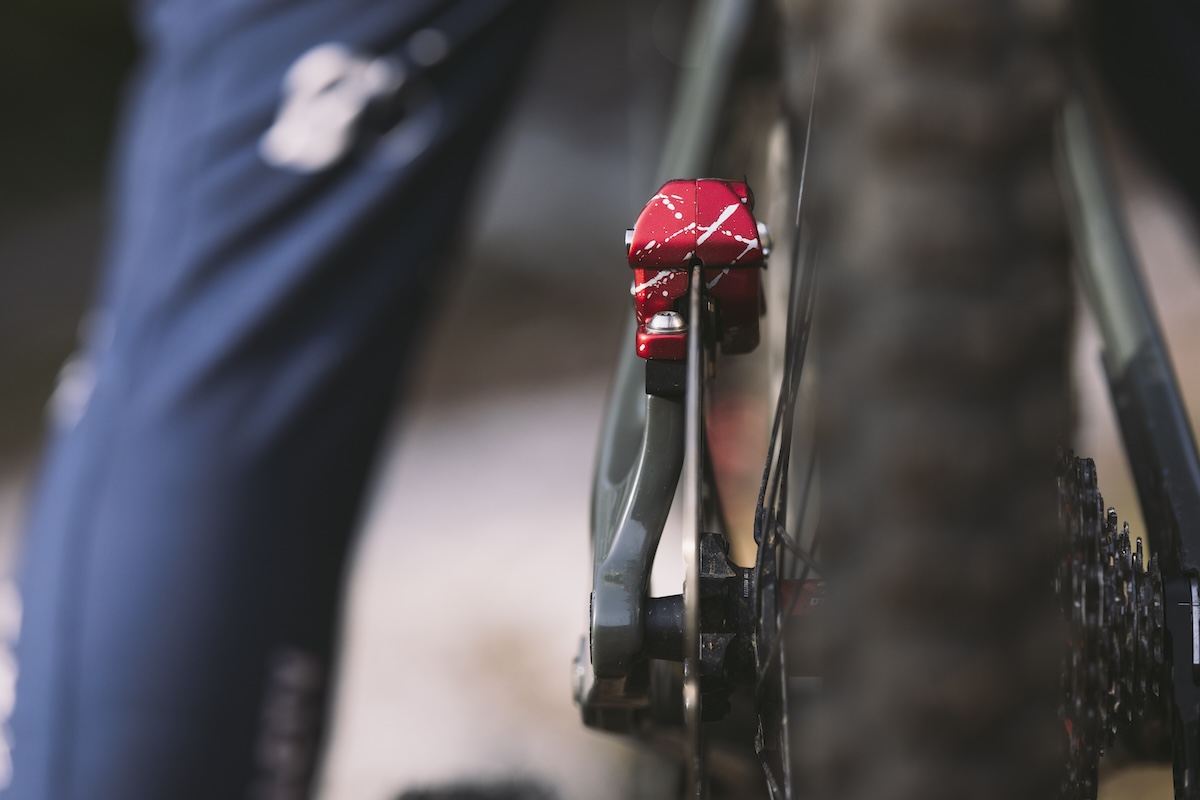
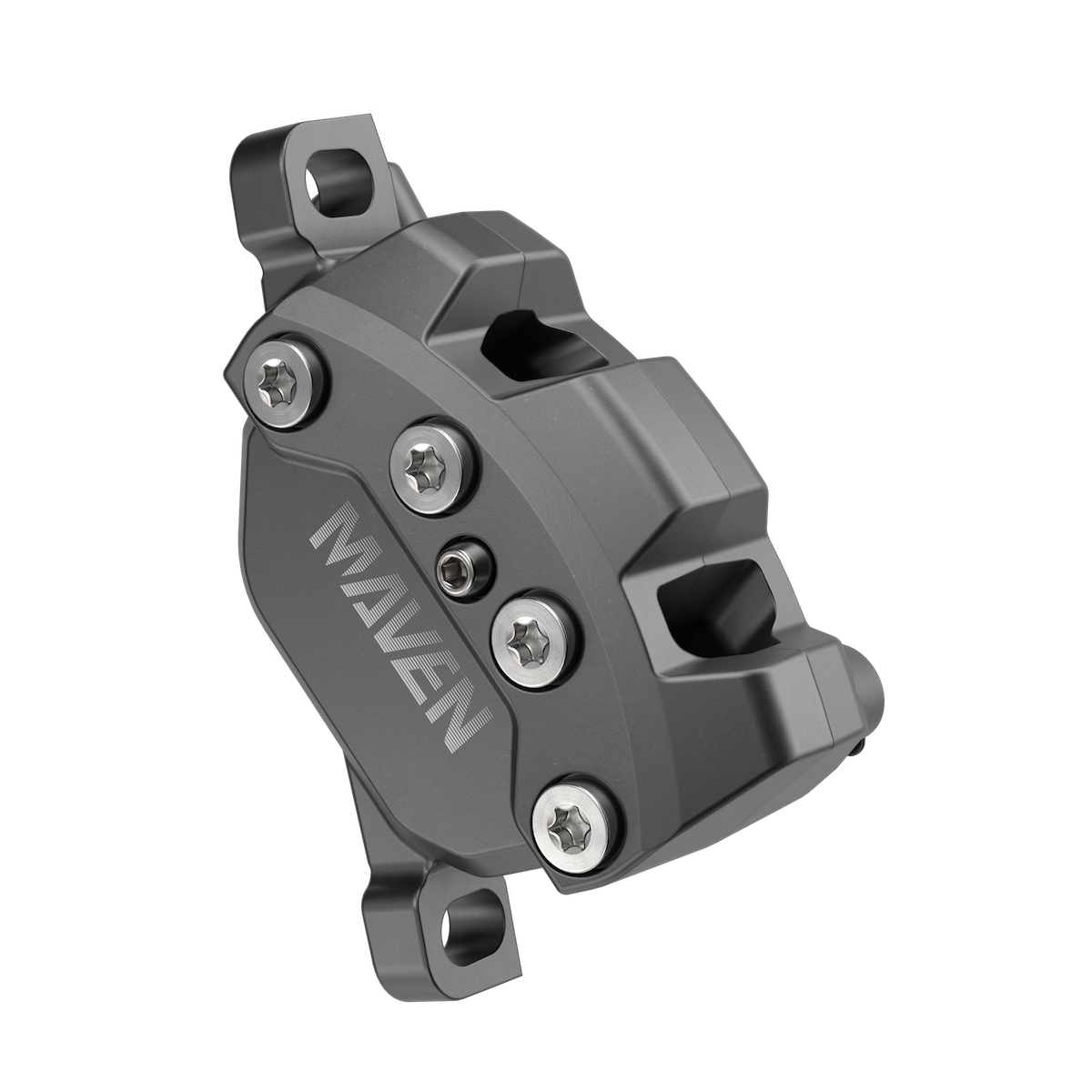
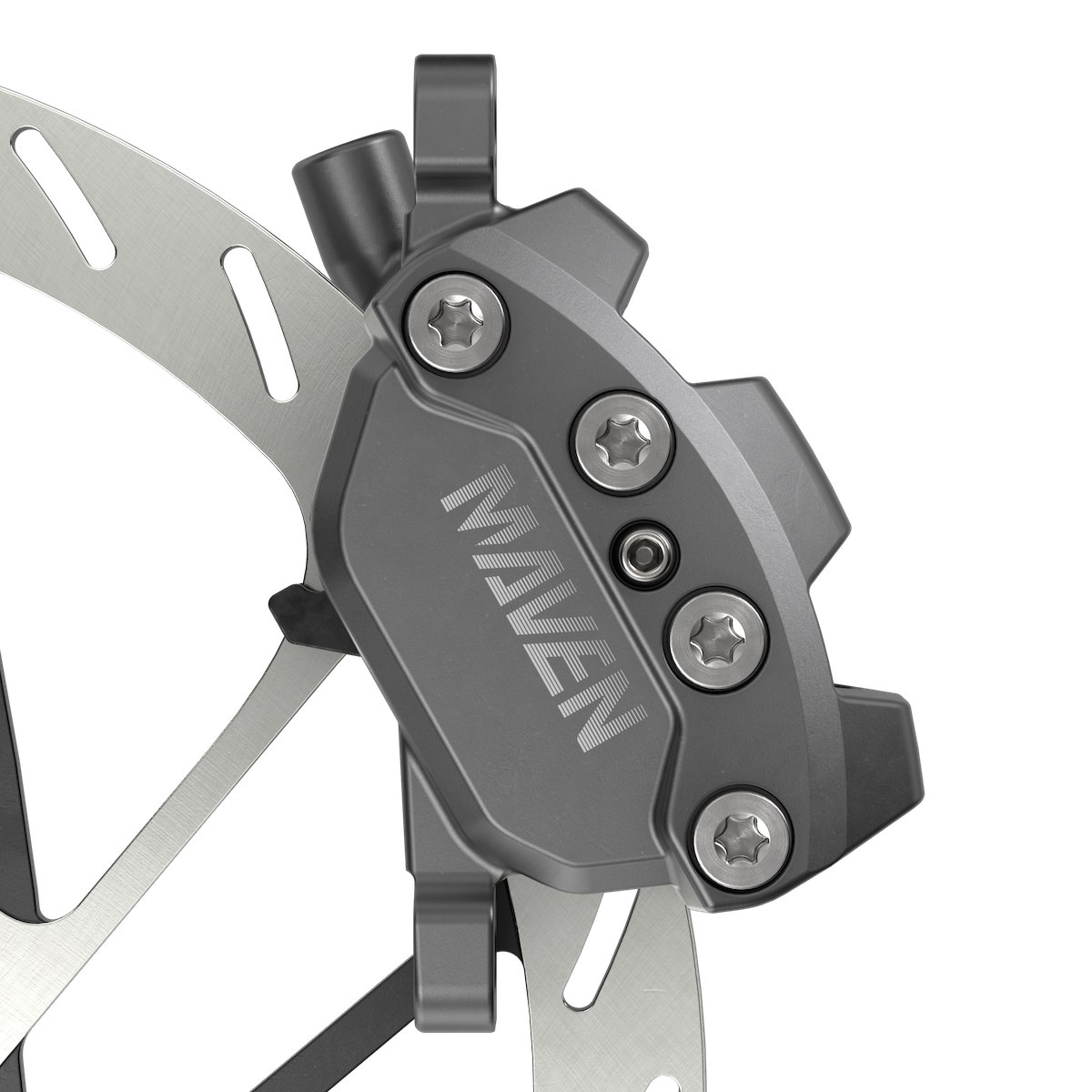
Measure any brake caliper under power and you’ll find flex. Maven’s four caliper body bolts aren’t just for show. They reduce power loss at the caliper, translating to a solid feel in the lever, befitting its power.
Familiar Feel

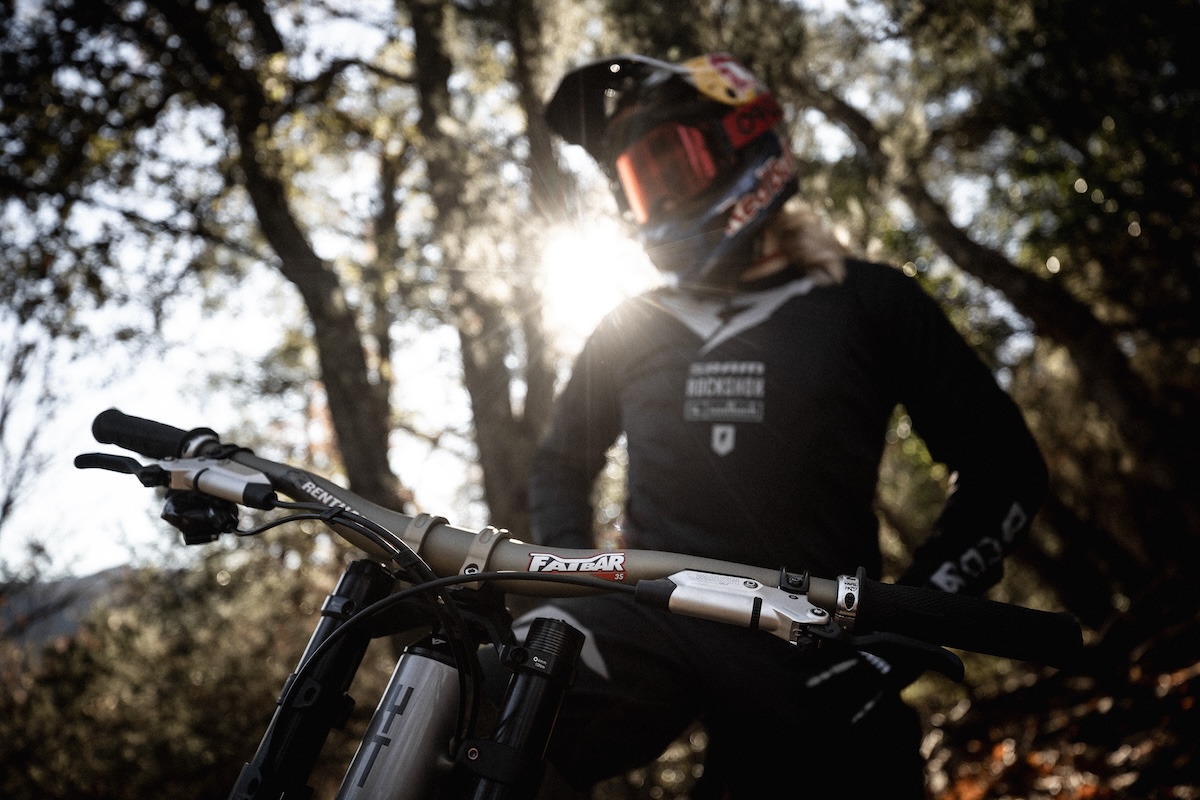
Reach for a Maven lever, and you’ll find a familiar feel. Pivot point placement, blade length and shape, as well as reach and contact point adjustments carry over from Code, maintaining tried-and-true lever ergonomics. Brake hoses are managed by a new stealth architecture that is optimized for a clean cockpit, while meshing well with today’s frame routing options.

Tuning

Maven’s surplus power makes it the go-to for the literal extreme of the sport. But with all that power, you can also tune it down. Think of it like volume. More available power gives you more options.
Rotors

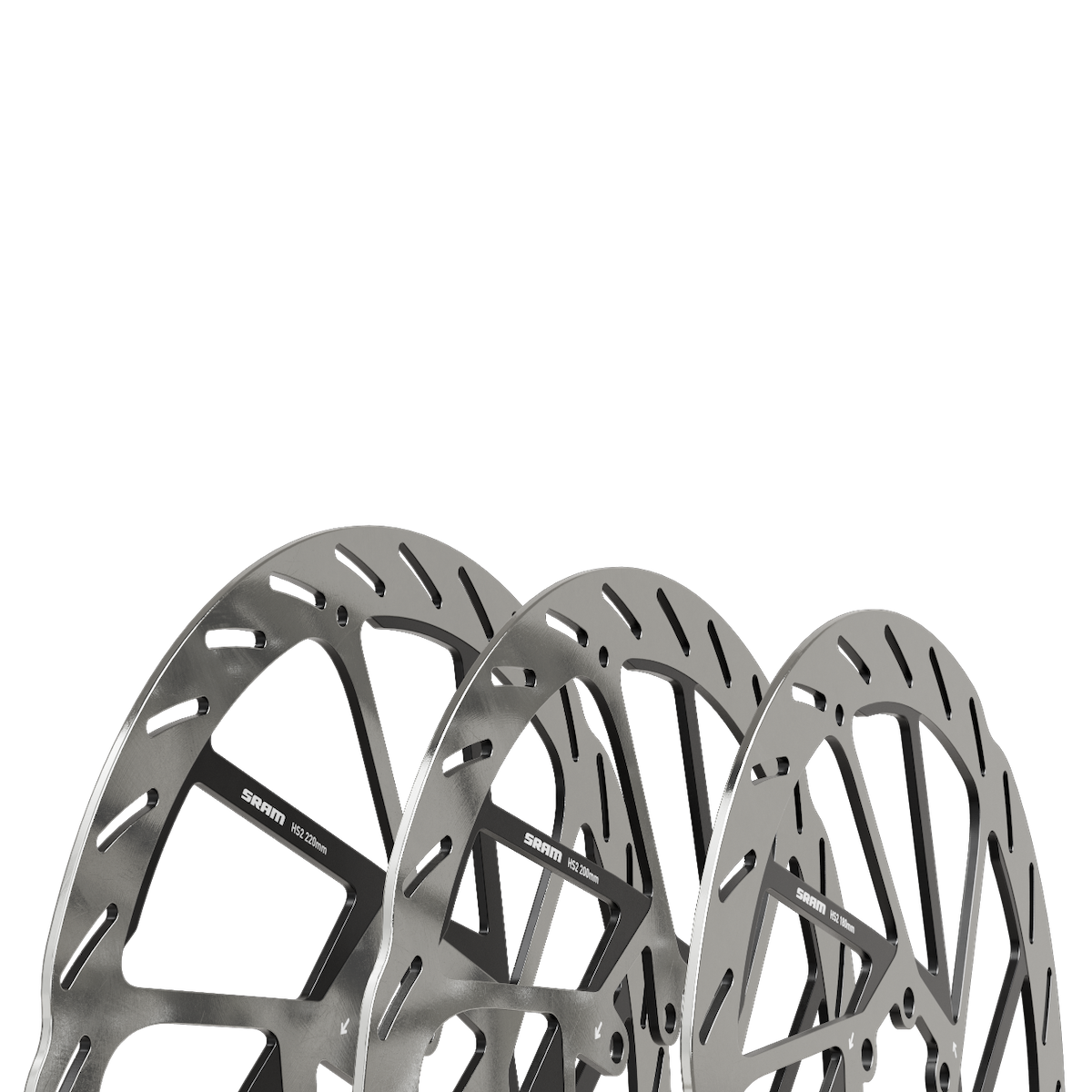
Start small – the smallest rotor size that your frame and fork can accept is the recommended starting point when tuning Maven.
For every 20mm jump in rotor size, the mechanical advantage is 14%. This means that going from a 180mm rotor to a 220mm rotor would boost system power by 28%.

But too big of a rotor could also lead to not enough heat being generated, and a smaller rotor where the optimal amount of heat is being generated could actually have more bite on the trail. Paying attention to the colour of the spokes on your rotors can be a tell of how your rotors are performing.

  • Browned or bronzed discoloring means the size is optimal.
  • Purple or rainbow discoloring means your rotors are running too hot and sizing up would be suggested.
  • No distinct discolouring would suggest they aren’t getting hot enough and sizing down would lead to optimal performance.
  • Choose HS2 rotors for 7% more power and better heat management, or CenterLine rotors if less power and weight saving is the objective.
Brake Pads

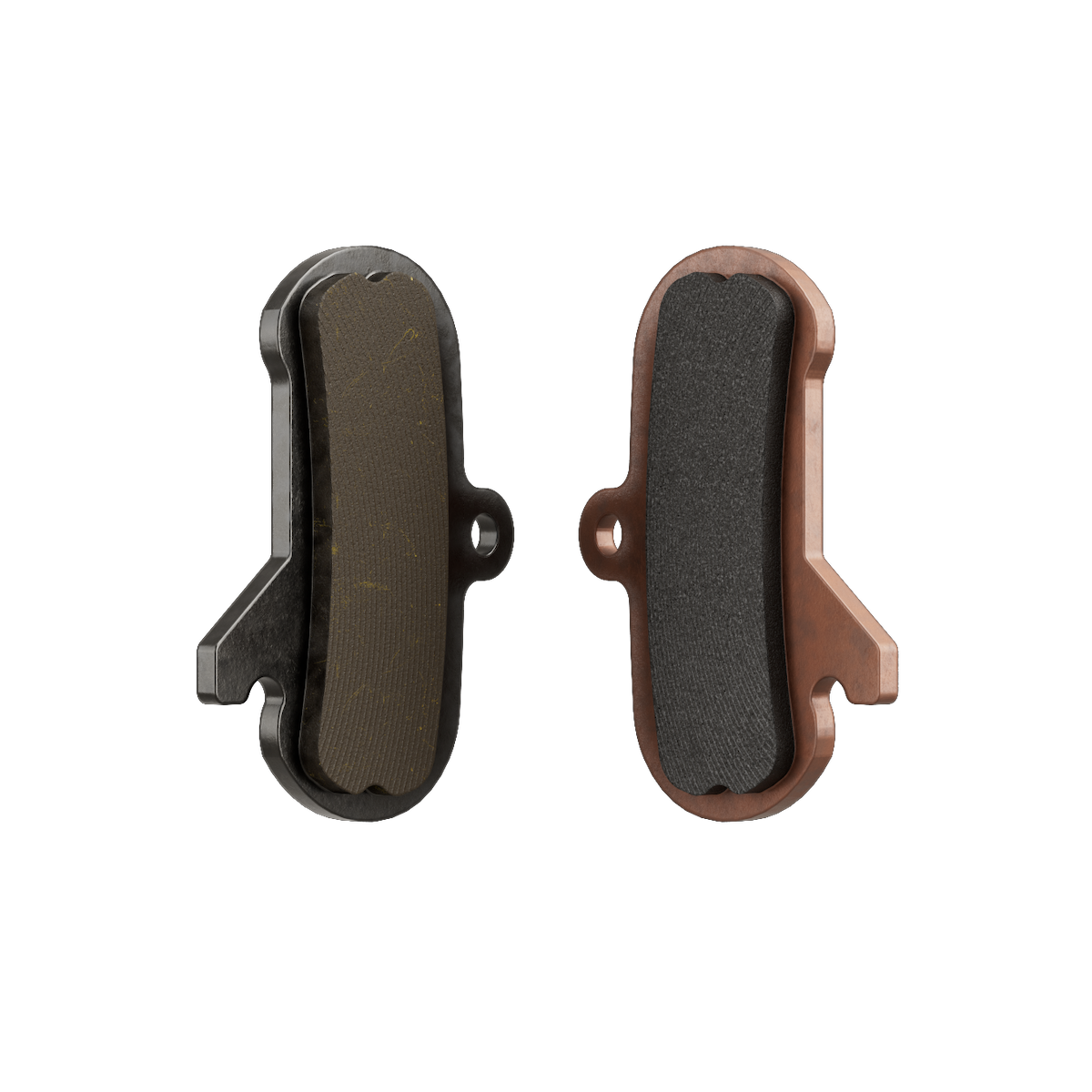
Maven’s unique XL pad shape is available in two compounds, each with their own distinct characteristics.

  • Organic brake pads are great if you are wanting a strong initial bite feel and less overall noise. They offer the best performance in drier conditions.
  • Sintered brake pads are great if you are looking for the most resistance to sustained heat. They also offer better performance in wet or muddy conditions.

To Beat Heat, Harness Heat

The common misconception is that heat is a brake’s worst enemy. The fact is, heat is essential. For a brake to be powerful and consistent, it must retain enough heat in the system but avoid quick fluctuations between hot and cold. It’s an art. An art where Maven shines.
Smart Thermal Mass

Maven calipers provide greater performance consistency by maintaining optimal operating temperatures for longer durations. Built for greater thermal mass, they take longer to heat up, keep excess heat at bay, yet retain optimal heat so as to not cool down too fast. When the caliper avoids the peaks and valleys of hot and cold, consistency of performance reaches totally
new levels.

It Starts With Seals

In the caliper, Maven’s piston seals use a proprietary material that retains its properties to maintain air-tight sealing regardless of extreme braking heat or low atmospheric temperatures.

These remarkable heat-tolerant seals also enable Maven to overcome the past weakness associated with mineral oil, and use mineral oil for its advantages. Take on the most extreme terrain and longest descents with consistent feel, run after run, ride after ride.

Maven Models

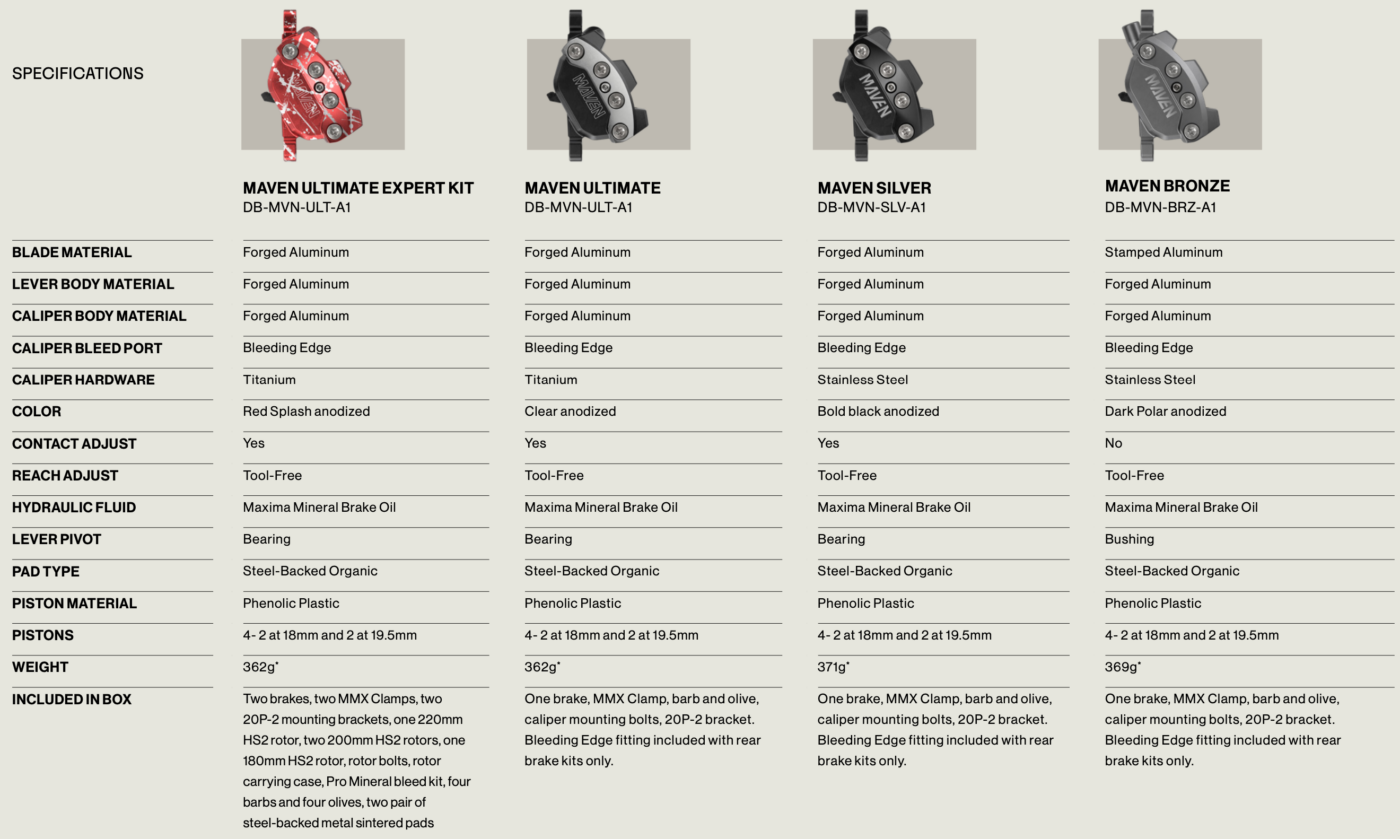
MAVEN ULTIMATE EXPERT KIT

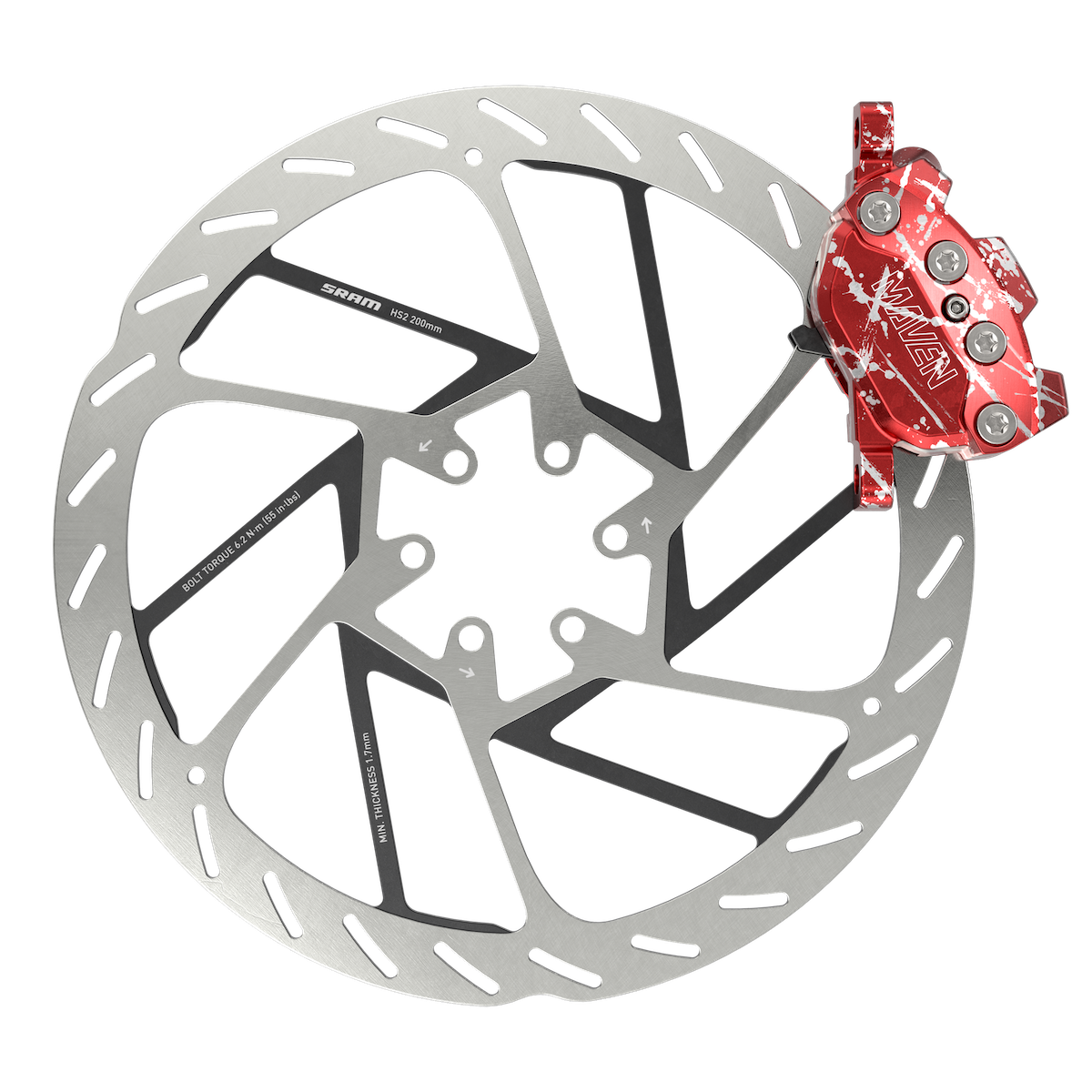
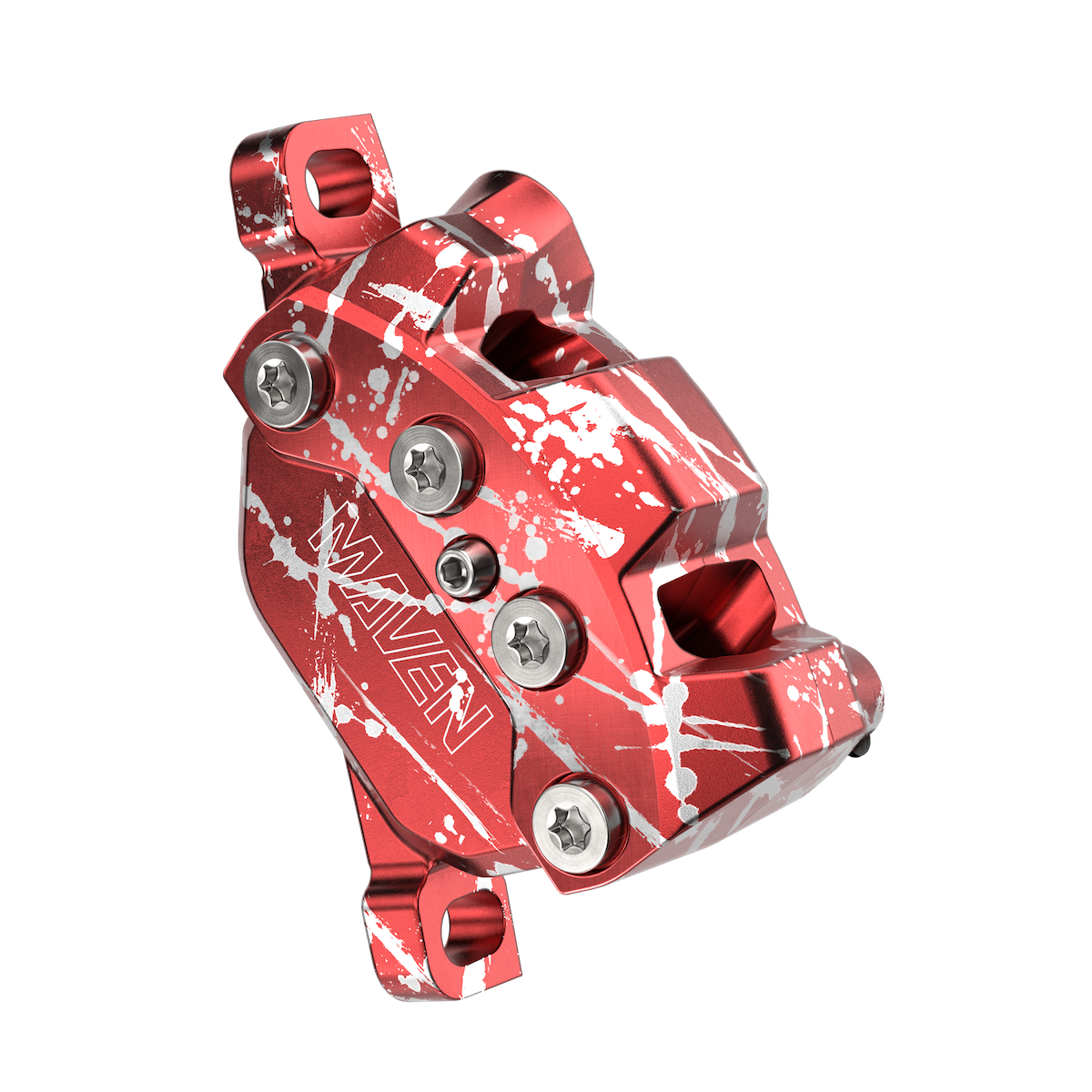
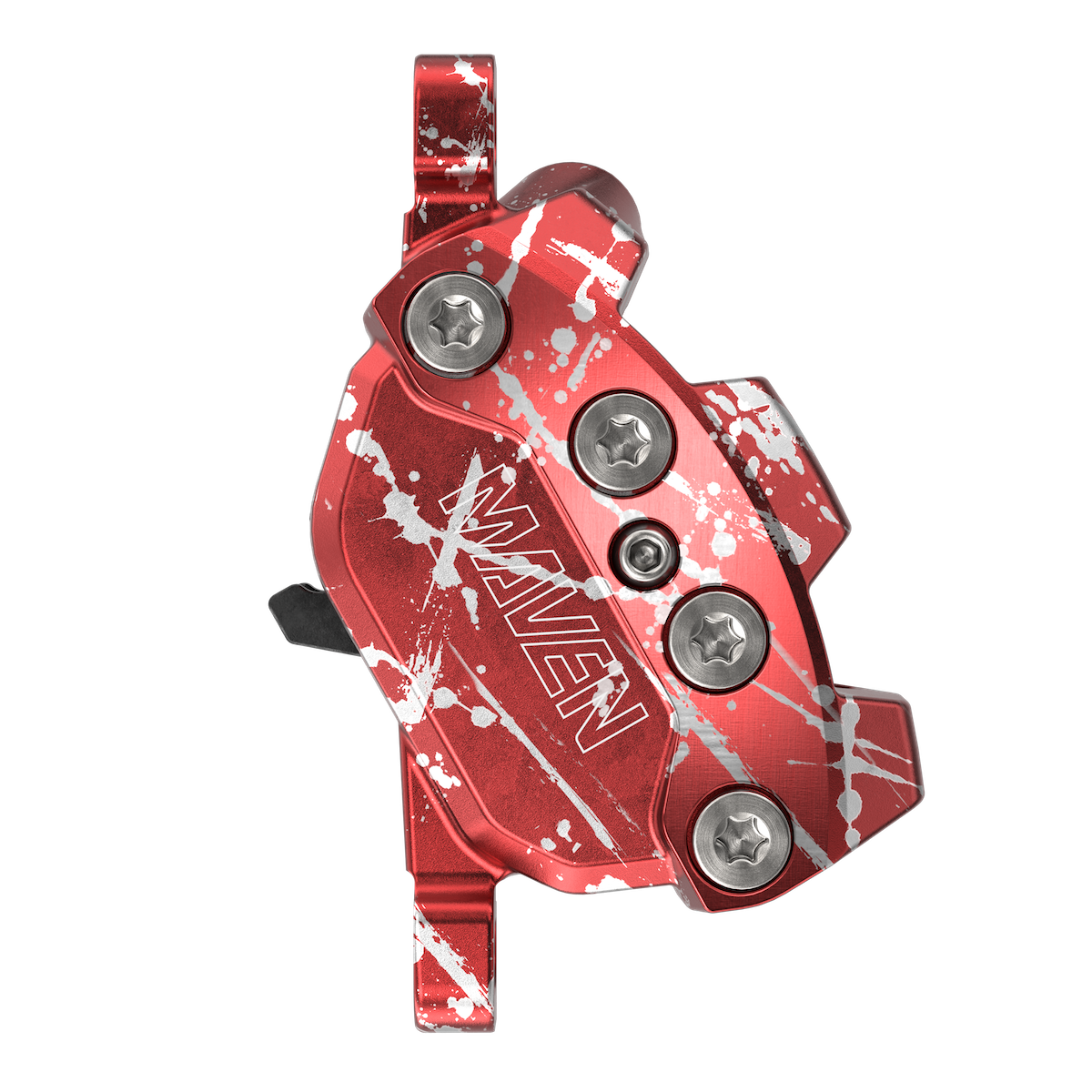
Every course is different. As conditions change, so does the tuning of your brakes. The fully loaded limited edition Maven Ultimate Expert Kit is designed to provide everything they need to tune their Maven Ultimate brakes for optimal brake performance. Edition 1 comes with exclusive red splash anodized calipers that set the brakes apart from the rest of the collection.
  • 2x organic and 2x sintered XL brake pad sets
  • 4x HS2 rotors (1x 220mm, 2x 200mm, 1x 180mm)
  • 2x 20p brackets
  • 2x MMX clamps
  • Maven Ultimate brake set with limited edition Red Splash anodized calipers
  • Pro mineral oil bleed kit
  • Rotor travel bag

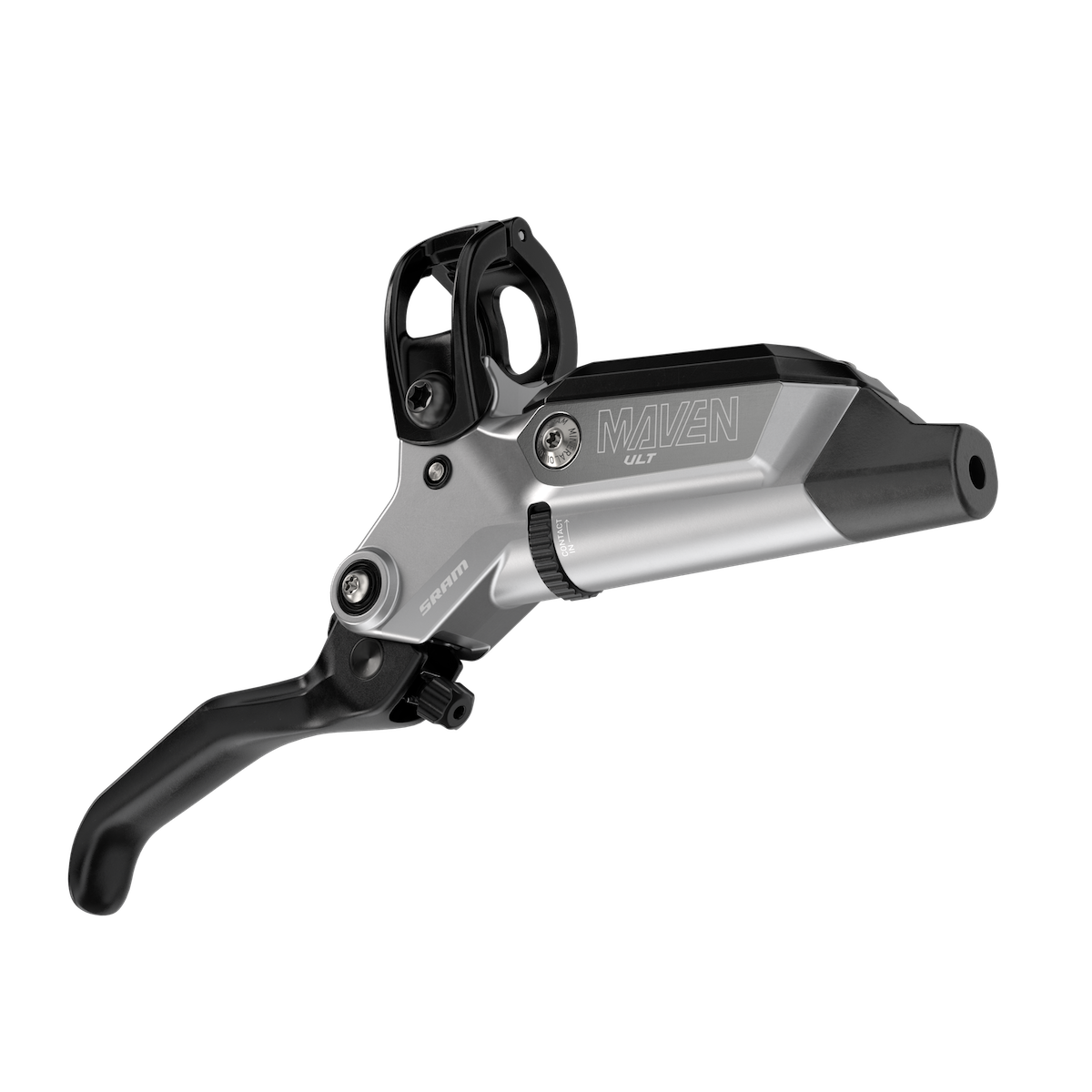
MAVEN ULTIMATE

Maven Ultimate pairs a sleek high polish lever body to a caliper with machined edges and titanium hardware for a finish worthy of any modern super bike. And for unrivalled ease of customization, features tool-free Reach and Contact Point Adjust. Maven is the expert, but Maven Ultimate is the pinnacle.
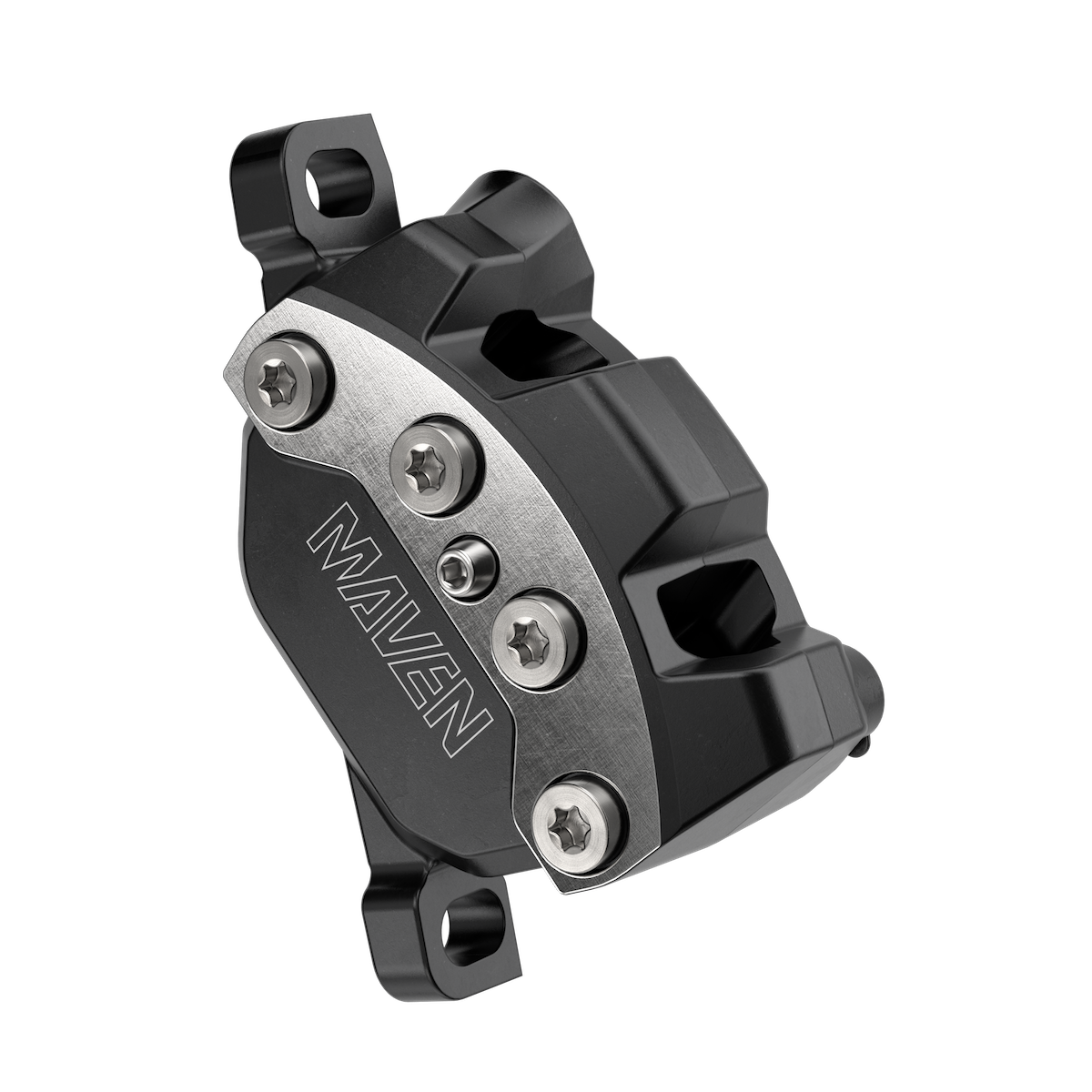
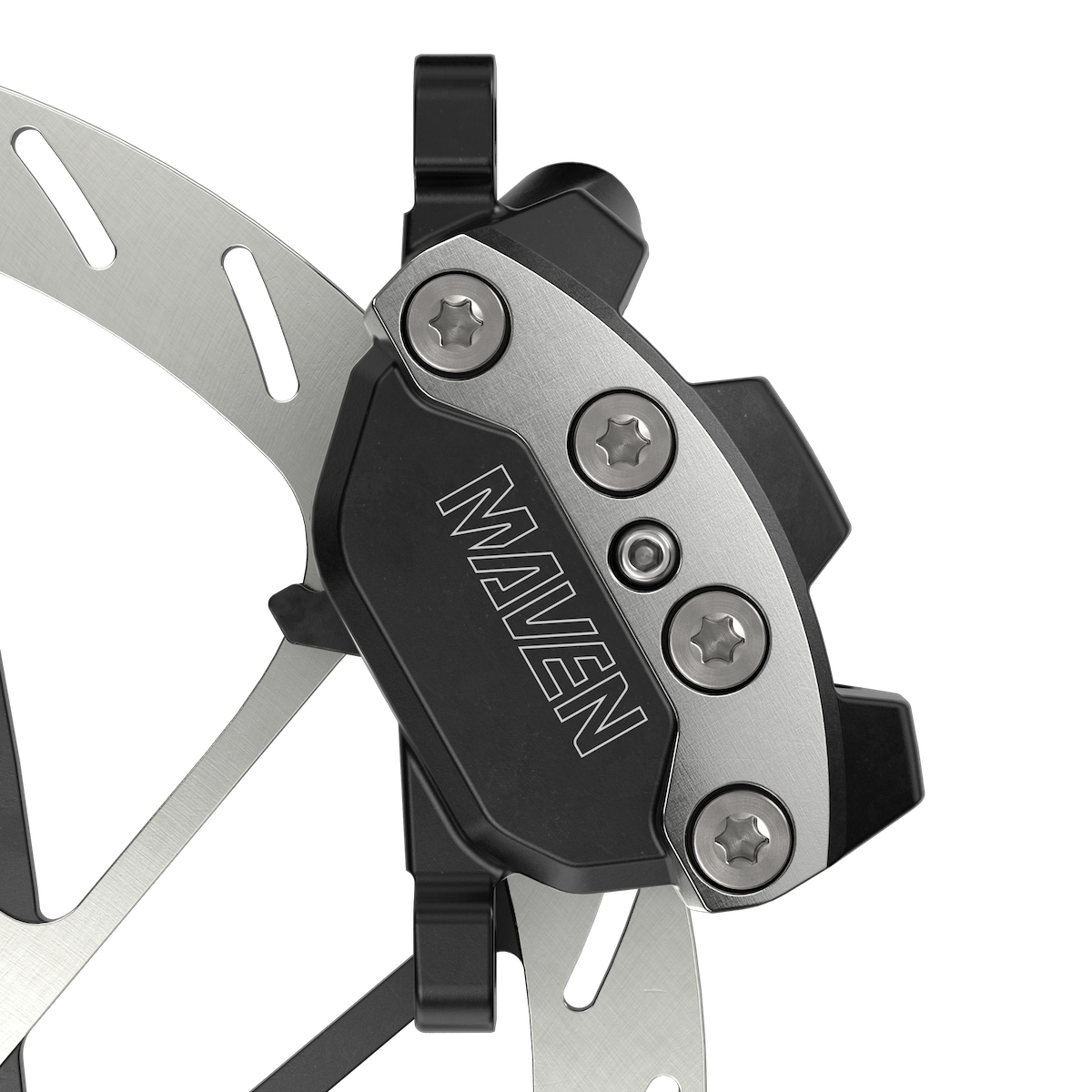
  • 18 and 19.5-millimeter pistons for best-in-class power
  • SwingLink for signature SRAM lever feel
  • Stiff 4-piston caliper with best heat management and easier bolt access
  • Organic pads come standard for the best modulation and the quietest ride
  • Stealth lever architecture for a sleeker, more modern ride
  • Mineral oil for low maintenance and performance
  • Designed for use with Maxima Mineral Brake Oil only
  • Ultimate worthy polished lever body and titanium hardware
  • Contact Point Adjust and tool-free Reach Adjust

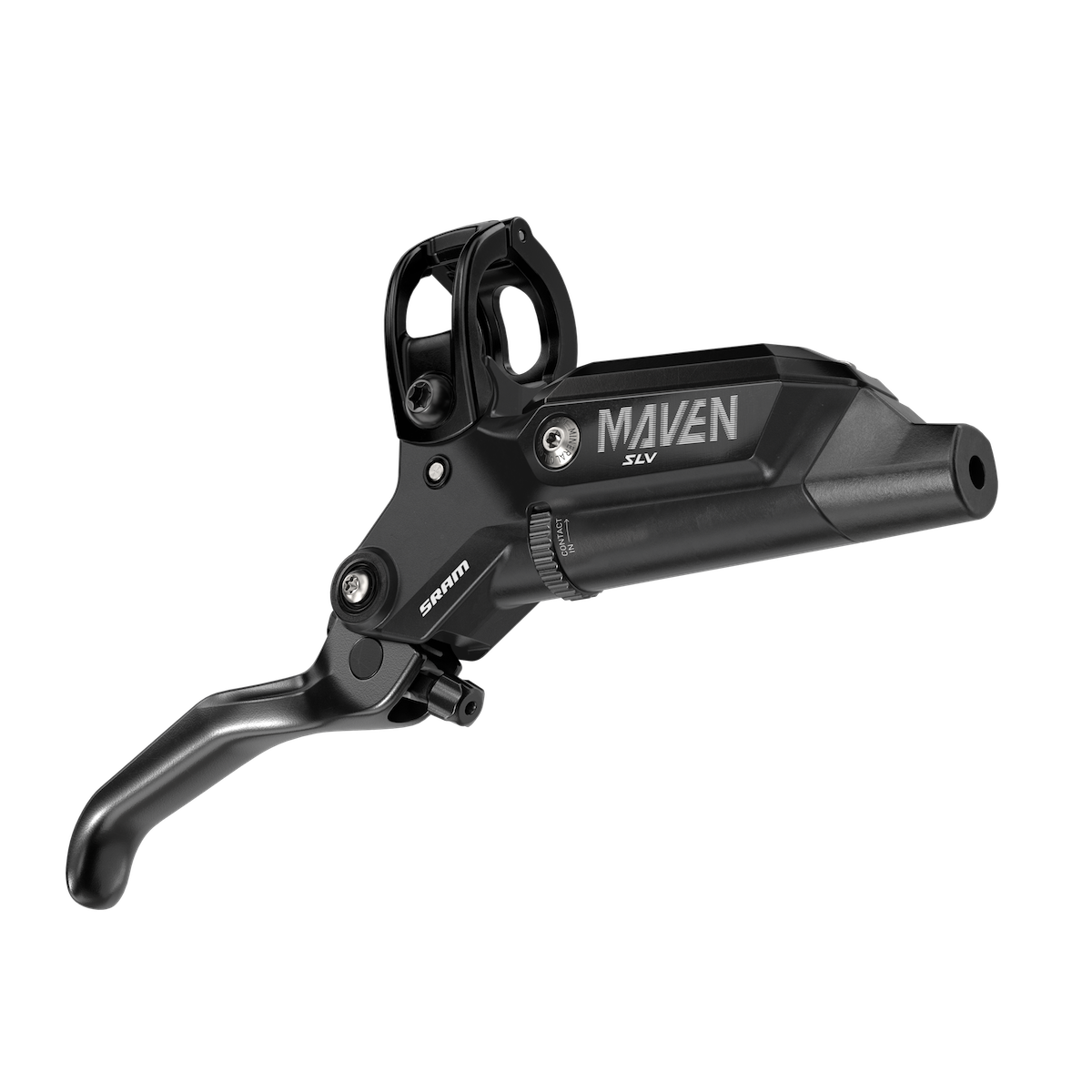
MAVEN SILVER

Maven Silver features a bold black anodized finish with stainless hardware. And for unrivaled ease of customization, features tool-free Reach and Contact Point Adjust.
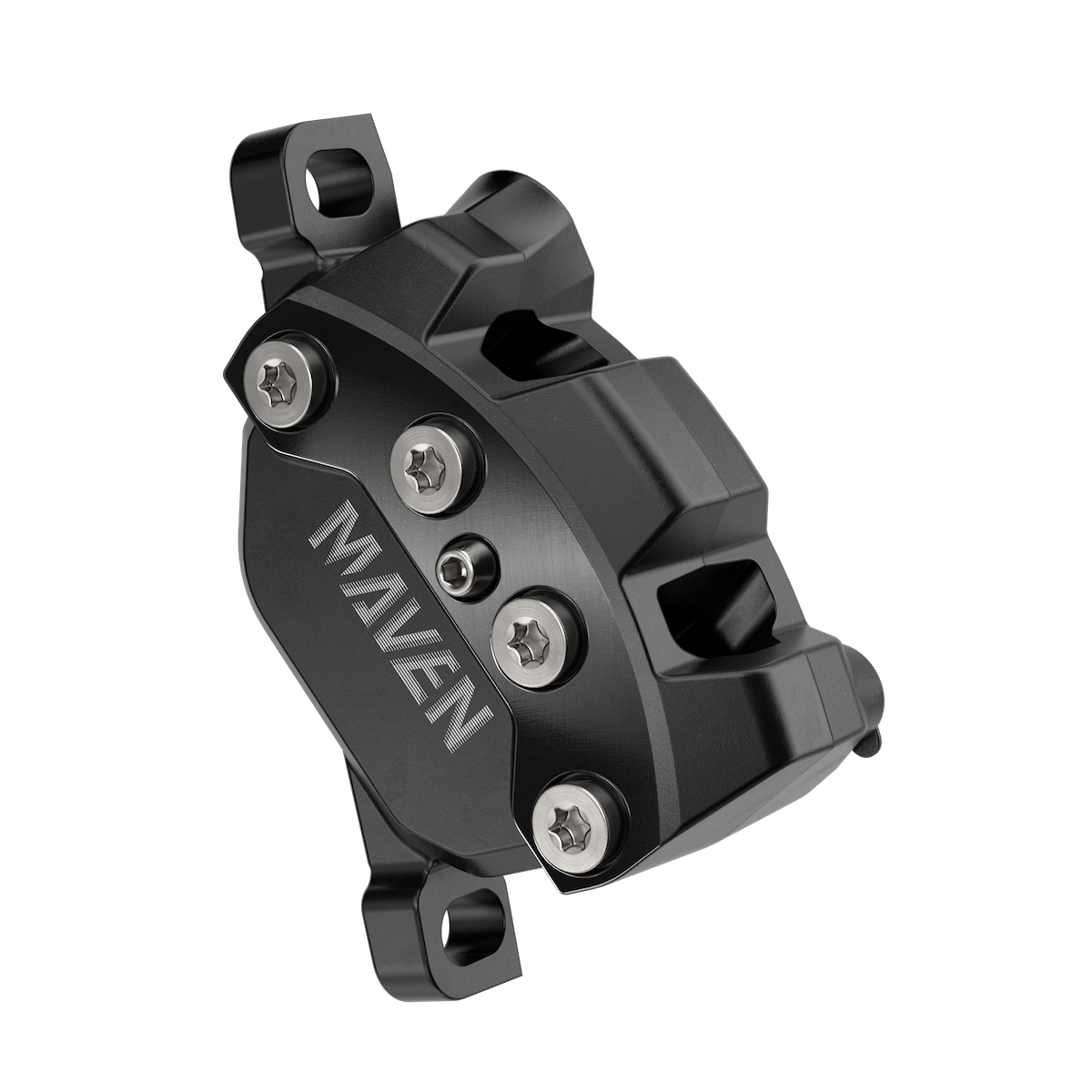
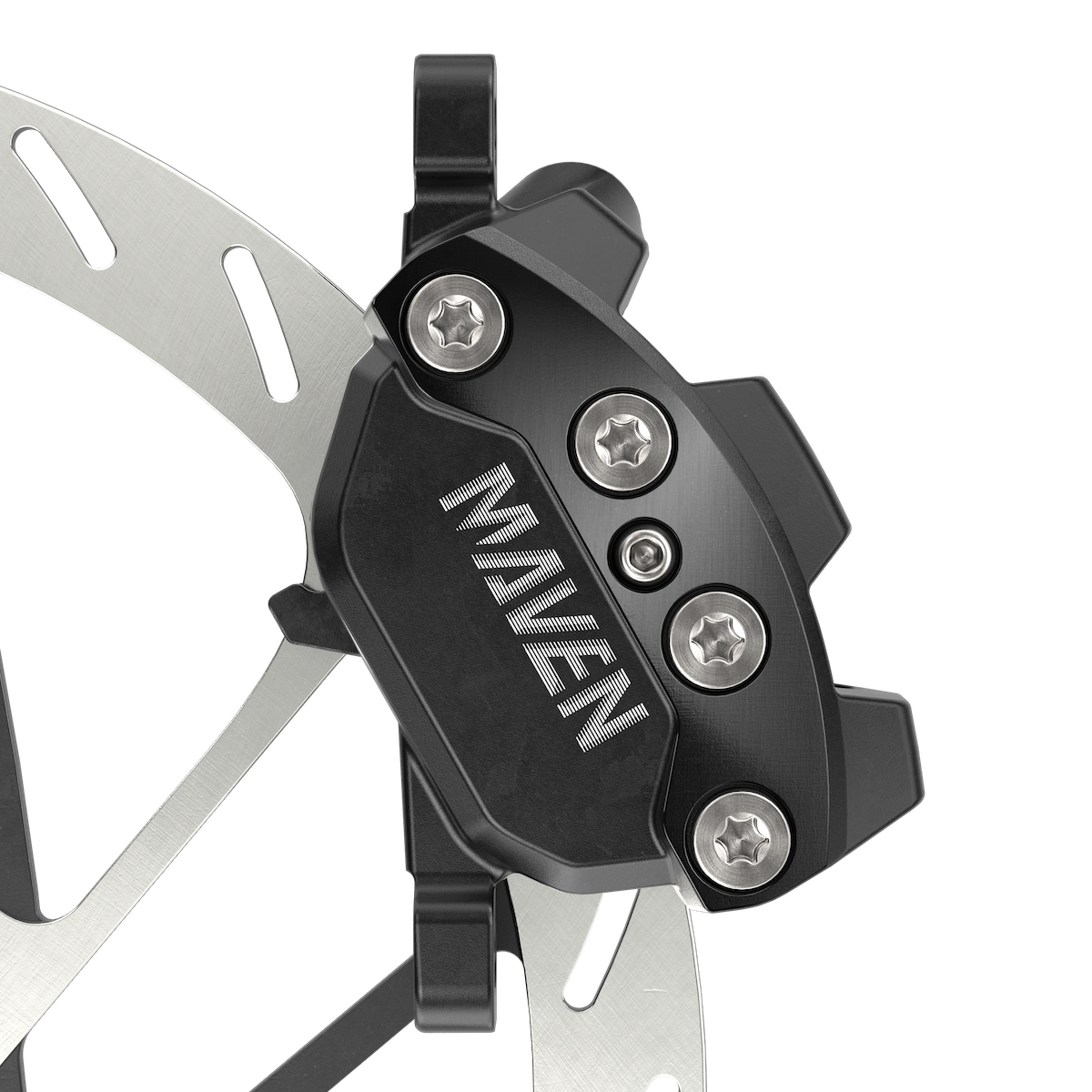
  • 18 and 19.5-millimeter pistons for best-in-class power
  • SwingLink for signature SRAM lever feel
  • Stiff 4-piston caliper with best heat management and easier bolt access
  • Organic pads come standard for the best modulation and the quietest ride
  • Stealth lever architecture for a sleeker, more modern ride
  • Mineral oil for low maintenance and performance
  • Designed for use with Maxima Mineral Brake Oil only
  • Bold black anodized finish
  • Contact Point Adjust and tool-free Reach Adjust

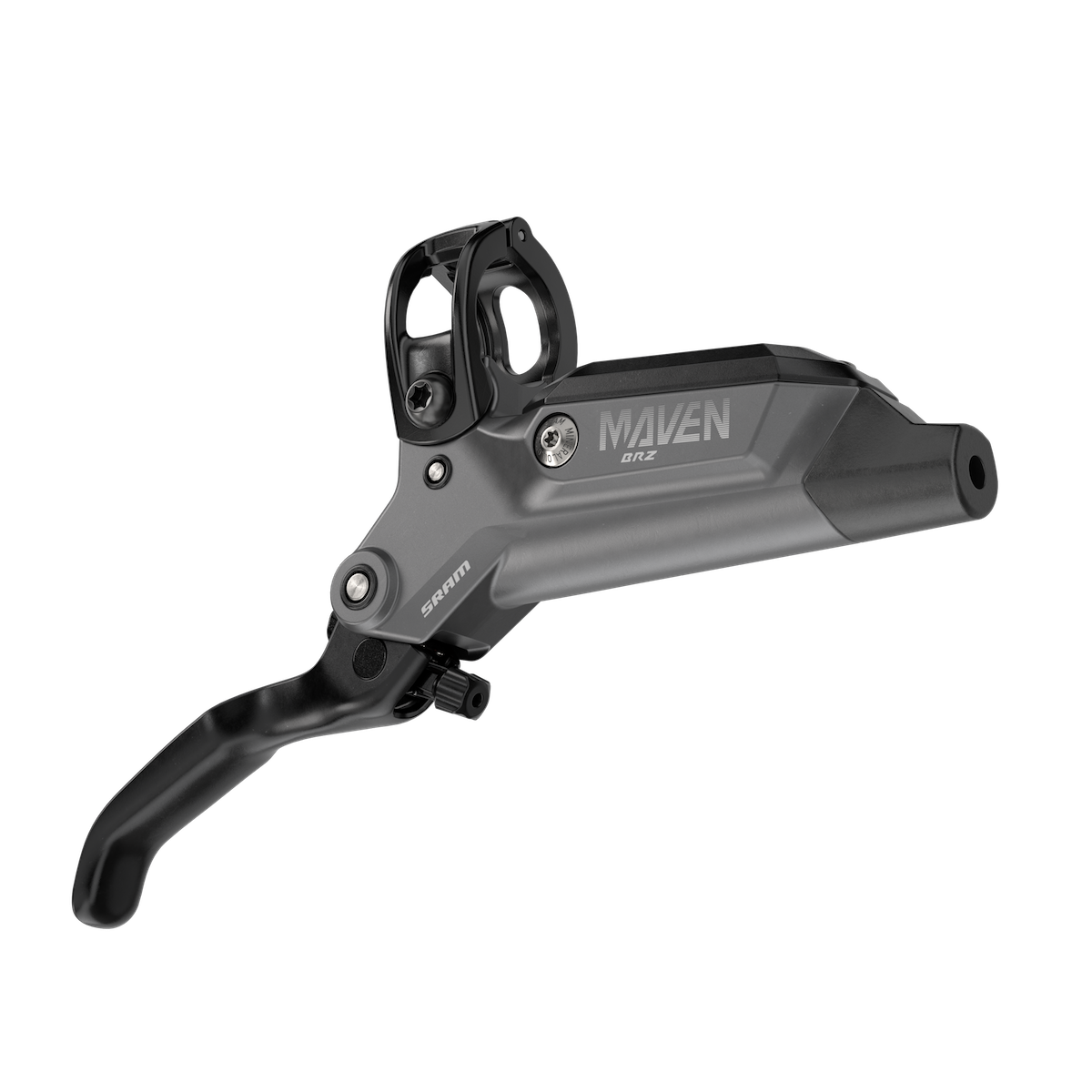
MAVEN BRONZE

Maven Bronze features a Dark Polar anodized finish, and for ease of customization includes tool-free Reach Adjust.
  • 18 and 19.5-millimeter pistons for best-in-class power
  • SwingLink for signature SRAM lever feel
  • Stiff 4-piston caliper with best heat management and easier bolt access
  • Organic pads come standard for the best modulation and the quietest ride
  • Stealth lever architecture for a sleeker, more modern ride
  • Mineral Oil for low maintenance and performance
  • Designed for use with Maxima Mineral Brake Oil only
  • Dark Polar anodized finish

POST BRACKET 20P STANDARD MOUNT

It’s a bracket that makes sense. With a simplified approach to hardware, just four 18mm mounting bolts are required, and for the best possible rotor to caliper alignment, two size-specific brackets cover the four common rotor size combinations.
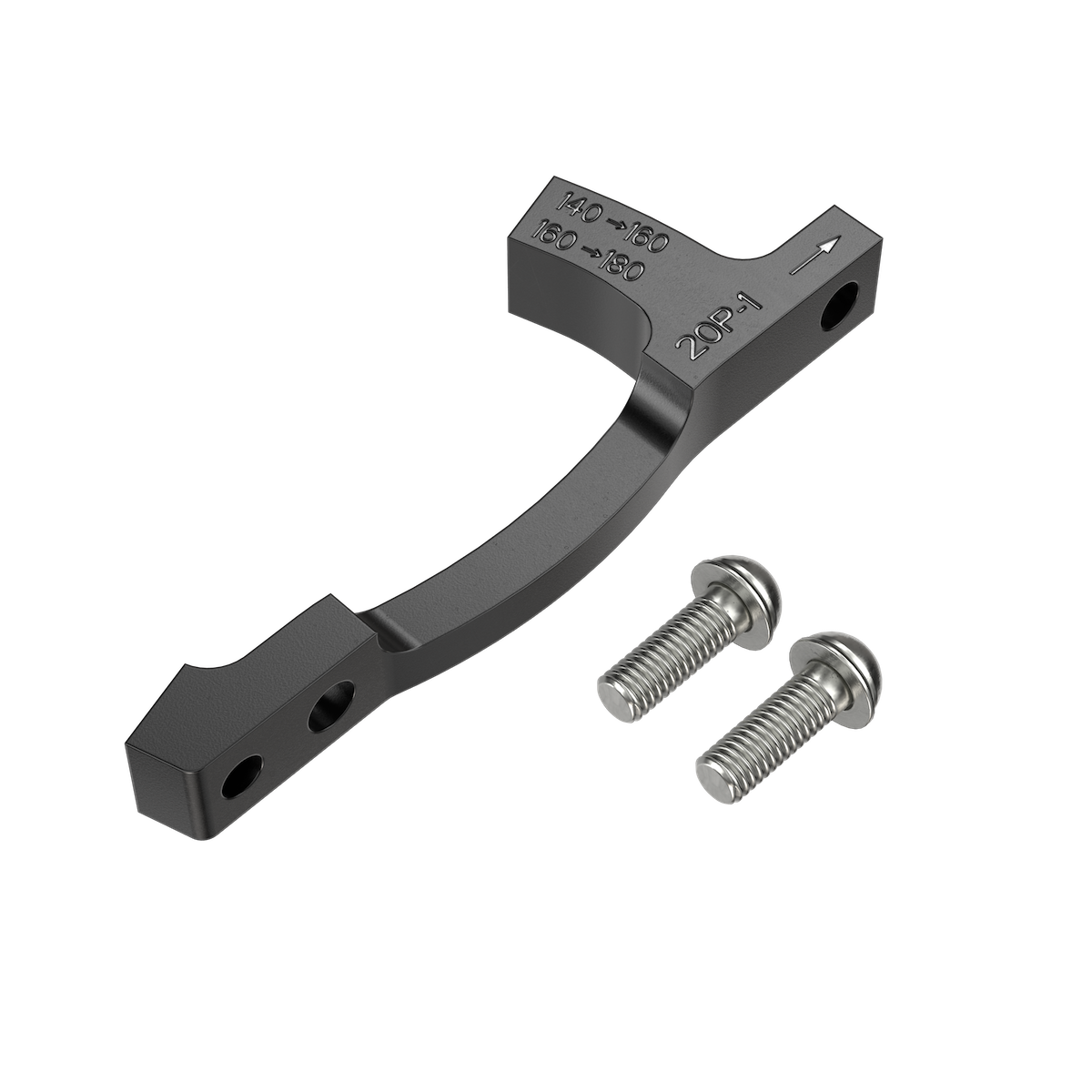
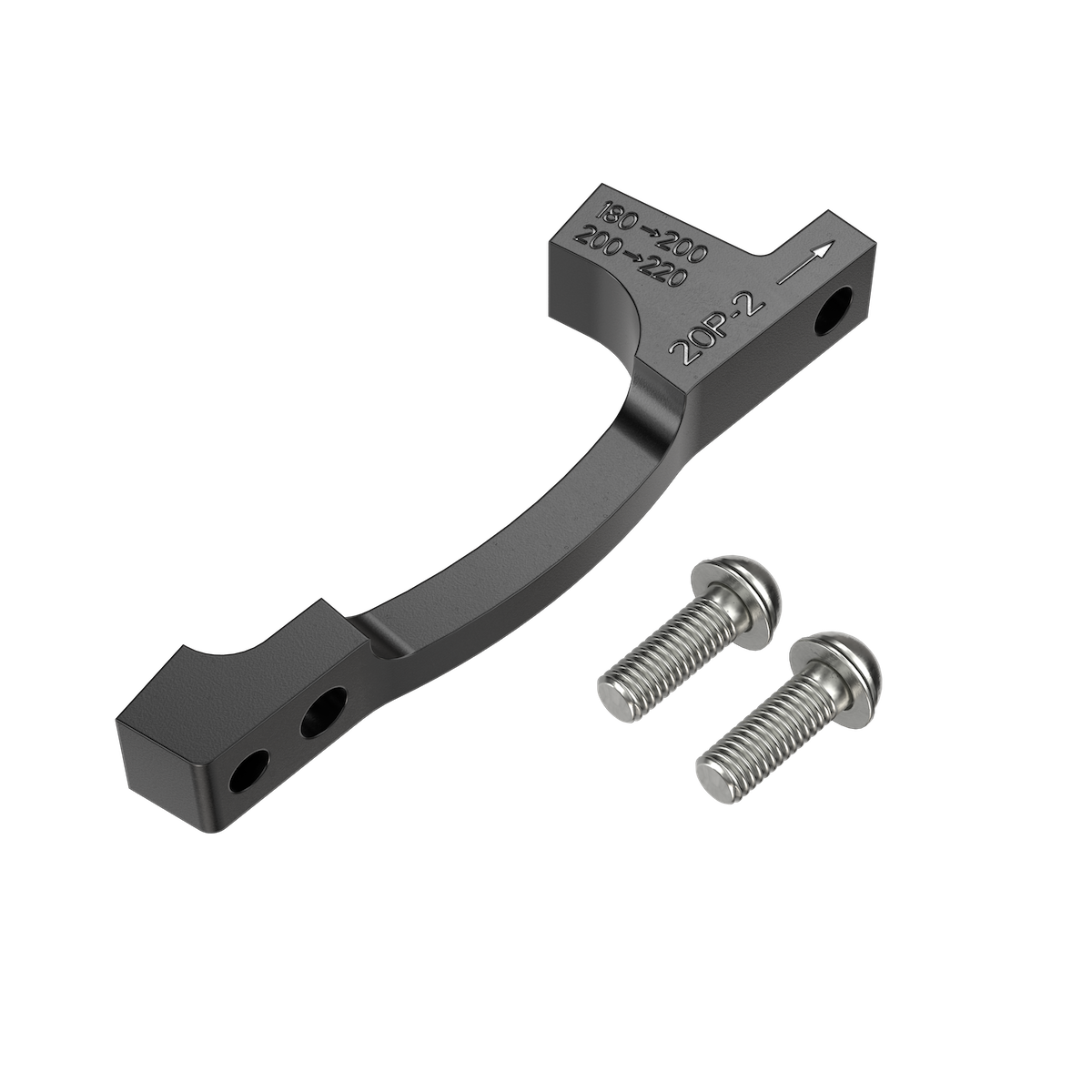
  • Maven requires this bracket for 20mm jumps
  • 20P-1 bracket for 160mm and 180mm rotors
  • 20P-2 bracket for 200mm and 220mm rotors
  • Four 18mm mounting bolts included
  • Stainless steel hardware
  • No CPS (concave/convex) hardware required

Local Pricing and Availibilty

For local pricing and availability please contact Cape Cycle Systems.

Questions & Answers

Why should I buy Maven brakes?

Bikes and riders have evolved, and brakes needed to evolve to match the new demands. Maven brakes are intended for extreme-duty riding applications – ideal for gravity, e-mtbers, enduro riders, or anyone who needs more power. With the correct baseline brake, you can properly tune your brakes through pad compounds and rotor sizes – ultimately giving you a better braking experience.

What makes Maven brakes ideal for extreme duty riding?

Power, with control. We’re entering a new power class, and Maven has the most while maintaining SRAM’s tried-and-true lever feel. With a new unseen level of baseline power, ride qualities can be tuned up or down based on the needs of the rider. And because of their exceptional heat management, Maven brakes are more consistent, which when combined with more power means less rider fatigue on long runs.

How much more power does have Maven have than Code brakes?

At the top end, Maven has roughly 50% more power than Code. This is due both to larger caliper pistons and to an optimized ratio between the lever piston and its giant caliper pistons.

Where do I find Maven brakes with custom finishes? What is the “Maven Ultimate Expert Kit”?

The fully loaded Maven Ultimate Expert Kit is equipped with everything you need to get to the starting line aboard SRAM’s most powerful brake. The pair of limited-edition splash red anodized Maven Ultimate brakes are your anchors. With the calipers housing monstrous 18 and 19.5-millimeter pistons, you’ve got nearly 50% more power than Code on hand. With so much baseline power on hand, there is more range than ever before to tune the ride qualities exactly how you want. With this in mind, the Maven Ultimate Expert Kit has been assembled with four HS2 rotors in three different sizes (1x 220mm, 2x 200mm, 1x 180mm) as well as both organic and sintered XL brake pads for up to 14 different tuning combinations. A custom travel bag keeps your rotors safe when in transit, and when you finally need it, the included Pro Mineral Bleed Kit has the tools necessary to service your brakes. Whether you’re landing on the podium or not, the Maven Expert Box contains everything you need to find your winning combination.

What size are the pistons in the Maven caliper?

Maven has 18 and 19.5mm caliper pistons.

Does Maven retain that same ‘SRAM’ lever feel?

Yes, Maven delivers a rate of leverage that changes throughout the lever stroke. The farther you pull along the arc, the more power Maven sends to the pistons. It’s what we call progressive power and it is present in all SRAM Swinglink equipped brakes.

Does Maven use Swinglink?

Yes, they use a Swinglink shape that has been optimized for Maven, which harnesses raw power to provide progressive power delivery, retaining SRAM’s signature ride feel.

Do Maven brakes have stealth levers?

Yes, Maven features a new stealth architecture that is optimized for a clean cockpit, while meshing well with today’s frame routing options.retaining SRAM’s signature ride feel.

Will the higher power on my Maven brakes increase the wear of pads/rotors?

Pad and rotor life on the Maven brakes is about the same or slightly better than with Code.

Do the Maven (XL) pads have a specific compound?

Maven’s XL brake pads are available in organic and sintered. The pad compounds are the exact same as what is found in Code’s L brake pads, with the difference being in the overall shape and size of the XL brake pads.

Why does the Maven caliper have four bolts instead of two?

Maven’s four caliper body bolts aren’t just for show. They create a stiffer caliper, which reduces power lost through flex, translating to a solid feel in the lever.

Why do the Maven brake pads load from the bottom?

The Maven caliper features four bolts holding the two halves together, resulting in a much stiffer caliper with a firmer lever feel. The four bolts are placed directly above the brake pads requiring the pads to be loaded from the bottom.

Why doesn’t Maven have a carbon lever blade?

The forged lever blade used on the Maven brakes is the stiffest lever blade material that we offer, providing riders with the most tactile feedback. Maven brakes are not compatible with lever blades from other SRAM brakes.

The carbon lever blades from Code Ultimate look very similar, are they compatible with my Maven brakes?

No – there is not any lever compatibility between Code and Maven. If a Code blade is installed on a Maven lever, it could lead to system closure. This is a critical safety concern, and thus we do not approve the use of Code blades with a Maven lever.

If system closure occurs, the high-pressure system is isolated from the reservoir. This would result in the brake not being able to manage any system expansion that may occur.

Where do I find the serial number on my Maven brakes?

The serial number of your Maven brake is located on the bottom side of your brake caliper right between the post mounts.

Do Maven brakes use mineral oil or DOT fluid?

Maven is a mineral oil brake. For Maven to meet our requirements as a mineral oil brake, we went through many seal material iterations to find the most heat resistant compound. Formulated to work with our co-developed Maxima Mineral Brake Oil, this proprietary seal material retains its elastomeric properties to maintain air tight sealing regardless of extreme braking heat or low atmospheric temps. In other words, the material is able to regain its original shape when a load is removed from it. Through testing it was determined that mineral oil offered the best performance (outperforming DOT versions) while also offering desired lower maintenance qualities.

I thought DOT fluid was better?

Each brake option we offer has been designed to use the fluid and seals that will give it maximum performance. With Maven, this option turned out to be mineral oil.

Why doesn’t Maven use any cooling fins?

Maven calipers are designed to get hot. Built for greater thermal mass, Maven calipers take longer to heat up and keep excess heat at bay, yet retain optimal heat so as to not cool down too fast. When the caliper avoids the peaks and valleys of hot and cold, consistency of performance reaches totally new levels.

Does Maven require any specific mounting hardware?

Maven requires the use of the new 20P-1 or 20P-2 brackets when a 20mm adapter is needed to accommodate a change to a larger rotor size. It is not compatible with the old post mount 20P bracket. Otherwise, it is compatible with all existing SRAM brake hardware. When a 20mm adapter is needed, choose 20P-1 for 180mm rotors, and 20P-2 for use with 200 or 220mm rotors.

Do I need to change my rotor if I try a different pad material?

We advise you to use new rotors when changing to a new pad compound material.

All disc brake pad compounds embed a thin layer of pad material into the rotor during brake bed-in and use. Introducing a new pad compound to a rotor can create noise and reduce brake performance.

Will my Maven brakes work on any frame?

Maven respects all existing SRAM brake frame fitment specifications.

How do I bed-in my Maven brakes?

Please follow the SRAM MTB Brake ‘bed-in’ procedure.

Do Maven brakes have Contact Point Adjust and Lever Reach Adjust?

Maven Ultimate, Silver, and Bronze all utilize tool- free Lever Reach Adjust, while Maven Ultimate and Silver also feature Contact Point Adjust.

Is my SRAM Maven mineral oil brake compatible with SRAM’s existing brake small parts and hoses?

Yes, Maven is compatible with SRAM Stealth- a-Majig hose barb, olive and compression fittings, SRAM hydraulic brake hoses, and SRAM DOT Grease.

What brake hose kit does Maven use?

Maven Ultimate and Maven Silver use the Silver Banjo Disc Brake Hose Kit – part number 00.5318.038.000.

Maven Bronze uses the Double Compression SRAM Disc Brake Hose Kit – part number 00.5318.036.000.

Which SRAM brake pads do Maven use?

It uses a new Maven-specific brake pad shape, which we call XL. It is available in sintered or organic compounds. SRAM Brake Pad Overview

How do I bleed my Maven mineral oil brakes?

For the full step-by-step process please refer to the Maven manual or the SRAM MTB Mineral Oil Brake Bleed video.

How often should my Maven brakes be bled?

We recommend performing a full bleed and replacing the mineral oil every two years. The main reason for that longer interval compared to our DOT brakes is that mineral oil does not absorb moisture.

Is the Maven bleed procedure the same as other SRAM disc brakes?

No, with the release of the new Maven hydraulic disc brakes, SRAM has made an update to the MTB Mineral Oil Brake Bleed procedure to ensure all riders achieve the maximum braking performance from their SRAM brakes. The bleed procedure now includes the additional step of a piston massage after completing the bleed and prior to installing the wheel. This required step cycles the caliper pistons, helping to break down initial friction between the pistons and seals, creating lower pad gap and consistent piston actuation. Please review the complete procedures in the Mineral Oil Disc Brake User Manual.

What should I do if DOT fluid was accidentally used in my mineral oil brake bleed?

Unfortunately, the brake should be replaced. DOT brake fluid contamination will cause degradation of the seals used in the mineral oil system and the brakes will be unsafe to continue to use. This is the same for mineral oil brake fluid accidentally used in a DOT brake.

Are SRAM Maven mineral oil brakes compatible with mineral oils from other brake manufacturers?

No. We have not tested all other mineral oils, and cannot guarantee performance or safety. Damage resulting from the use of brake fluids other than Maxima Mineral Brake Oil s not covered under warranty.

Which is the right brake fluid for my SRAM Maven mineral oil brake?

Maven brakes, like all SRAM mineral oil brakes, require Maxima Mineral Brake Oil which was co-developed with SRAM.

You can find it using part number: 00.5318.030.000 – 4oz/120ml or 00.5318.030.001 – 16.9oz/500ml

Do Maven brake calipers have Bleeding Edge fittings?

Yes, they use a mineral oil specific Bleeding Edge fitting. The 5mm size of the fitting is unique to Maven and will only interface with the SRAM Mineral Oil bleed kit. This is to ensure that incompatible SRAM DOT fluid bleed kits cannot be used. All aftermarket Maven brakes will include a Bleeding Edge syringe tip to retrofit existing SRAM Mineral Oil Bleed Kits that didn’t initially include the Bleeding Edge tip.

Why are my Maven calipers weeping slightly from the top where the two halves meet? Is this brake fluid?

This is not brake fluid, this is assembly grease. It is normal that a very small amount of assembly grease may expel from between the two halves on the top surface when the brakes are new. Wipe away to remove.

Tags: ,

Related posts

Comments

NotSoBigBen

Feb 23, 2024, 10:14 AM

Genuine question @DieselnDust and other techies, other than maybe downhillers, extreme riders and proper XC riders, should any of us average Joe riders concern ourselves with boiling fluids?

robbybzgo

Feb 23, 2024, 10:31 AM

1 hour ago, Headshot said:

I prefer real world testing like when i crashed and the hot rotor lay against my leg and left a lekker Shimano burn mark. 

Consider that an honour brand (maybe most dedicated brand ambassadors should get one).

Or a gang tat(oo) depending on how rad it looks.

Your choice...

Headshot

Feb 23, 2024, 10:37 AM

1 minute ago, BaGearA said:

Boling water can hurt so stay away from that one.


Mineral oil , bad for the system and oil. Flush asap but you still have some decent working service out of the brakes. 


Dot , very bad. Because it absorbs water and if it has already then the steam will rise to the top ( your lever ) because it has a boiling point so much lower than the dot and suddenly there will be jack out of your lever , as in nothing. 


The above scenarios are super hard to create , even if your brake oil is more than 10 years old. SO don't stress about it too much , regular maintenance on a modern system will give heaps of reliability and decent performance be it dot or mineral based.  

Agreed, but only if the levers are properly made and my Guides were awful with sticky levers because of poor quality pistons (yes I know they've fixed the problem since) but the other k@k thing was how the fluid started stripping the finish off the paint on the levers despite being very careful about washing them off. Poor quality like this put me off SRAM brakes for good.

NotSoBigBen

Feb 23, 2024, 10:44 AM

9 minutes ago, BaGearA said:

Boling water can hurt so stay away from that one.


Mineral oil , bad for the system and oil. Flush asap but you still have some decent working service out of the brakes. 


Dot , very bad. Because it absorbs water and if it has already then the steam will rise to the top ( your lever ) because it has a boiling point so much lower than the dot and suddenly there will be jack out of your lever , as in nothing. 


The above scenarios are super hard to create , even if your brake oil is more than 10 years old. SO don't stress about it too much , regular maintenance on a modern system will give heaps of reliability and decent performance be it dot or mineral based.  

Hence my question, I have more than one brake set that has not been bled since the year dot and still work fine. Bearing in mind I only have from the 'other' manufacturer and notwithstanding the fact I clearly don't stress them to that point! 

dave303e

Feb 23, 2024, 11:20 AM

So on most of the motorbikes you always have a heat insulator between the pad and the brake caliper/piston. I have boiled far to many rear brakes on offroad motorbikes. It is one of the worst thing to happen when you really need your breaks and they just fade or the pedal/lever loses all pressure. MTB calipers never have that insulator so I am always weary. My concern with it is if you need to bleed brakes in a hurry and can't find Shimano or another good mineral oil and all of a sudden without knowing it you are putting in an oil that boils at 2/3rds of the manufacturers oils boiling point and then expecting it to perform. Motorex is one of the higher boiling point mineral oils, it boils 120dec C hotter than the Magura mineral oil. 

You put in any DOT5,1 and you know the minimum boiling point is exactly the same through any brand you can get your hands on in a rush. Also you can walk into midas/autozone/mica/chamberlains and get brake fluid. As soon as you need mineral oil for brakes you are going to get torn a fresh one by a bicycle or motorbike specialty brand and supplier. Shimano mineral oil is nearly R140/liter more expensive than a good motul dot 5,1 fluid.

Headshot

Feb 23, 2024, 11:55 AM

35 minutes ago, dave303e said:

So on most of the motorbikes you always have a heat insulator between the pad and the brake caliper/piston. I have boiled far to many rear brakes on offroad motorbikes. It is one of the worst thing to happen when you really need your breaks and they just fade or the pedal/lever loses all pressure. MTB calipers never have that insulator so I am always weary. My concern with it is if you need to bleed brakes in a hurry and can't find Shimano or another good mineral oil and all of a sudden without knowing it you are putting in an oil that boils at 2/3rds of the manufacturers oils boiling point and then expecting it to perform. Motorex is one of the higher boiling point mineral oils, it boils 120dec C hotter than the Magura mineral oil. 

You put in any DOT5,1 and you know the minimum boiling point is exactly the same through any brand you can get your hands on in a rush. Also you can walk into midas/autozone/mica/chamberlains and get brake fluid. As soon as you need mineral oil for brakes you are going to get torn a fresh one by a bicycle or motorbike specialty brand and supplier. Shimano mineral oil is nearly R140/liter more expensive than a good motul dot 5,1 fluid.

I think you're overthinking it on the MTB side. I use some french hydraulic mineral oil in my Shimano's with no noticeable side effects - just good braking and no fade.  I do abuse my back brake a bit. You can click on takealot and order some of the automotive quality mineral oil at under R200 p/l and it will be with you in 3 days. 


Sorry its now R202.00 https://www.takealot.com/total-lhm-plus-hydraulic-mineral-liquid-1l/PLID72926639?gad_source=1&gclid=Cj0KCQiAoeGuBhCBARIsAGfKY7zwsNx_Klka_opoQabXyCtkgqNzBF1zwPXdxCZc4jHLmt5o9ap9mswaAonhEALw_wcB&gclsrc=aw.ds

The Ouzo

Feb 23, 2024, 12:23 PM

19 minutes ago, Headshot said:

I think you're overthinking it on the MTB side. I use some french hydraulic mineral oil in my Shimano's with no noticeable side effects - just good braking and no fade.  I do abuse my back brake a bit. You can click on takealot and order some of the automotive quality mineral oil at under R200 p/l and it will be with you in 3 days. 


Sorry its now R202.00 https://www.takealot.com/total-lhm-plus-hydraulic-mineral-liquid-1l/PLID72926639?gad_source=1&gclid=Cj0KCQiAoeGuBhCBARIsAGfKY7zwsNx_Klka_opoQabXyCtkgqNzBF1zwPXdxCZc4jHLmt5o9ap9mswaAonhEALw_wcB&gclsrc=aw.ds

agreed for 99% of use cases, heck Seth from Berm Peak is still running baby oil in one of his bikes, most people wont overheat the brake fluid on their bicycles.

Steady Spin

Feb 23, 2024, 12:32 PM

Not to be that guy but.... 

I'll stick to my Hope Tech 3 V4s.

- 10 years old and not a single issue.
- Bled them once in 10 years because I figured it was time. 
- Stops with excellent modulation and power.
- Never felt like they faded on me. 
- Looks amazing with the machined surfaces
 

dave303e

Feb 23, 2024, 12:36 PM

30 minutes ago, Headshot said:

I think you're overthinking it on the MTB side. I use some french hydraulic mineral oil in my Shimano's with no noticeable side effects - just good braking and no fade.  I do abuse my back brake a bit. You can click on takealot and order some of the automotive quality mineral oil at under R200 p/l and it will be with you in 3 days. 


Sorry its now R202.00 https://www.takealot.com/total-lhm-plus-hydraulic-mineral-liquid-1l/PLID72926639?gad_source=1&gclid=Cj0KCQiAoeGuBhCBARIsAGfKY7zwsNx_Klka_opoQabXyCtkgqNzBF1zwPXdxCZc4jHLmt5o9ap9mswaAonhEALw_wcB&gclsrc=aw.ds

You ever lost half your breaking capacity 180km into a 400km national offroad motorcycle race on a 2t with relatively no engine braking available... I have, that is why I am particular about what goes into my brakes.

We squeezed 4 of our bikes into a van with all kit and camping gear to go to the race and when we arrived I realised my brakes were super spongey. Could only get DOT3 brake fluid at the local town nearest the race and because we were so tight on space no one brought any. That fluid boiled after a few hours and it was a super fun day out for the rest of the day.

So I have my reasons, it is not a fun lesson to learn the hard way.

DieselnDust

Feb 23, 2024, 12:36 PM

2 hours ago, NotSoBigBen said:

Genuine question @DieselnDust and other techies, other than maybe downhillers, extreme riders and proper XC riders, should any of us average Joe riders concern ourselves with boiling 


if you weigh more than 90kg and like the downs more than the ups and are very competent so brakes late and hard then I would factor it in. 
 

if you ride the brakes a lot then maybe it should of concern but the main factor is speed and the energy required to stop

Headshot

Feb 23, 2024, 12:53 PM

14 minutes ago, dave303e said:

You ever lost half your breaking capacity 180km into a 400km national offroad motorcycle race on a 2t with relatively no engine braking available... I have, that is why I am particular about what goes into my brakes.

We squeezed 4 of our bikes into a van with all kit and camping gear to go to the race and when we arrived I realised my brakes were super spongey. Could only get DOT3 brake fluid at the local town nearest the race and because we were so tight on space no one brought any. That fluid boiled after a few hours and it was a super fun day out for the rest of the day.

So I have my reasons, it is not a fun lesson to learn the hard way.

No I haven't. I have ridden a fastish 2s bike on the road though and I shudder to think what brake failure would be like.  Which is why I referred to "MTB" brakes of which I have extensive experience over the last 30 years.  They are not the same. 

DieselnDust

Feb 23, 2024, 6:00 PM

5 hours ago, Headshot said:

No I haven't. I have ridden a fastish 2s bike on the road though and I shudder to think what brake failure would be like.  Which is why I referred to "MTB" brakes of which I have extensive experience over the last 30 years.  They are not the same. 

No but I will tell you this 

in 2008 cape epic day 3 stage 2 coming down the gamkaberg toward calitzdorp spa my team is had a bit of brake failure. He’s XT’s brake fluid boiled. He then only had the fronts. Had to get a walk parts of that descent. 
we don’t often experience that but the Hope brake systems didn’t have any issues. Magura and Shimano struggled. Both were mineral oil while Hope was DoT.

MORNE

Feb 24, 2024, 3:54 AM

17 hours ago, BaGearA said:

Boling water can hurt so stay away from that one.


Mineral oil , bad for the system and oil. Flush asap but you still have some decent working service out of the brakes. 


Dot , very bad. Because it absorbs water and if it has already then the steam will rise to the top ( your lever ) because it has a boiling point so much lower than the dot and suddenly there will be jack out of your lever , as in nothing. 


The above scenarios are super hard to create , even if your brake oil is more than 10 years old. SO don't stress about it too much , regular maintenance on a modern system will give heaps of reliability and decent performance be it dot or mineral based.  

Plus ceramic pistons are now common, which also help isolate heat to the rotor/pad interface. I was breaking in a new set of pads a while back and after a few loops of riding, braking hard, letting off, rinse repeat i squirted some of my water on the pads and it sizzled and steamed like I was frying eggs lol. I thought this was the perfect opportunity to feel how hot the calliper gets and it was barely noticable.

anyway, this is now a few years old already, but i keep referring back to this as it was a substantial lab test. There were not a lot of DOT filled systems at the top of the pile when it came to pure braking power. 

https://enduro-mtb.com/en/best-mtb-disc-brake-can-buy/


Also, objectively the most powerful bicycle brakes you can buy (Trickstuff) uses Bionol now (sunflower oil lol) as fluid. Need to try some, apparently it can be used in any mineral oil system: if the color of the bottle hints at the color of the oil, then we know what sram now uses in their ‘mineral oil’ brakes.

Hydraulic disc brakes typically use either mineral oil or DOT fluid, but the Maxima brakes are filled with something a little different – sunflower oil, or Bionol to be more specific. Created by Danico, the initial boiling point of Bionol is said to be 300-degrees Celcius, which is higher than mineral oil and DOT 5.1. It's not only for Trickstuff brakes, though; Bionol will also work in any mineral-oil operated brake”


IMG_0936.jpeg

DieselnDust

Feb 24, 2024, 11:41 AM

On 2/23/2024 at 12:32 PM, BaGearA said:

Boling water can hurt so stay away from that one.


Mineral oil , bad for the system and oil. Flush asap but you still have some decent working service out of the brakes. 


Dot , very bad. Because it absorbs water and if it has already then the steam will rise to the top ( your lever ) because it has a boiling point so much lower than the dot and suddenly there will be jack out of your lever , as in nothing. 


The above scenarios are super hard to create , even if your brake oil is more than 10 years old. SO don't stress about it too much , regular maintenance on a modern system will give heaps of reliability and decent performance be it dot or mineral based.  

Not sure what ls going on here in bold. Very confusing. I think you mean mineral. DoT absorbs water but its reflux boiling point is still much higher than mineral or water. Think of engine coolant, ethylene glycol, it raises the waters boiling point to prevent overheating and pump cavitation. DoT has a similar property. Mineral has to do the same but it’s not as good at it 

michaelbiker

Feb 26, 2024, 4:29 AM

Forgive me if this is a stupid question but why don’t we need to replace the oil in our car brakes every year like it’s recommended on DOT oil bicycle brakes? Is this a requirement on motorcycles too?

hansolo

Feb 26, 2024, 6:18 AM

Loving how we are going round in circles "inventing" new stuff to end up basically where we started...

Pretty soon SRAM will be touting new "less powerfull" brakes to make you go faster or a new standard to mount these stronger brakes to your bike. 

Hoping I don't sound like a Luddite but I really think we could do with better lower end components for the masses rather than just making more and more expensive components.  

dave303e

Feb 26, 2024, 6:51 AM

2 hours ago, michaelbiker said:

Forgive me if this is a stupid question but why don’t we need to replace the oil in our car brakes every year like it’s recommended on DOT oil bicycle brakes? Is this a requirement on motorcycles too?


Wall mounts, sketchy travelling, working on the bike upside down, often the brakes get bumped and the air in reservoir goes into the system. Cars also are not weight weenie-ing to the max so the seals and build is often a lot stronger, with power assist brakes as well the seals can stick a lot more, but with a bicycle your hand must actuate that piston so they can't get too much of a tight fit/seal. 
Ford ranger service schedule says new brake fluid every 2 years.

Shebeen

Feb 26, 2024, 6:54 AM

On 2/23/2024 at 2:36 PM, dave303e said:

You ever lost half your breaking capacity 180km into a 400km national offroad motorcycle race on a 2t with relatively no engine braking available... I have, that is why I am particular about what goes into my brakes.

We squeezed 4 of our bikes into a van with all kit and camping gear to go to the race and when we arrived I realised my brakes were super spongey. Could only get DOT3 brake fluid at the local town nearest the race and because we were so tight on space no one brought any. That fluid boiled after a few hours and it was a super fun day out for the rest of the day.

So I have my reasons, it is not a fun lesson to learn the hard way.

surely the braking forces on a motorbike are way increased over a mtb? We don't compare chain issues between motorbikes and mtb, so why braking? nothing wrong being overly cautious but i reckon mtb specific sceanrios would be a lot more relevant.


[question for the experts - @DieselnDustAlso, to boil something takes a lot of energy so it's one thing getting to boiling point but another issue going past it. Even then my physics brain tells me the brake hose should then become pressurised and the calipers should bite - why do they become squishy?


DieselnDust

Feb 26, 2024, 8:23 AM

10 minutes ago, Shebeen said:

surely the braking forces on a motorbike are way increased over a mtb? We don't compare chain issues between motorbikes and mtb, so why braking? nothing wrong being overly cautious but i reckon mtb specific sceanrios would be a lot more relevant.


[question for the experts - @DieselnDustAlso, to boil something takes a lot of energy so it's one thing getting to boiling point but another issue going past it. Even then my physics brain tells me the brake hose should then become pressurised and the calipers should bite - why do they become squishy?


Great question!!

In mineral oil, water has to be entrained in the oil. These oils have an affinity to absorb water but when heated will release that water more easily than a glycol (DoT oils)

Boiling point is not so much the issue but rather bulk modulus. We refer to boiling point because there a correlation to bulk modulus. Liquids are generally considered as incompressible right…,

but that’s at room temperature. Get a liquid close to its boiling point its bulk modulus changes and it can then be compressed. When it boils it’s a gas and gas bubbles are compressible. 

so we accept that hydraulic oils absorb water. In many large hydraulic systems we fill fit filters and coalesces to know the dirt and water out to very low parts per million levels. There’s no such luxury in a vehicles braking system so we need an expansion chamber to allow for fluid expansion at temperature and also an oil that can hold onto water molecules so that they behave as fishery have a higher boiling point. To do this the water molecules have to be separated from each other and bonded to the oil or something in the oil. Glycols do this quite effectively which is why they are used in brake fluids in all machines. Mineral oils have limited capacity to do this because it’s achieved through a small dose of emulsifying additives. Can’t have to much because water emulsions have bulk modulus problems ( will need a big expansion chamber). 
 

so to answer why does the lever feel squishy?

Generally this won’t happen during braking. A hit brake will often suffer face due to either pad material overheating and friction reducing, or due to fluid boiling and gas bubbles compressing because of excess water in the oil. Even at small quantities, water that isn’t bound to the emulsion additive in mineral oils will boil due to pressure and temperature from the braking and pressure. Remember under pressure the water won’t boil at 100C, it will boil at a higher temperature but this is still lower than the surrounding oil or glycol.

Shebeen

Feb 26, 2024, 8:45 AM

21 minutes ago, DieselnDust said:

Great question!!

In mineral oil, water has to be entrained in the oil. These oils have an affinity to absorb water but when heated will release that water more easily than a glycol (DoT oils)

Boiling point is not so much the issue but rather bulk modulus. We refer to boiling point because there a correlation to bulk modulus. Liquids are generally considered as incompressible right…,

but that’s at room temperature. Get a liquid close to its boiling point its bulk modulus changes and it can then be compressed. When it boils it’s a gas and gas bubbles are compressible. 

so we accept that hydraulic oils absorb water. In many large hydraulic systems we fill fit filters and coalesces to know the dirt and water out to very low parts per million levels. There’s no such luxury in a vehicles braking system so we need an expansion chamber to allow for fluid expansion at temperature and also an oil that can hold onto water molecules so that they behave as fishery have a higher boiling point. To do this the water molecules have to be separated from each other and bonded to the oil or something in the oil. Glycols do this quite effectively which is why they are used in brake fluids in all machines. Mineral oils have limited capacity to do this because it’s achieved through a small dose of emulsifying additives. Can’t have to much because water emulsions have bulk modulus problems ( will need a big expansion chamber). 
 

so to answer why does the lever feel squishy?

Generally this won’t happen during braking. A hit brake will often suffer face due to either pad material overheating and friction reducing, or due to fluid boiling and gas bubbles compressing because of excess water in the oil. Even at small quantities, water that isn’t bound to the emulsion additive in mineral oils will boil due to pressure and temperature from the braking and pressure. Remember under pressure the water won’t boil at 100C, it will boil at a higher temperature but this is still lower than the surrounding oil or glycol.

img_20180224_183406-1276480943.jpg?w=840

The Ouzo

Feb 26, 2024, 9:27 AM

3 hours ago, hansolo said:

Loving how we are going round in circles "inventing" new stuff to end up basically where we started...

Pretty soon SRAM will be touting new "less powerfull" brakes to make you go faster or a new standard to mount these stronger brakes to your bike. 

Hoping I don't sound like a Luddite but I really think we could do with better lower end components for the masses rather than just making more and more expensive components.  

developing high end tech generally eventually means the technology trickles down to the lower end.

Think about cars, tech we have as standard in lower end cars now was high tech stuff reserved for top end models only in the past. 

Think groupsets, Shimano 105 today has tech from Dura-Ace and ultegra of a few years back.

Thats generally how the normal R&D works.

Headshot

Feb 26, 2024, 12:29 PM

I am not a fan of the look of the latest flat facing SRAM levers and these don't disappoint. They do seem to be very effective brakes though...

DieselnDust

Feb 26, 2024, 1:36 PM

SRAM brakes developed due to leaps and bounds of the erratically funcytioning taper bore brakes of the mid to  late 2000’s. 
Once they stopped trying to reinvent the wheel (stopper) their brakes actually worked very very well. I still have Guides with revised lever internals that are strong and reliable 

MORNE

Feb 27, 2024, 4:34 AM

https://www.summitbikes.co.za/index.php?id_product=1740&controller=product
 

grab em while they are hot. Garenteed to be the cheapest set you’ll find in store😅

Quite a substantial set of things though. If you consider the rotors around 1k each and you get 4 in the box, including adaptors etc, i guess the price isn't too hectic. At least not Dominic’s. You’ll pay 5k more at other stores soon lol.  Pitty it’s the pikey red though.


IMG_1011.jpeg

Add a comment

You must log in to comment