We’ve all heard the rumblings of a global crisis in the bike industry. Full warehouses. Company-wide layoffs. Cut-price sales. Business closures.
We were curious to know how this is playing out on Bike Hub. Is it truly all doom and gloom? How are the community of buyers and sellers on Bike Hub being impacted?
Will the economic crunch drive up demand for ‘cheaper’ second-hand goods, or will blowout sales and price cuts on new models see the second-hand market struggle? We dove down a data rabbit hole and clambered back out with some insights, and many more questions.
Demand is stabilising
Enquiries (responses to ads) are not a direct measure of sales, but they are an excellent indicator of demand and we can assume that there is a correlation with sales. Our data goes back to Q1 2020: dovetailing with the start of the lockdowns.
The graph below shows unique enquiries per quarter. Enquiries spike in mid 2020 when everyone was looking to buy a bike and has seen a steady decline since. Until now.
Q1 2024 is marginally up year-on-year, suggesting demand may just be stabilising after three and a bit years of steady decline. We’ll have to revisit this after Q2, but perhaps a glimmer of hope that while the supply side may still face pressure, demand is levelling out?
Road proves resilient
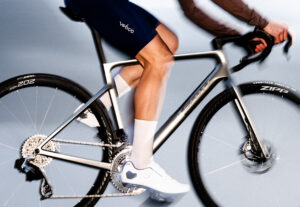
Despite increasing traffic pressure, safety concerns, and deteriorating road surfaces across much of the country, it would appear that demand for road bikes is healthy. As you can see in the table below unique enquiries have increased overall, with the R25k-R50k price band seeing the biggest percentage increase, up 20% to 961 enquiries in Q1.
Even more interesting is that if we drill down by region, Gauteng has seen the biggest increase in demand for road bikes across all price bands. The majority of enquiries sit in the under R25k price band, which has seen an increase of 10% year on year. While road bikes above R75k have seen a remarkable 52.7% increase in enquiries, indication increasing demand in a region where based on anecdotal evidence, we’d have expected the opposite.
Gravel is growing
We’ve watched the boom of gravel events, with interest, and not unexpectedly this is mirrored in the demand for gravel bikes in our marketplace. Enquiries on gravel bikes have climbed steadily year on year with an overall increase of 9.5% in Q1 2024.
Interestingly while Gauteng still generates more enquiries than the Western Cape at 405 vs 341, in 2024 enquiries have remained flat after two years of massive growth, while the Western Cape saw a 25% increase in enquiries. This mirrors the activity we’ve seen in the events space, with significantly more events taking place in the Western Cape.
In the bigger picture those numbers are still a small piece of the bicycle pie, but a piece that is growing.
E-bikes are charging
We see them everywhere on the roads and trails, and consistently hear from brands and news stories that e-bikes are driving growth within the bike industry. Once again the data supports the anecdotal evidence, and we’ve seen consistent growth in enquiries across all e-bike categories in the past year with 20% growth year on year in Q1. The Western Cape and Gauteng are evenly matched in terms of enquiry numbers in 2024, but the Western Cape has seen double the growth year on year in 2024.
Similar to Gravel bikes, E-bikes are still a small percentage of the totals, but are showing healthy growth.
Dual Suspension MTB on rocky terrain
Dual suspension Mountain bikes have traditionally been the bread and butter of our marathon focussed market, and it’s in this category that we can see signs of a crunch. There has been a consistent decline in enquiries after the peak of the Covid boom. Enquiries for Q1 2024 are down 7% year on year from 5298 to 4941. By no means a catastrophic decrease and still the largest category in terms of enquiries, but perhaps indicative of some saturation in this space.
Hardtails hold their own
Hardtail mountain bikes saw 13.5% increase in enquiries year on year for Q1. The overwhelming majority of these in the under R25k price band: suggesting that there is still demand for entry level bikes. It could be seen as a positive indication that there is still a steady flow of newcomers to the sport.
Disclaimers:
It’s important to note that we are not suggesting that the conditions on the Bike Hub marketplace echo those of the wider industry. We are simply reporting on what our data is reflecting for a rather unique segment of the cycling industry.
The following definitions apply:
- Unique enquiries: counts one enquiry per user per ad in cases where the user clicked multiple times or via multiple contact methods
- Region data accuracy: User region data is based on user IP address geolocation services provided by MaxMind. This is reported to be 60-80% accurate, with greater accuracy for larger cities and regions.
Thumbnail image credit: Meta.ai – prompt: “A bubble full of bicycles and parts of bicycles exploding”
Keen to know more?
Like us you might land up here with more questions than when we started.
Pop your questions in the comments and we’ll do our best to answer them.



Where are the stats for the Hard tail MTB