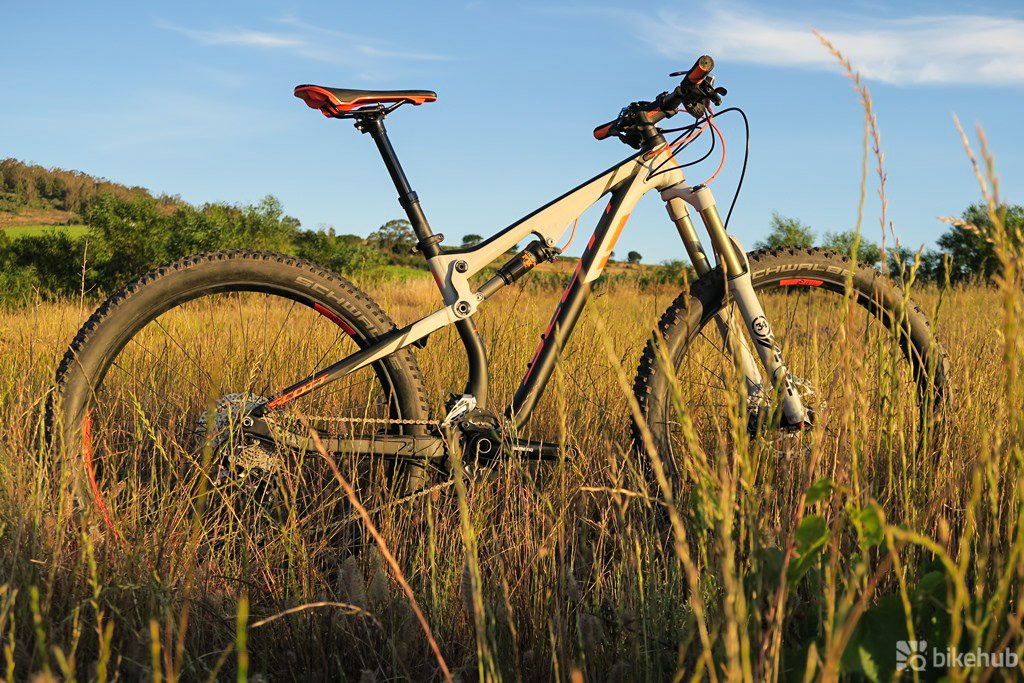
Plus bikes are designed to help give mountain bike riders more traction on the trails. SCOTT Sports was one of the first big players to launch 27.5+ bikes, with four models and 11 options in their Scale (Hardtail) and Genius (Dual Suspension) platforms. Courtesy of SCOTT Sports SA and Olympic Cycles, we were sent a Genius Plus 720 to test.
The Frame
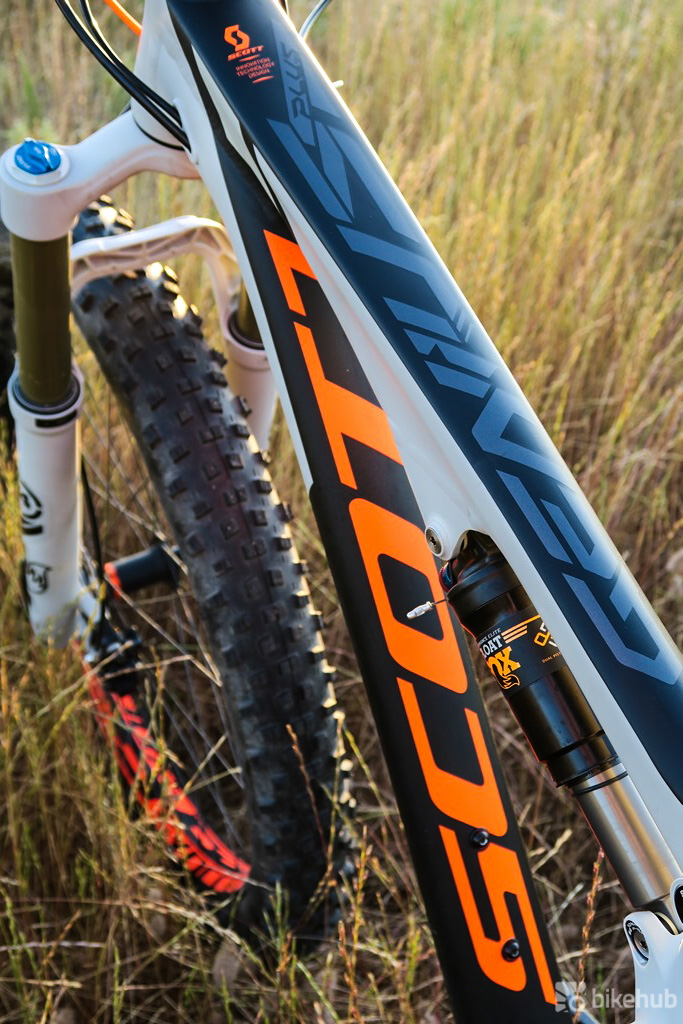
There are three models of the Genius Plus: the 700 Tuned Plus and 710 Plus feature carbon mainframes, and the alloy 720 Plus. Mainframes are shared with the Genius 900 models with a new alloy rear triangle to accommodate Boost 148mm hubs and tyre clearance for the wider rubber. Featuring 130mm travel on the rear wheel paired with a 140mm fork, the Genius Plus is aimed at riding trails all day long. The Boost148 rear wheel spacing and Boost110 fork allow for 29″ wheels to be fitted to these frames, adding even more versatility.
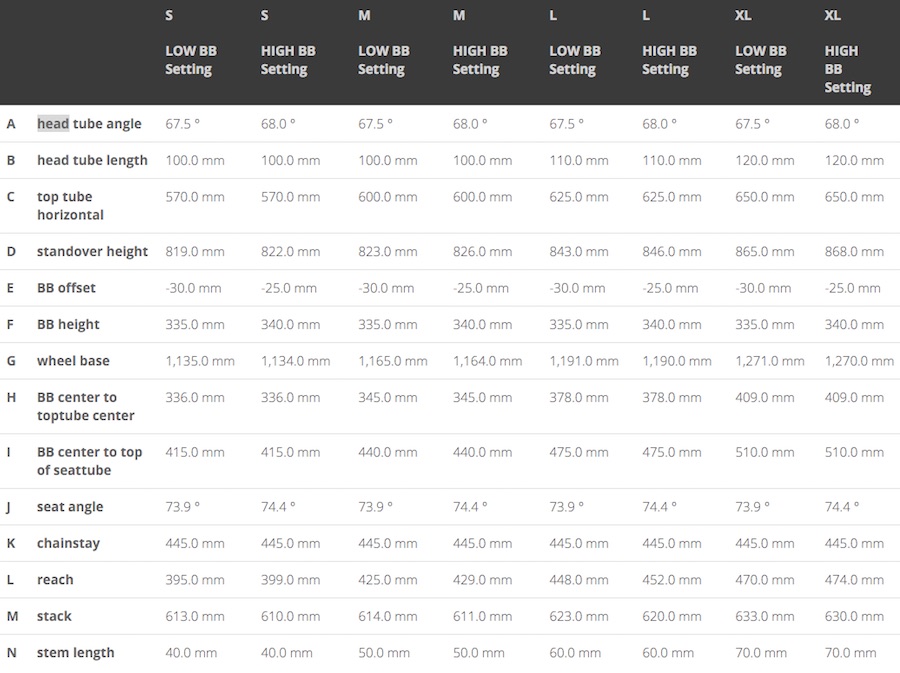
The frame is hydroformed using custom butted 6061 Alloy and designed around a link driven single pivot with a forged link activating the rear shock. The ace up its sleeve is adjustable geometry by way of a shock mount chip in the linkage. This is done by removing the shock mount chip and flipping it into either “high” or “low” mounting position. Doing this will change the bottom bracket height by 5.5mm and the head and seat tube angles by 0.5 degrees. It has a knock-on effect on other measurements as well – in actual fact, only the chainstay and seat tube lengths remain untouched.
Scott utilizes a progressive leverage curve and a relatively low main pivot which follows the current industry trend. This allows a more supple suspension at sag but with some ramp up as the wheel moves towards bottom out. Helping to give the Genius good small bump efficiency but keeps it from bottoming out or diving through its travel when the going gets rough. The relatively low main pivot location was a clear decision by Scott to maximize pedaling efficiency.
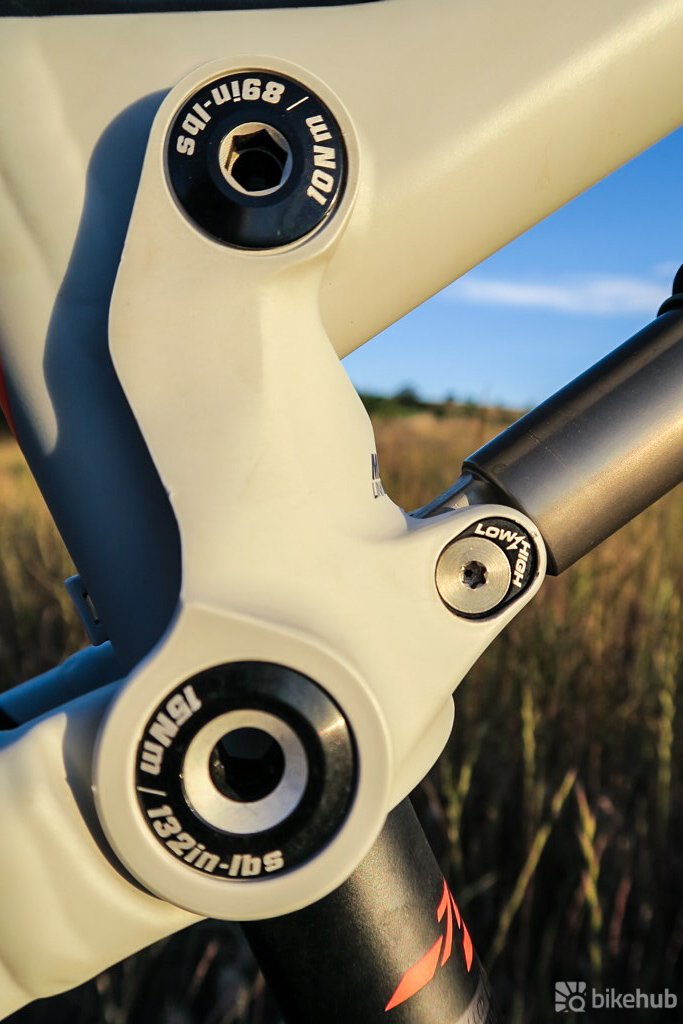
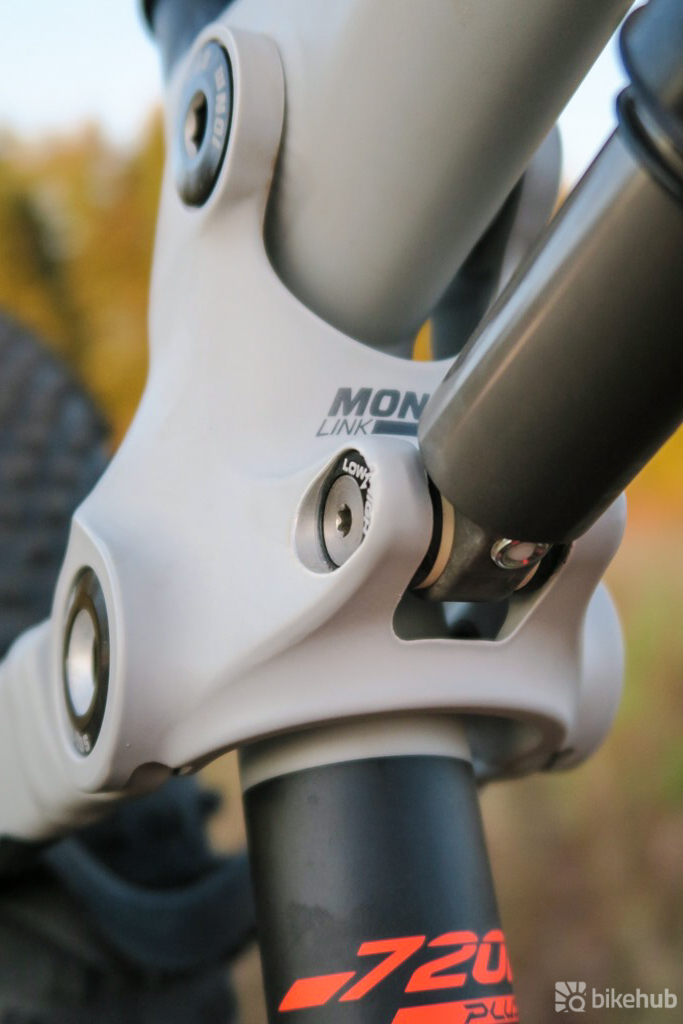
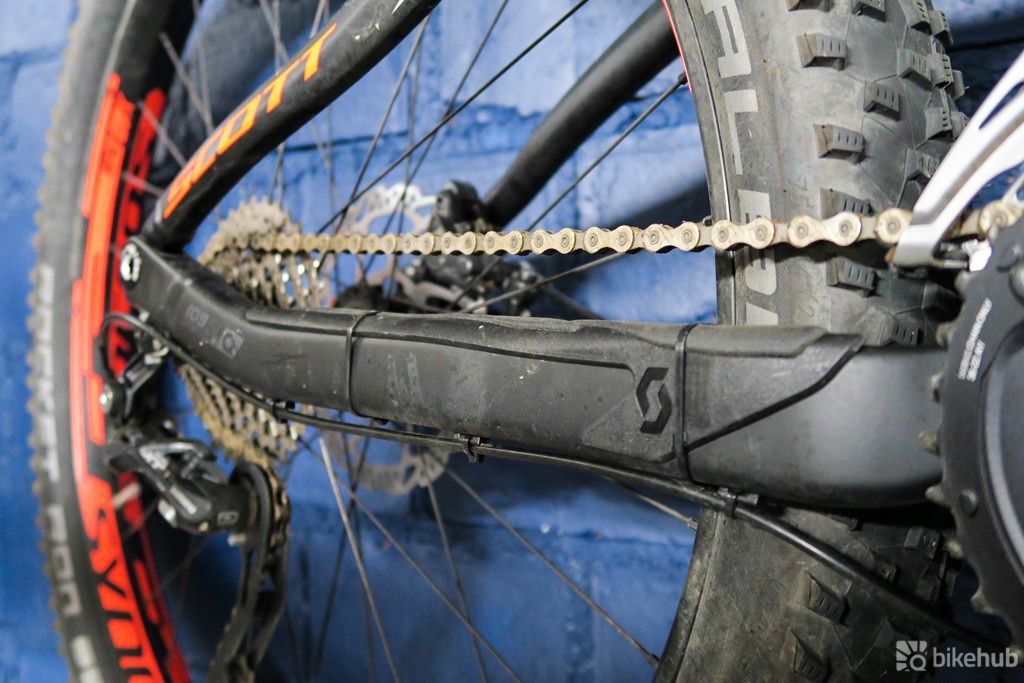
A “chainblocker” plate protects the frame from chain suck by blocking it from falling off the inner ring and damaging the frame. The system is compatible with 3x and 2x drivetrains. The optional ISCG adaptor allows riders to run a chain device for single or 2x chain set and is removable when not in use. More attention to detail can be seen in the IDS-SL dropout system which works with 142x12mm, 135x12mm and 135x5mm QR rear axle standards with bolt torque specs printed on the bearing caps.
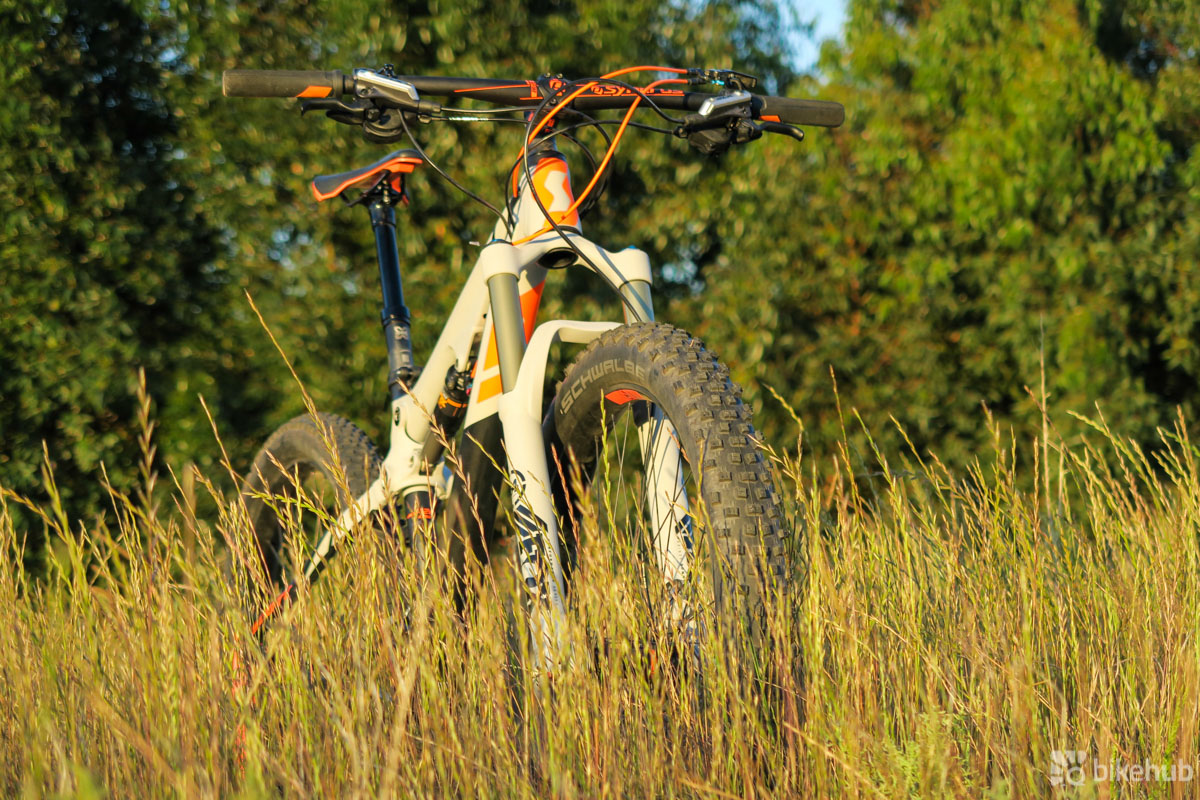
The 720’s navy grey, black and orange colour scheme works very well and makes it a real eye turner.
Features:
- 148mm Boost Rear Axle Width
- Adjustable geometry via shock mount chip
- Direct post mount rear brake
- IDS SL Dropout system works with 142x12mm, 135x12mm and 135x5mm QR rear axle standards
- Twinloc lever system
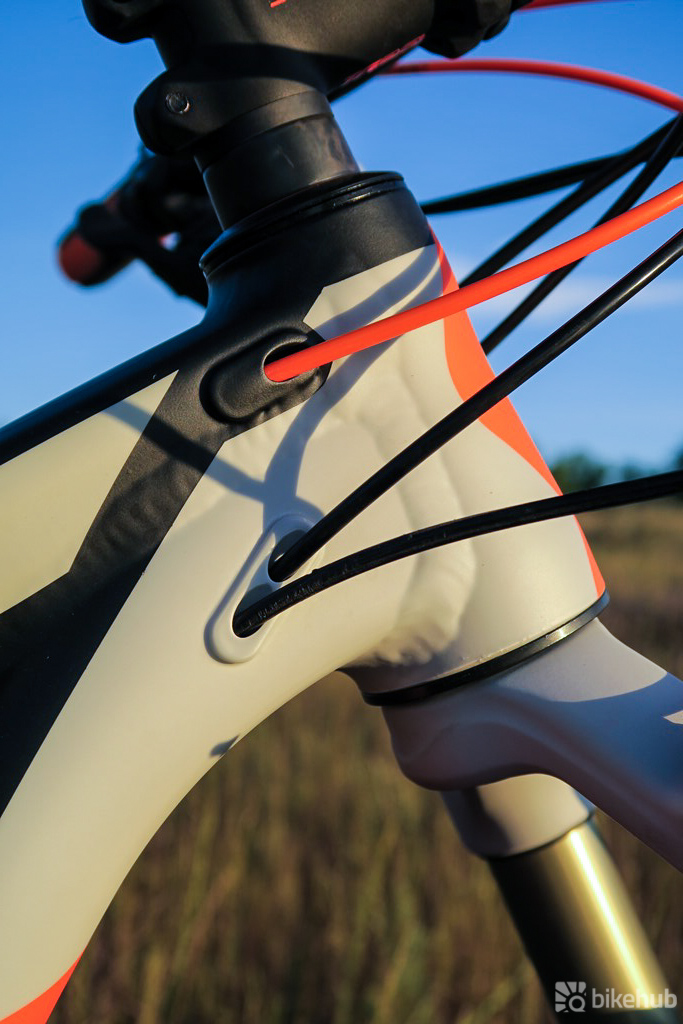
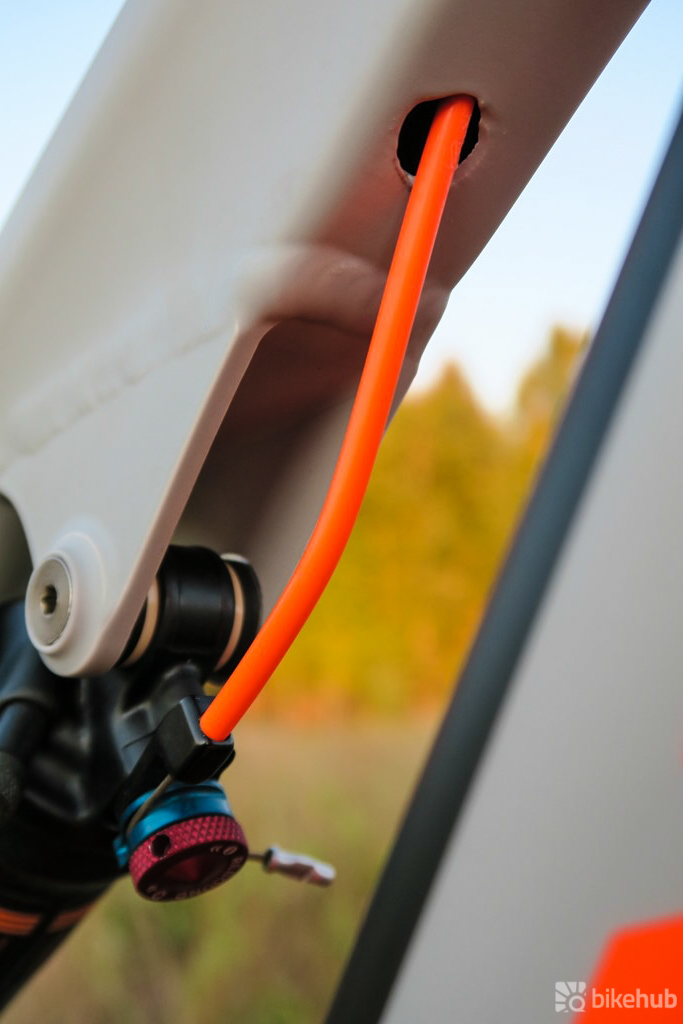
- Internal cable routing
What is Plus?
Plus-sized bikes spawned from a 29er / fatbike / 27.5 Frankenstein type experiment. 27.5+ tyres are generally somewhere between 2.8″ and 3” wide and stand much taller than a standard 27.5″ tyre. For those who don’t know, 27.5″ / 26″ and 29″ refers to rim size and not the outside diameter of the tyre. With an increase in width comes a higher sidewall and, consequently the outside diameter of the tyre is almost the same as a standard 29er tyre. However, thanks to the wider rims and significant increase in tyre volume, the handling characteristics are completely different.
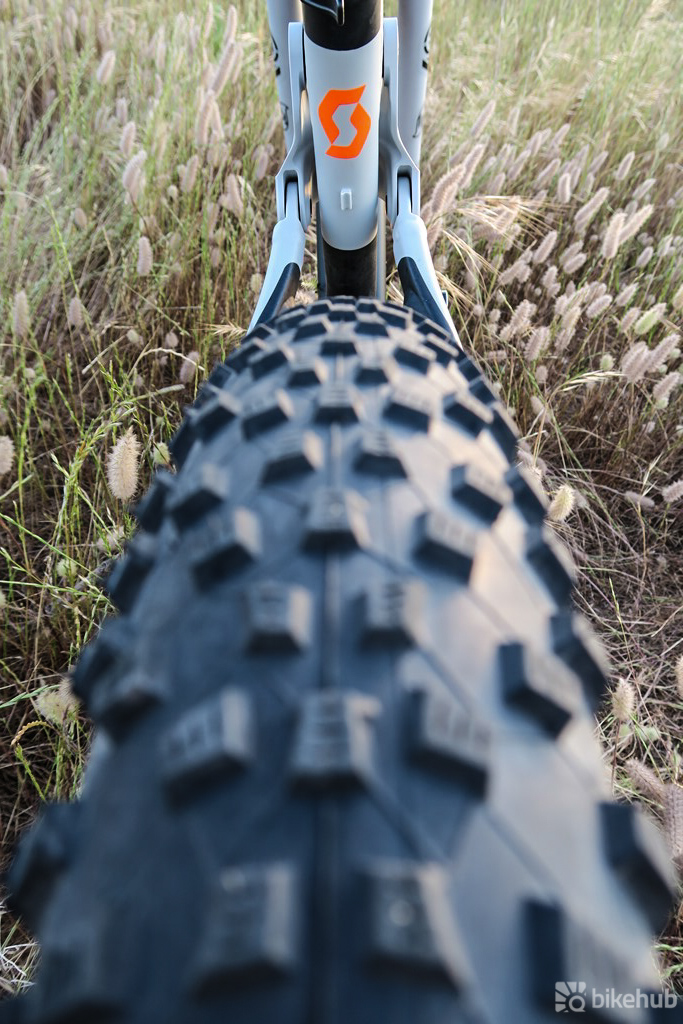
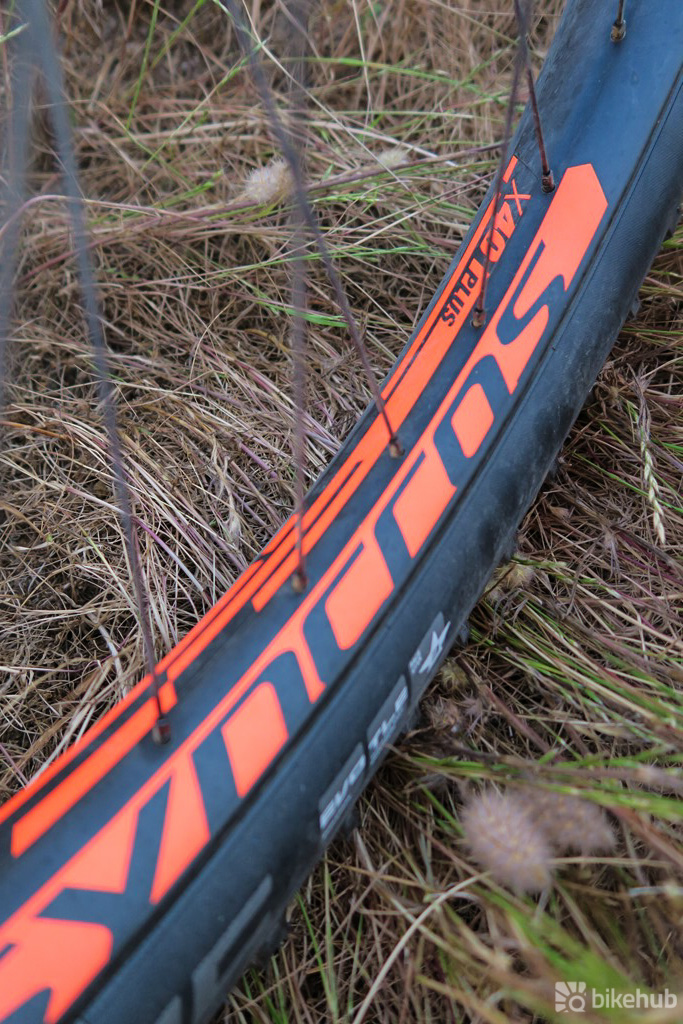
To allow the plus size tyres, rim width needed to be increased to provide a more stable base for the tyre to prevent folding over during hard cornering. There are currently several different rim widths doing the rounds. Scott, through their in-house brand Syncros, currently use a 40mm internal width, as they believe that to be the sweet spot.
Plus would also not have been possible without SRAM’s Boost 148 component standard. In short, rear axle width has grown to 148mm, up from 142mm Thru Axle and 135mm Quick Release, while keeping the same Q-Factor. The front axle is 10mm wider at 110mm.
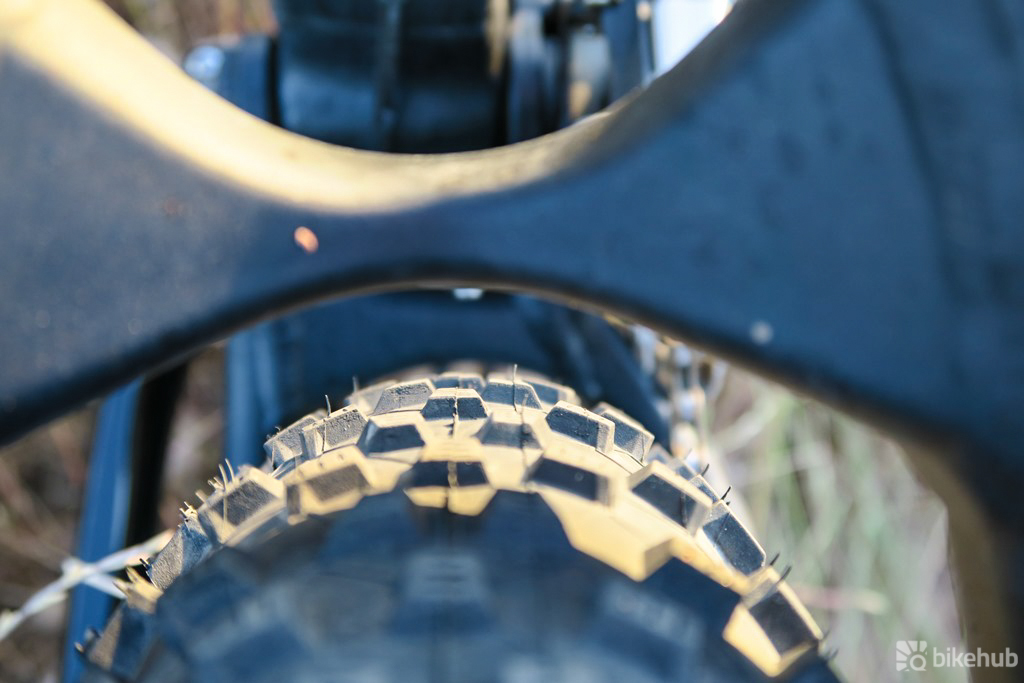
Schwalbe claim impressive numbers when comparing a 2.35″ tyre at 1.7bar / 25.5psi and a 2.8″ tyre pumped up to 1.0bar / 14.5psi. Snake-bite resistance is improved by 8%, the contact patch is 21% larger and they claim there is only a 1% increase in rolling resistance. These tyres do not have the same bouncy feel that fat bikes offer although there is some muted connection that helps it traverse rough terrain quite well.
The advantages of 27.5+ are:
- a larger contact patch for a huge increase in traction
- you can run low pressures without the tyre rolling on the rim or risking a snake bite
- the extra cushioning makes for a more comfortable ride, although not near fatbike levels.
In an industry where most new developments come from the desire to go faster (usually in XC, Marathon and Stage Racing with Enduro only recently pushing All Mountain and Trail Bike development), 27.5+ is a breath of fresh air as the focus has turned to comfort, increase in grip and fun factor for the every day rider.
Twin Loc Lever System
https://vimeo.com/6849224
Like most of their bikes, the Scott Genius Plus comes fitted with their patented TwinLoc system which is controlled by a handlebar mounted lever. When the lever is pushed to switch the shock to Lock mode, the fork is simultaneously put into Climb mode. Switching to Traction mode limits the rear shock’s travel to 100mm and puts the front fork into Trail mode.
The reduction in travel in Traction mode is achieved by reducing the shock canister’s air volume, creating less sag, which in turn raises the bike’s ride height, and slightly steepens the head angle. Pushing the lever to its second stop locks out the shock and fork entirely, turning the Genius Plus into a rock solid pedaling machine.
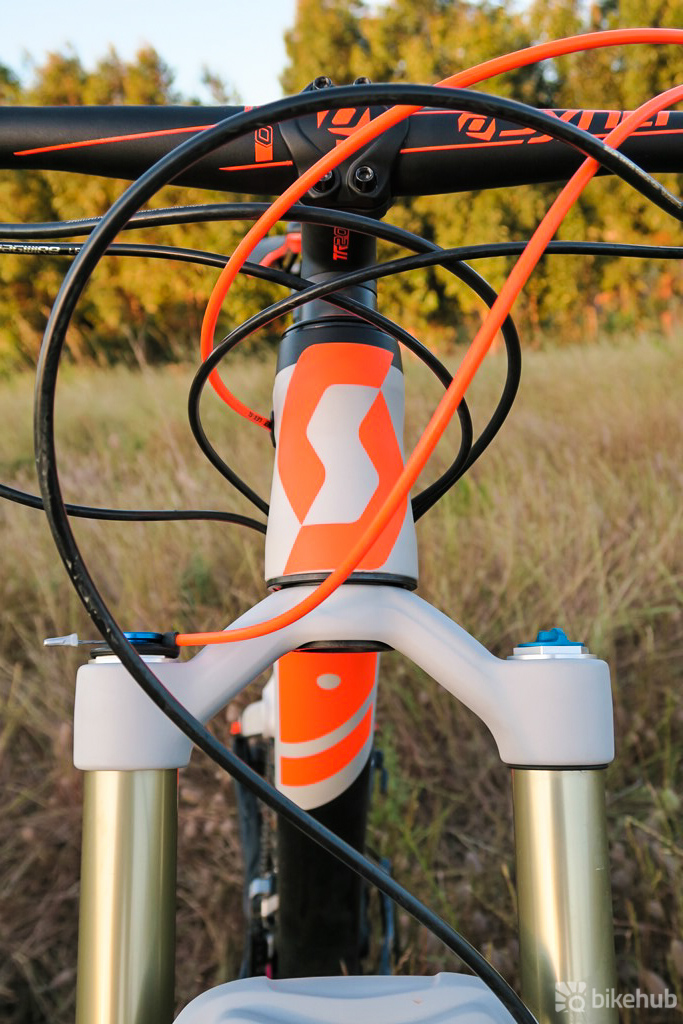
I’m not the biggest fan of the Twin-loc though. I can appreciate it on a bike that is meant to a beast in climb mode or where saving vital seconds can mean the difference in a podium or not, but on a bike that is meant to slay trails, I’d prefer to be able to separate front and rear lock out. Although I ride bikes as open as possible most of the time, I do add a bit of platform to the rear every so often, but just about never to the fork. The twin lock out lever also makes for a very busy cockpit.
Components
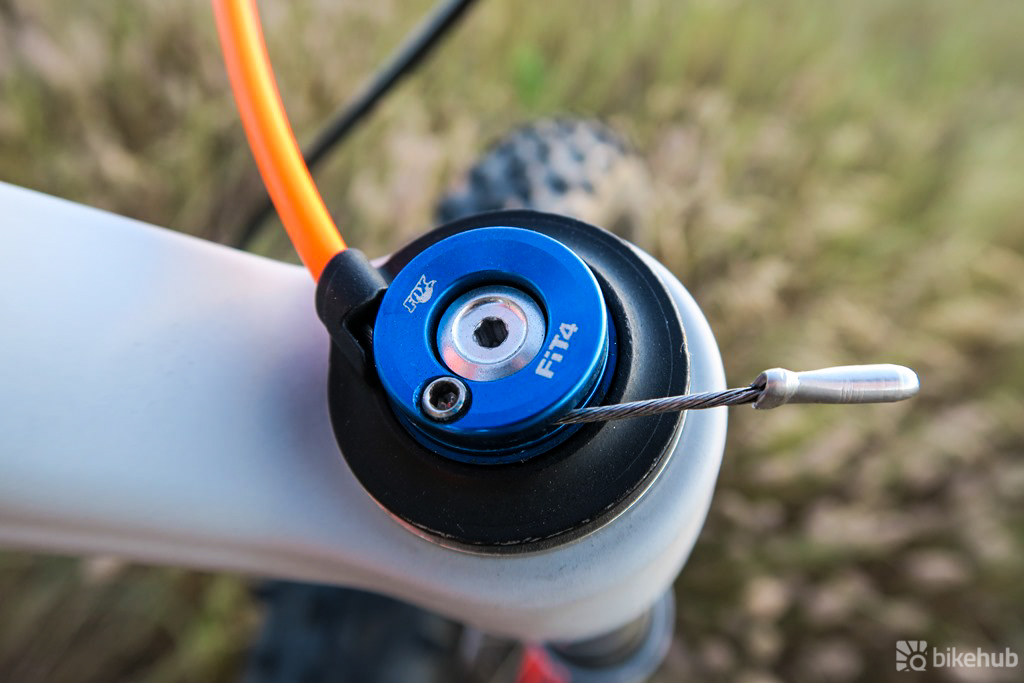
Fork: It’s great to see Scott fitting a Fox 34 as it will go a long way to keep you and the bike in check on technical terrain. With the traction and grip that comes with 2.8-inch tires, the extra stiffness and control from the Fox 34 was a welcome relief. The performance of the Fox 34 Float Performance FIT4 was good and a massive improvement over the 32 on the standard Genius 720 tested earlier this year.
Shock: The Genius Plus 720 comes fitted with a Fox Float Performance Elite. It features the new Dual Position System (DPS) which replaces the Lockout – Trail – Descend settings in favour of Firm, Medium and Open. The new valve design provides full lockout without compromising bump compliance, ride control and efficiency. As usual you have the option of external rebound adjustment, but it lacks the additional 3 clicks of low-speed compression adjust in the Open mode that comes standard on the Factory Series.
Testing the bike out on the trails confirmed that their new DPS is a big step in the right direction.
Drivetrain: Shimano parts are mixed and matched to make up the 720’s drivetrain. Performance was good and I never got the feeling that was a compromise in the quality.
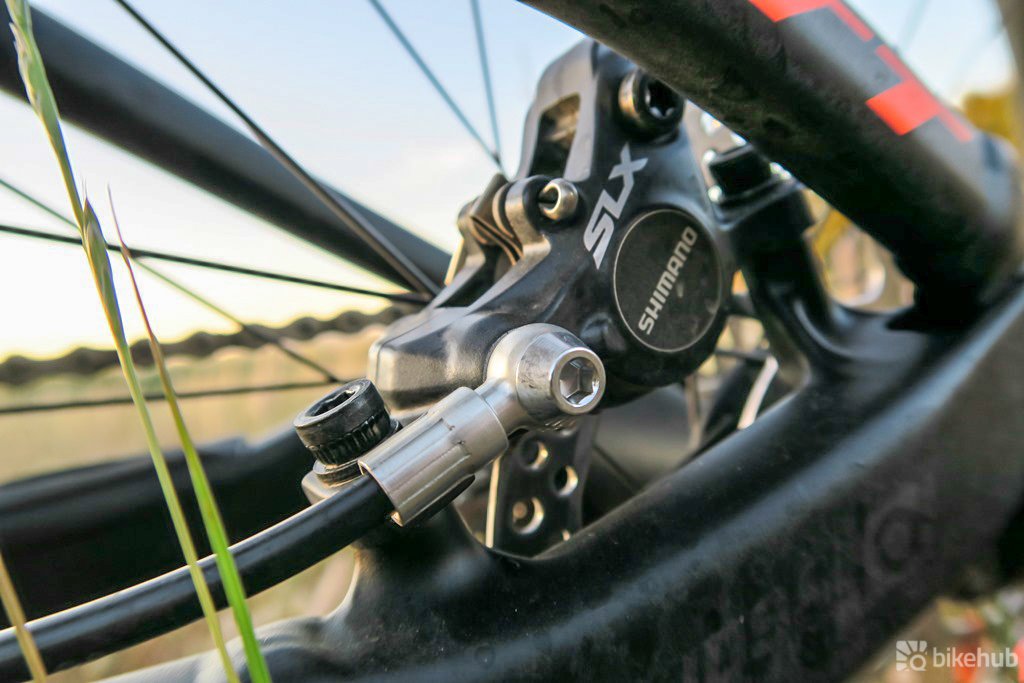
Brakes: We’ve said it before and we will probably say this a good couple of times more – Shimano SLX brakes offer very good value for money with the stopping power and overall feel on offer. Paired with 180mm rotors front and rear, there was no faulting these brakes.

Handlebar: A 740mm flat bar from Syncros and suitably short stem is specced from the factory. Cockpit setup is a very personal choice, but this combination should suit most.
Seatpost: I was glad to see the Plus version of the 720 come standard with a dropper seatpost, as it was a piece of kit I missed when I reviewed the Genius 740 earlier this year. The X-Fusion seatpost performed as expected and with internal cable routing it looks the part as well.
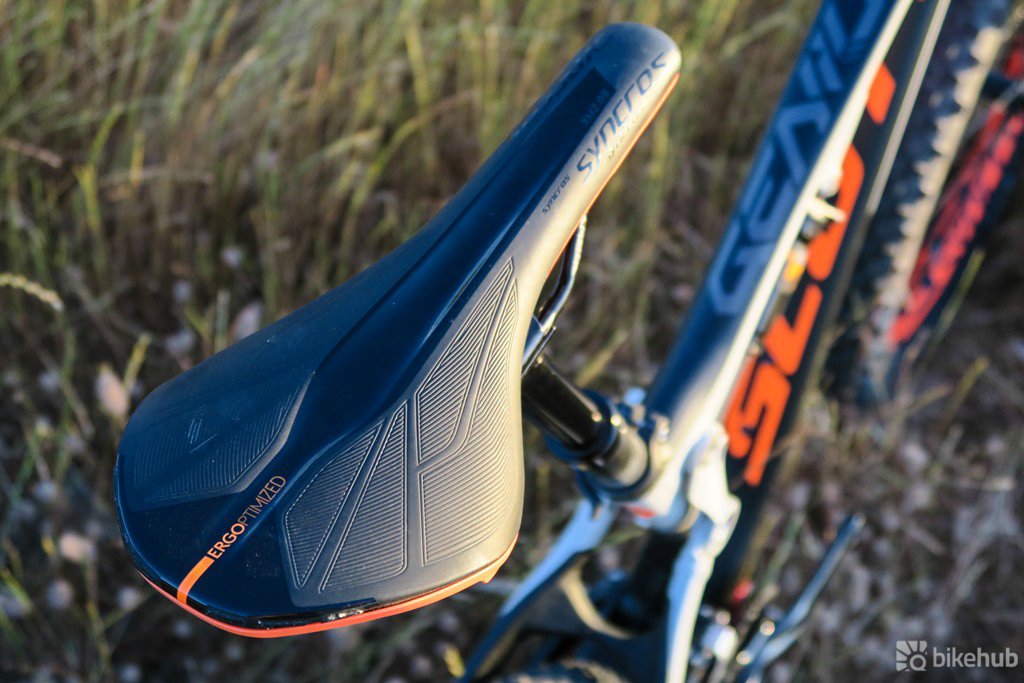
Saddle: The Syncros XM2.0 with Cromoly rails was comfortable and its orange base fitted in nicely with the rest of the bike.
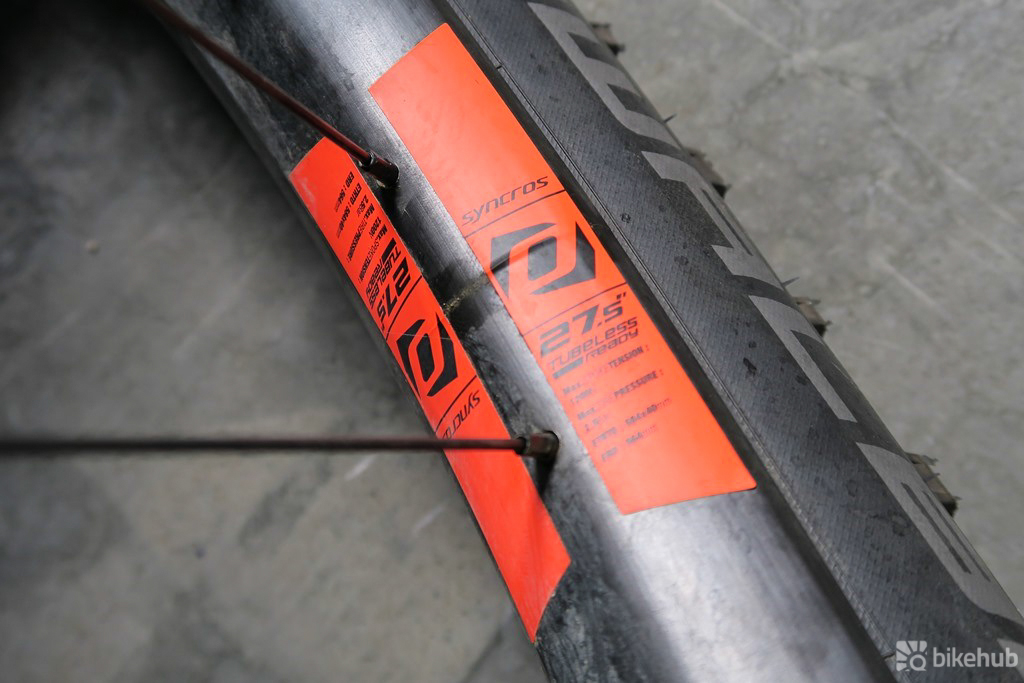
Wheelset: The Syncros hubs made by Formula are laced to Syncros X-40 rims using DT Swiss Champion spokes. I have no reference for 27.5+ wheels other than a couple of quick spins. What I can say is that I like the fact that Syncros has gone suitably wide with them. There are some plus bikes running on rims that are narrower than what is considered the norm on 27.5″ and 29″ wheelsets. If plus bike rims are too narrow, the contact patch size decreases resulting in less traction – negating the whole point behind going Plus.
Tyres: All Scott Plus bikes will be supplied with Schwalbe Nobby Nics or Rocket Rons dependent on model. The Genius Plus 720 comes with a Nobby Nic Evo front and a Rocket Ron Evo rear. The 820 gram 2.8″ tyres look like their counterparts but on steroids. With 27.5+ being this new to the market there is very little reference and comparison available. We hope to change this in 2016 by spending as much time as possible on different plus bikes, tyres and wheels.
On the Trail
I feel that the 29er revolution, 27.5″ revival and fatbike fad have allowed us to look at yet another wheelsize with some objectivity. It has opened (some) minds and had we been this accepting to trying something different when 29ers came along, the Internet would have been a far quieter place.
I say that, because to understand a plus bike you have to ride it. And riding only once won’t do as there is some adjustment required from the rider’s side. As an example, I ride “standard size tyres” mounted to wide Derby Rims on my Mercer Hungry Monkey. They are 35mm internal and 40mm external and the effect that alone had on the tyres required some adjustment in how I ride.
Going to 2.8″ tyres is a whole new world. Not only do they roll impressively well, but the speed you can carry through, over and around the trail is a mild shock to the system. Maybe if you’re a Minnaar who can corner at breakneck speeds as it is the difference would not be that big but here is a great cheat upgrade for the average rider looking to gain some pace. Much like a 29er shaved seconds off over a distance by just being 3 inches bigger, so too will the bigger contact patch on plus tyres shave seconds off.
The only catch here is you will need to stay off the brakes and unlearn some “comfort braking”. Trust the tyres to grip and it will rip around berms and leave you with smiles for miles. Initially I did notice the bigger tyres when making quick direction changes, the added weight on the outer of the wheels creates a gyroscopic effect, and it’s hard to ignore at first. Leaning the bike over onto the side knobs of the tyres required a bit more body language. However, after a ride or two, I came to terms with these changes in technique and it felt weird going from the Genius Plus to a trail 29er with its “skinny” tyres.
The bigger contact patch has another spin off, a massive increase in stopping power as the tyres bite down and drag you to a halt far quicker. Fortunately this is also something you adjust to after a couple of rides. Just remind yourself of the fact when jumping back on your skinny bike.
Something else that stood out for me was on short technical climbs or having to pedal your way through sections. With the extra traction it feels like the bike digs into the trail and tanks its way to the top or other side. I was reminded of the difference it makes to drop a 4×4’s tyre pressures when tackling rough terrain. There’s also a sense of extra predictability when the bike does drift on loose over hard-pack. It would be nice to be able to experiment with different tyres to get a sense of how much is down to the tyres and how much of it was just pure plus-goodness.
The suspension on the Genius Plus seems to benefit from the bigger tyres. It felt composed even through the roughest terrain. The Fox 34 performed very well and was the first fork from their Performance range that I didn’t feel like it is taking away from the fun factor.
Although the handlebars aren’t narrow, I would go a little wider to help muscle the bike around.
Verdict
In terms of specification, the 2016 Genius Plus solves all the component choices I would have liked to change on the Genius 740. It comes standard with a Fox 34, dropper seatpost and grippier tyres. The Genius Plus offers all of those items in a package that handles and performs well over all terrain.
The Genius Plus allows you to go faster with more control and climb steeper sections with greater ease. Chances are that you won’t suddenly challenge for a podium in XC races but, with all the stability and traction you could ever wish for in a package that rides and handles much like a regular bike, it’ll let both newcomers and more experienced riders do more and have fun while doing it.
All you need to do is open your mind and give it a good go. Chances are you will stay or dig through your drawers as you seek answers to cycling’s N + 1 equation.
Full Specification:
- FrameGenius PLUS Alloy 6061 custom butted, Hydroformed tubes / tapered Headtube, BB92 / U-Mono Link / rear 180PM, IDS SL DM dropout for 148x12mm Boost, BB height adj. / Full Internal Cable Routing, 130mm rear travel
- TravelFront: 140mm, Rear: 130mm
- ForkFOX 34 Float Performance Air, FIT4 3-Modes, Boost 15x110mm QR axle / tapered steerer, Lockout / reb. Adj. / 140mm travel
- Rear ShockFOX Float Performance Elite / 3 modes, DPS / Lockout – Trail – Descend, reb. Adj. / 190X50mm
- Remote SystemSCOTT TwinLoc Remote Technology, 3 modes front and rear / integ. clamp
- HeadsetSyncros Comp / Tapered 1.5″ – 1 1/8″, semi integ. OD 50/61mm / ID 44/55mm
- F. DerailleurShimano Deore FD-M618-E / DM
- R. DerailleurShimano XT RD-M781 SGS / DM, Shadow Type / 20 Speed
- ShifterShimano Deore SL-M610-I, Rapidfire Plus / 2 way release, Ispecs
- BrakesShimano SLX M675 Disc, 180/F and 180/Rmm SM-RT54 CL Rotor
- CranksetShimano FC-M627-B Boost, 2-piece Design, 36Ax22 T
- BB-setShimano BB-MT500-PA / shell 41×89.5mm
- HandlebarSyncros FL2.0 T-Bar, Alloy 6061 D.B. / T shape Flat / 9° / 740mm
- StemSyncros TR2.0, 6061 / 4D forged / oversize 31.8mm, 1 1/8″ / +6° angle
- SeatpostX-Fusion Hilo Strate custom / 125mm adj., internal cable routing / remote
- SeatSyncros XM2.0 / CROM rails
- Hub (front)Syncros CL811 / Boost 15x110mm, made by Formula
- Hub (rear)Syncros CL148S / Boost 148x12mm, RWS axle / made by Formula
- ChainKMC X10
- CassetteShimano CS-HG50-10, 11-36 T
- SpokesDT Swiss Champion Black 1.8mm
- RimsSyncros X-40 / 27.5″ / Tubeless Ready, 40mm wide / 32H / Eyelets
- TyresSchwalbe Front: Nobby Nic EVO / 2.80×27.5; Rear: Rocket Ron EVO / 2.80×27.5 PaceStar compound / Tubeless Easy
- Weight13.8 kgs
- Retail PriceR46,000.00
Geometry
From the Manufacturer:
The phrase “Any Trail, Any Time“ was coined a few years back to describe the Genius series. The all NEW Genius 720 Plus makes that phrase ring even truer. Adding plus sized wheels to what is already one of the most capable rigs on the market ups the level of traction, comfort, and most importantly fun hogging. Sporting an Alloy frame, the 720 comes in at a lower price point. Rocks, roots and boosts beware, this bike is ready to rumble.


 , so what you saying is compromise between skinny and getting a few flats vs a bit fatter and heavier but no worries about tyre issues?


Totally.
I think of these bikes and fatbikes as a bit like the BMW X6. Personally I'd never ever even consider one and think it's completely pointless in light of the X5. But some people obviously love them.