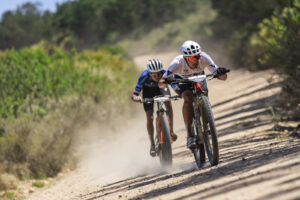
With temperatures at the Attakwas Extreme predicted to be in the mid-forties this weekend, staying fuelled and hydrated is going to be key to a safe and successful ride. We had a quick phonecall with coach and Sport Performance specialist Prof Mike Posthumus to cover the key points on staying fuelled, hydrated and heat management. Here’s what he had to say:
Carbohydrate Intake
I am reluctant to give carbohydrate recommendations so close to a race because the strategy should be well practised, and individuals should have been training their gut.
The general recommendation is 90 grams of carbohydrate per hour. That would be an ideal. However, individuals might struggle to consume and digest 90 grams per hour if they have not been training their gut for it, so it needs to be individualised, and based on experience.
A further issue which is very important to mention, is that nutrient absorption is far lower in the heat because when racing in the heat, blood flow is distributed to the periphery to try and cool the body. When blood flow is redirected to your periphery, there’s less blood available in your digestive system, and this then causes decreased absorption in the gut. So athletes racing in the heat need to be extra cautious.
Fluid Intake
Fluid requirements remain a contentious issue. The best guideline to use is simply to drink to thirst. All studies that have compared drinking to thirst versus giving specific guidelines have shown no differences.
Hydration Solutions
A well-formulated isotonic carbohydrate solution may actually be more hydrating than pure water. The reason for this is that a good carbohydrate drink contains the correct combination of carbohydrates and electrolytes to be able to optimise hydration when you’re drinking, so a far greater amount of water can be reabsorbed. However palatability and preferences need to be considered.
How Much Fluid to Carry
Plan depending on the speed you are planning to ride, or the time you are planning to take from water point to water point. Make sure that you have enough fluid on you for approximately 800 millilitres per hour. If you are planning to take three hours between water points, you’re going to need more than two bottles. And this is where carrying a backpack can be useful.
Heat management
Obviously, it’s a little bit late to start heat acclimation, but the key principle is that you want to keep your core temperature as low as possible during the race. Exertional heat stroke is related to your core body temperature, and the core temperature rise that happens during exercise in the heat. There are few things you can do to manage the heat:
The first is to ensure that you start the race well hydrated. I would recommend drinking an electrolyte solution before you go to bed, and while warming up in the morning.
Then drink regularly during the race, and stay as cool as possible. Ice your neck and wrists at water point to bring your core temperature down, and stay in the shade wherever possible.
Lastly, pace yourself conservatively, and ride within yourself to avoid the rise in core temperature.
Warning signs to look out for
Be aware of how your body is responding to the heat. Symptoms like dizziness, confusion, or a significant increase in rate of perceived exertion (RPE) indicate the need for immediate cooling and hydration.
Questions for Mike?
Let us know in the comments and we’ll do our best to get them answered.