Tech

First Ride: SRAM Eagle XX1

By BikeHubCoreAdmin · 64 comments

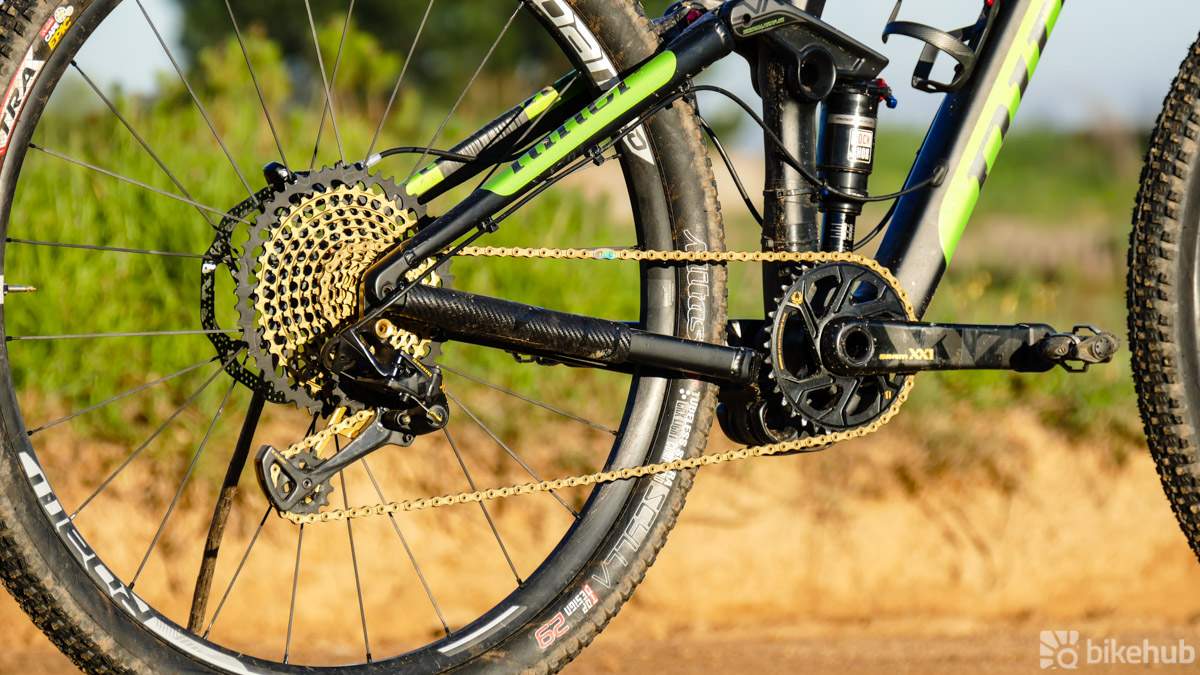
SRAM introduced the first ever 12 speed mountain bike groupsets in March with the announcement of their Eagle XX1 and X01 drivetrains. While the Eagle X01 drivetrain is suitable for all riding styles up to and including Enduro racing, the Eagle XX1 is geared towards cross-country with the use of light weight materials.
ccs-62657-0-05074600-1471872909.jpg

The Technology

Cassette

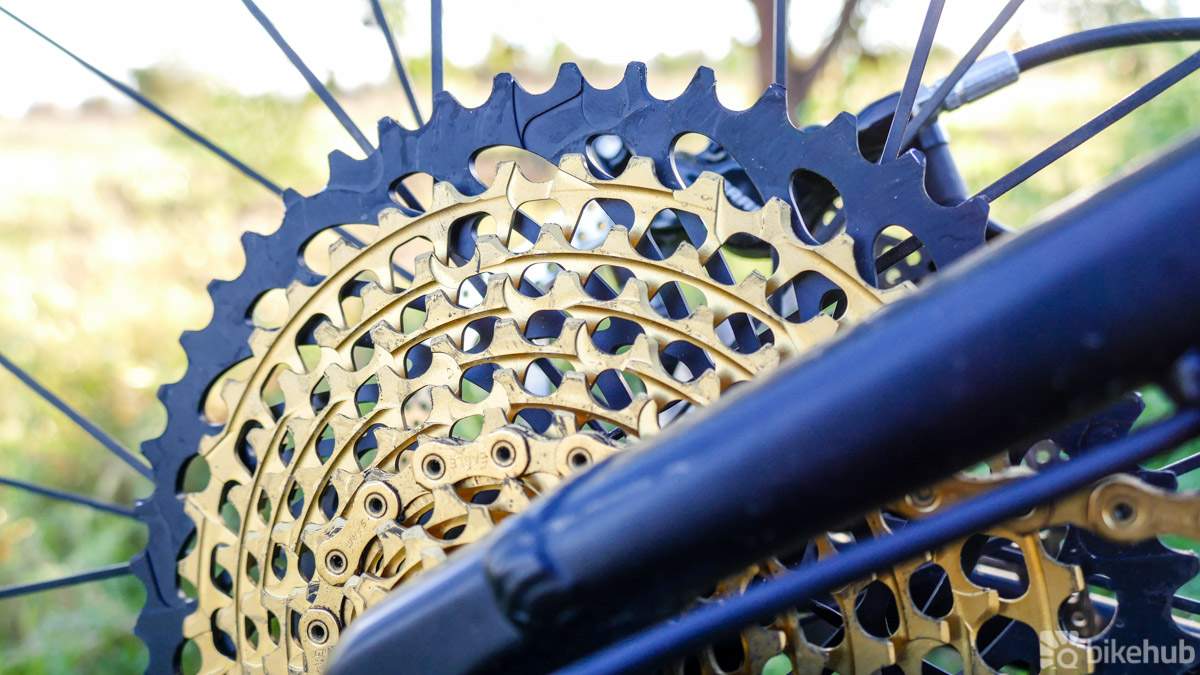
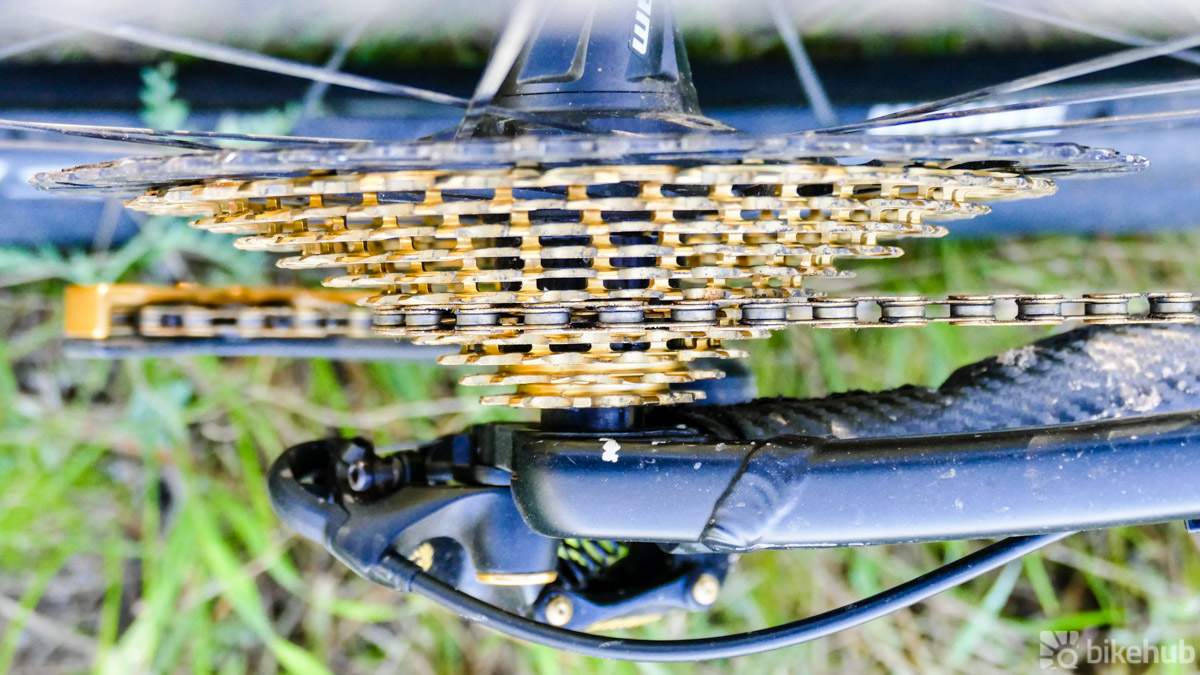
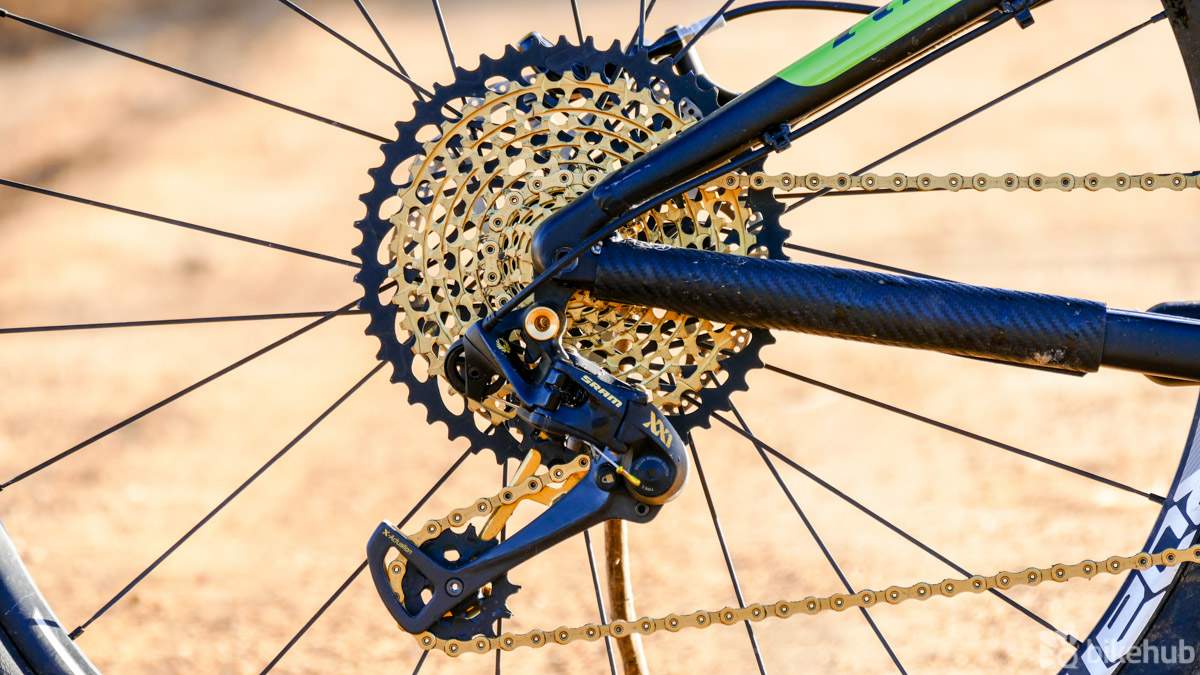
In order to fit in the extra 12th gear, an entirely new cassette had to be built with the cogs spaced closer together than its 11 speed counterparts. The first 11 gears mirror SRAM’s 11 speed cassette (10-12-14-16-18-21-24-28-32-36-42) which means an easy learning curve for those already familiar with SRAM’s 1x drivetrain, there is simply a bigger cog at the end of the range. The dedicated 12-speed spacing makes compatibility an issue with the crank being the only part that can be carried over from SRAM’s 11-speed system.
ccs-62657-0-65729000-1471872912.jpg
ccs-62657-0-90844000-1471872916.jpg

With the addition of the 50-tooth granny gear, riders will need to jump up a chainring size or two to take full advantage of the cassettes 500% range. SRAM Eagle with a 36-tooth chainring will give you the same top-end and low range of a 39/26 2x drivetrain running an 11-36 cassette. The Eagle XX1 cassette weighs a claimed 355g (87 grams more than 11-speed XX1) and is constructed using SRAM’s X-Dome technique, where nine of the cogs are machined out of a single piece of steel billet. Two of the three remaining cogs are made separately from steel, and the final 50-tooth cog is aluminium.

Chainring
ccs-62657-0-69060800-1471872913.jpg
ccs-62657-0-97884600-1471872909.jpg

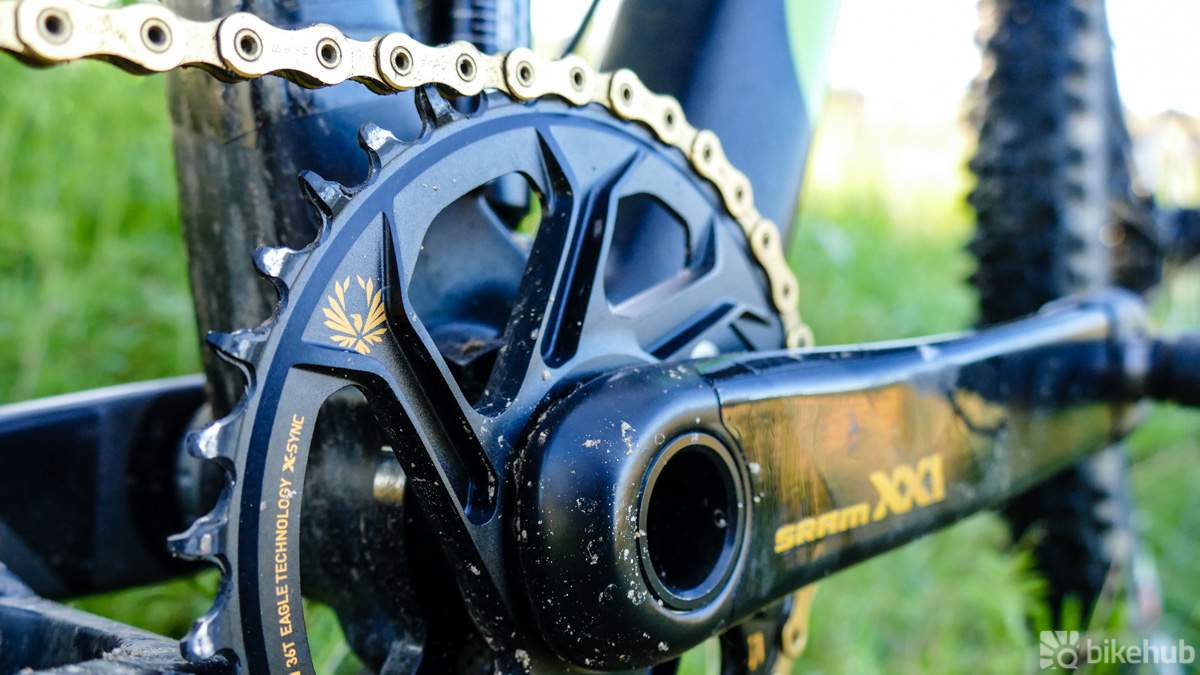
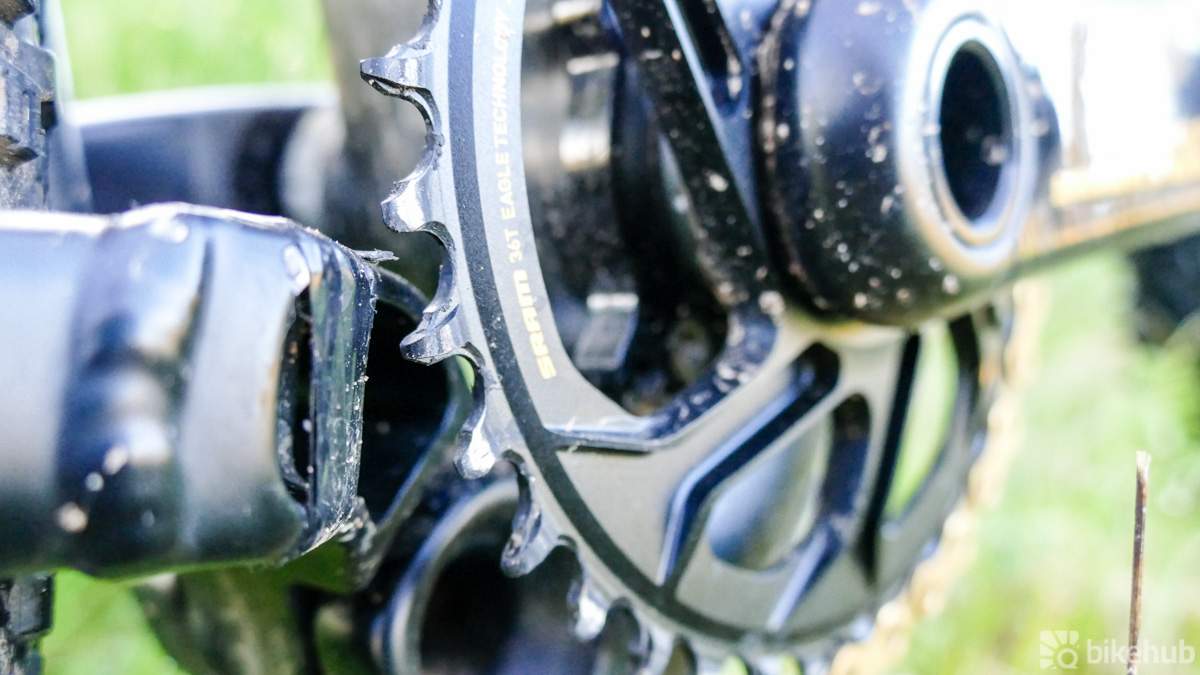
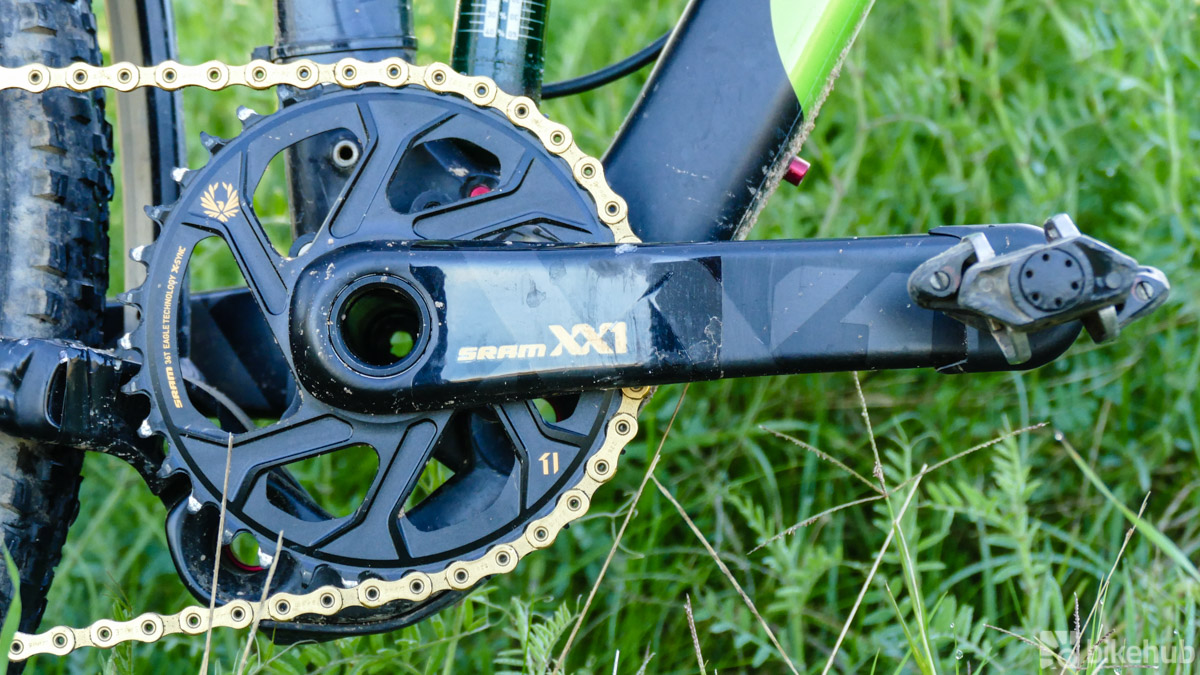
SRAM claim that the new X-Sync 2 chainring tooth profile lasts much longer than than existing X-Sync rings and that the new tooth shape has more mud clearance. Cutouts in the material also prevent chain suck as the teeth on the ring wear. In addition, the new X-Sync 2 distributes load over more teeth to reduce wear and the trailing edge has been removed to quieten release at the bottom of the stroke. The chainrings are direct-mount only and available in even number sizes from 30 to 38.

Derailleur
ccs-62657-0-49868900-1471872916.jpg
ccs-62657-0-48289300-1471872919.jpg

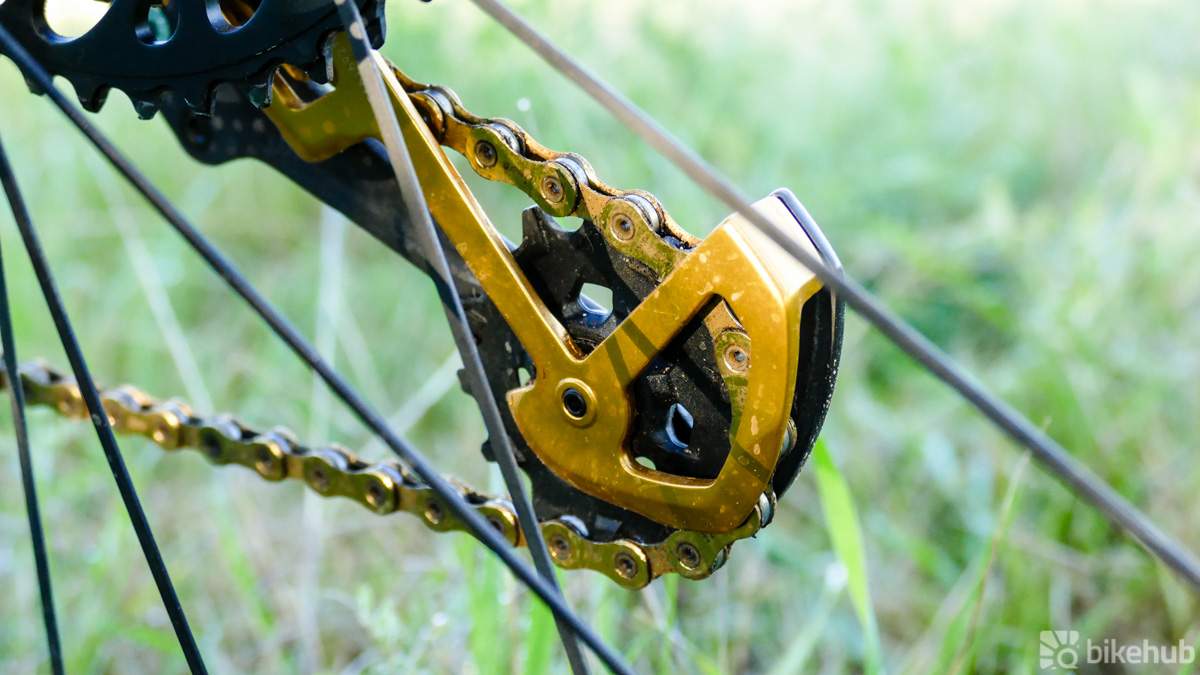
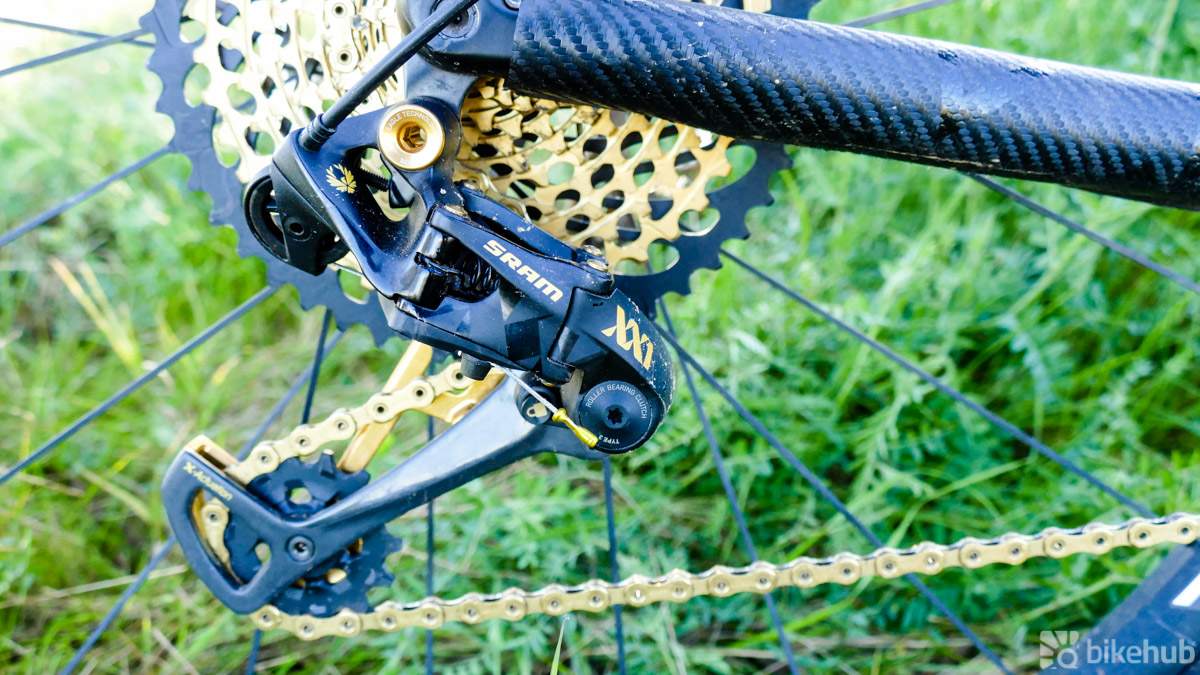
The new 12-speed derailleurs feature a larger 14-tooth X-Sync lower pulley (two teeth larger than its 11-speed sibling) to accommodate shifting across the extended range and sport a quieter, smoother Type-3 roller bearing clutch mechanism. The B-knuckle (the portion of the derailleur that is threaded onto the hanger) has been tweaked to help keep the mounting bolt from unthreading itself. SRAM have also added a bushing around the mounting bolt, allowing the derailleur to pivot forwards and back without bringing the bolt with it. The XX1 Eagle derailleur gets a carbon fibre cage and a titanium spring, allowing it to weigh in 12 grams lighter than the aluminium cage on Eagle X01.

Further updates see the Cage Lock button relocated away from the front of the derailleur to better protect it from impacts

Shifter

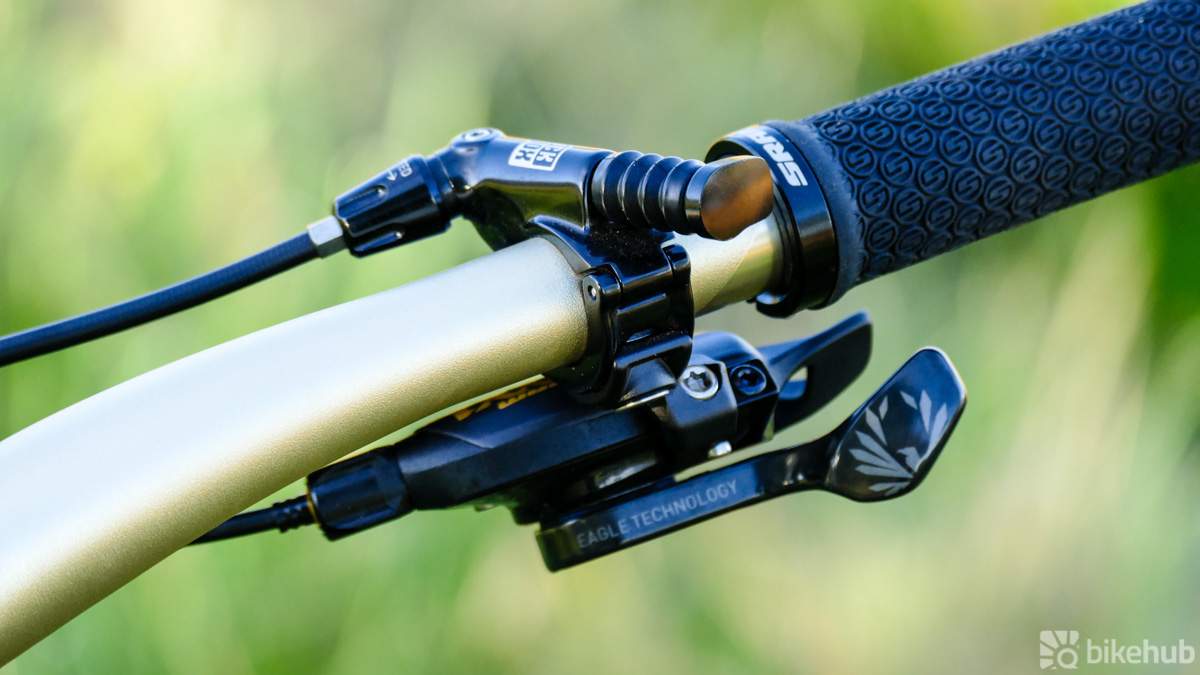
The shifters have been updated to include a 12th gear and improved to enhance trigger feel, precision and durability. The position-adjustable shift lever and the top cover are made from carbon fibre to reduce weight. There is also a Grip Shift option for those who prefer them over a more traditional trigger shifter.
ccs-62657-0-15924500-1471872920.jpg

Chain

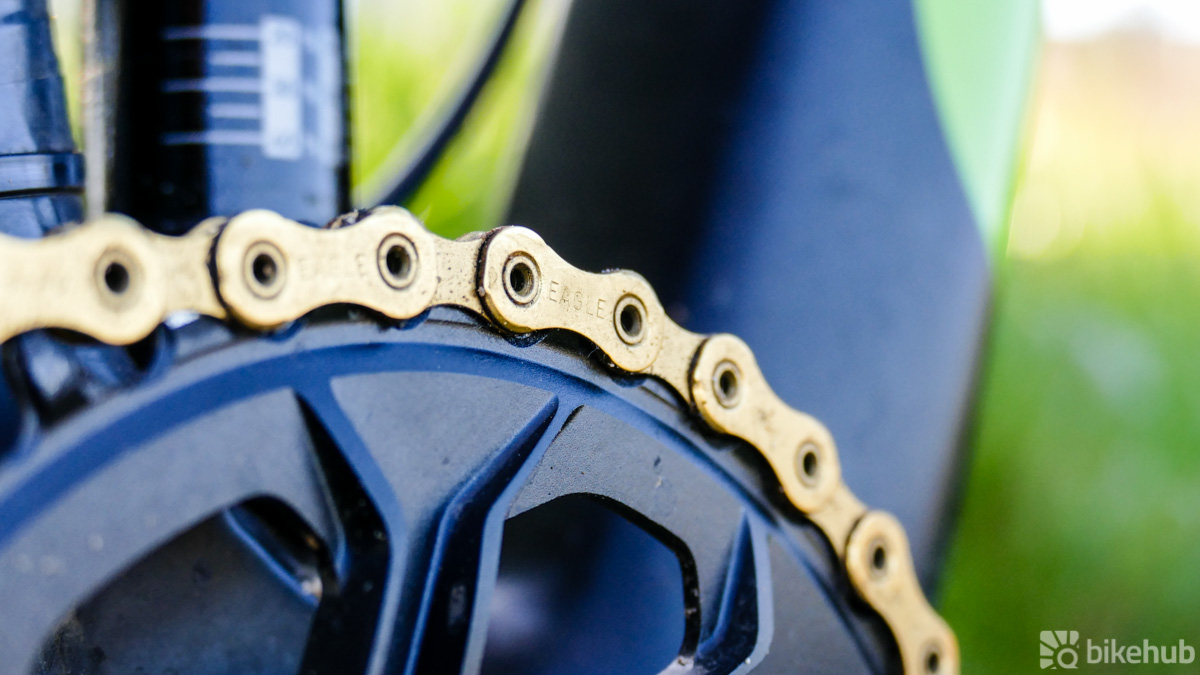
The Eagle chain links have a smooth radius, with no sharp edges or chamfers, which yield a significant reduction in noise, friction and wear on chainrings and cassette cogs. This design also allows for a flatter plate, which means more consistent chain riveting and greater overall strength. The plates have smooth, rounded edges, as well as chamfers at the rivet holes, so the rivets sit flush with the outer plates. Hard Chrome technology extends the chain’s optimal performance life and a Titanium Nitride coating decreases corrosion and further reduces friction.
ccs-62657-0-62329600-1471872922.jpg

SRAM claim that the Eagle chain is the quietest, strongest and most wear-resistant chain in the world and that its unique design also provides significantly improved wear resistance on Eagle cassettes and rings. The chains are made in SRAM’s own factory in Portugal giving them full control over quality. In their quest to design a quieter, longer lasting drivetrain, SRAM built all-new machines and utilized new processes in the development of the Eagle chain. It is not just narrower.

The Eagle Power Lock chain connector was also redesigned with Flowlink technology that provides better chain-guiding and increased longevity. Flowlink is marketing talk for ultra-smooth inner-plates that are completely devoid of square edges, resulting in a chain that engages the cassette and chainring with far less friction, for quieter performance and better wear life. The design allows a narrower overall profile that can withstand greater angles, and also allows for a flatter outer-plate, which means more consistent chain riveting and enhanced overall strength.

Crankset
ccs-62657-0-91337800-1471872922.jpg

The new Eagle XX1 crankset features a special hollow internal architecture, combined with SRAM’s proprietary Carbon Tuned lay-up, that has enabled them to build a crankset that is said to be the lightest, stiffest and strongest on the market. This hollowed-out design however limits it to cross-country and trail duty only.

On the Trail

In preparation for my time on Eagle, I took my 1×11 equipped bike out for a couple of rides as I felt it would give me a good point of reference to the changes in design and extended range of the Eagle system.
ccs-62657-0-32679200-1471872925.jpg

Knowing that the biggest jump in number of teeth was from the 42T to the new 50T Granny, I shifted between these cogs under varied circumstances, but each time the chain slotted into place without any drama or a feeling that it was a stretch for the drivetrain. Overall, the shifting experience was “positive” with no ghost-shifting or delay in engaging when shifting up or down.

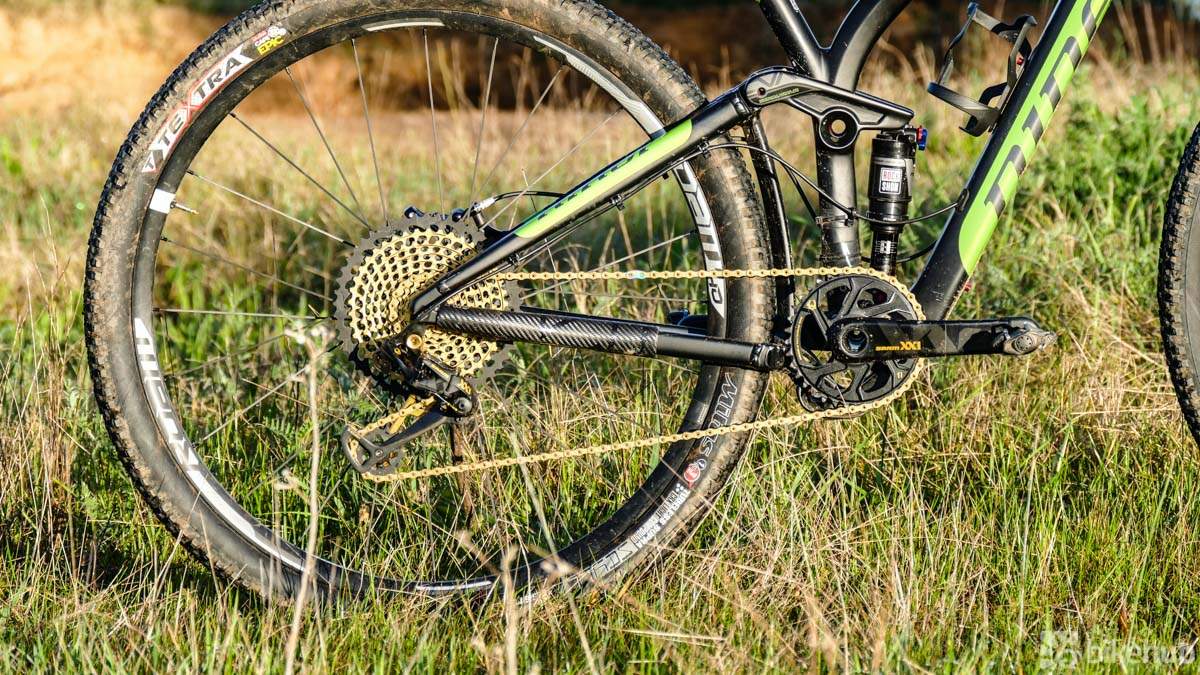
However the first thing I noticed when I hit the trails on the Eagle equipped Niner R.I.P. 9 was just how quiet and smooth the drivetrain is. There is a distinct lack of drivetrain “noise” especially when in the upper extremities of the cassette. So much so that I went back to our launch article just to double check what was done to achieve this.
ccs-62657-0-73714600-1471873299.jpg

The biggest on trail benefit was the fact that the test bike could run a 36T chainring compared to my own bike’s 32T. As mentioned, above, this gave me the same top end range I would have had on a 39/26 double chainring configuration. This meant there was no comical spinning out of gears when things turned downhill. I could comfortably put in a couple of pedal strokes when needed even with speeds in excess of 45km/h. At this stage my 32T 11-speed would have been reduced to freewheeling.
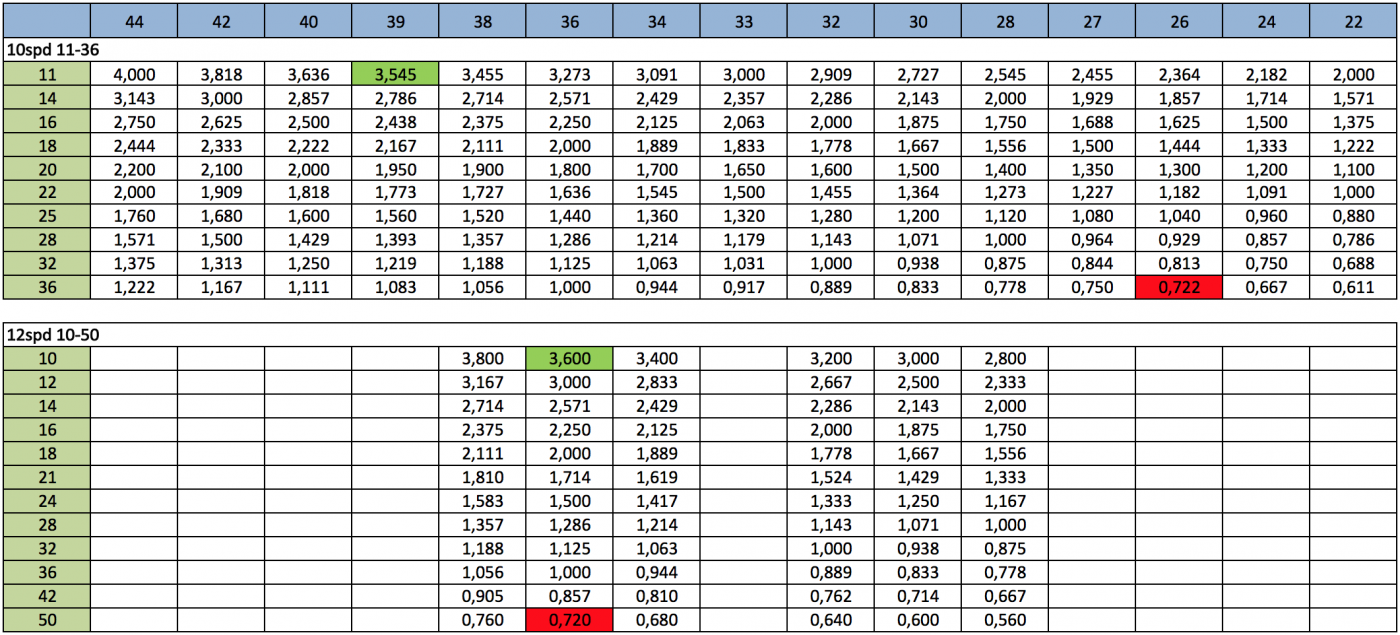
ccs-62657-0-40651800-1471891707.pngRange comparison between a 10 speed drivetrain running 39/26T chainrings with a 11-36T cassette and 12 speed Eagle using a 36T chainring with it’s 10-50 cassette.

If however you are after the extra breathing space when climbing, chances are you will still be able to jump up one chairing size and score at both ends of the spectrum. The table below shows running a 34T-50T combination will give you a lower granny than running 30T-42T. In fact, you would have to go down to 28T-42T to beat it, without the drawbacks that would come with running 28T-10T on the flats and downhills.
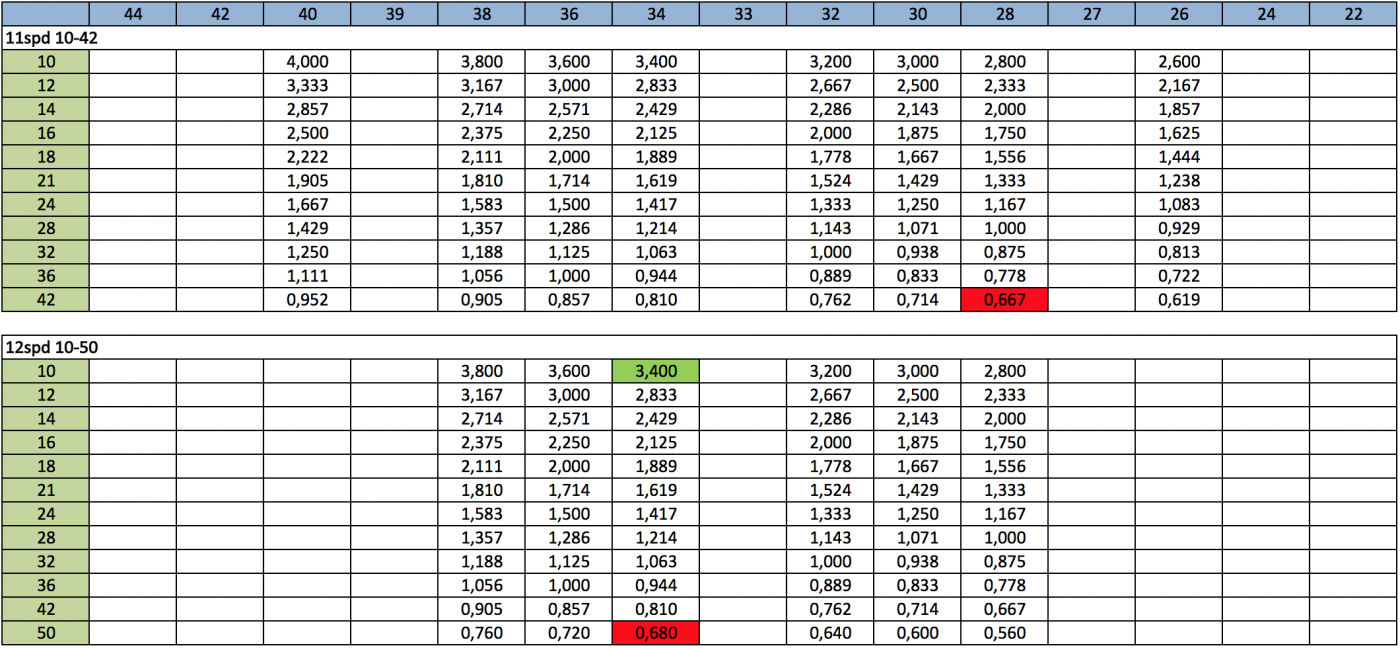
ccs-62657-0-30573400-1471891715.png12 Speed Eagle compared to an 11 speed drivetrain showing how the 50T granny gear impacts on chainring size selection.

Verdict

Three days with a whole new drivetrain does not equal a full review in our eyes. There is simply too much to consider, try and experience. Ultimately on a groupset, we would want to report on how it performs through rain, mud, days of hammering, how much attention it needs to keep shifting crisply and, of course, how long it lasts in African conditions. While we can not answer these questions just yet, I can say that all indications are that SRAM have delivered another groundbreaking product.

Of course, technology like this does not come cheap and Eagle still needs to prove itself over a full season, but at this stage it looks like there are no reasons left not to go 1x. For those looking to upgrade to 1x or to replace their current worn XX1 or X01 11-speed groupsets, with the greater range of gears offering a true benefit out on the trails, it would only make sense to go Eagle.


Related posts

Comments

BenReaper

Aug 25, 2016, 8:25 PM

Saw this groupset being fitted to a bike at my Lbs today. Must say it looks quite the part in the flesh.


It gives a real clean look to the bike as all 1 × systems do, and the Gold cassette and chain looks awesome.


Even though the top and bottom gear supposedly gives you the same range as a 2 x10 system I think it will have gaps between gears somewhere as mentioned by someone else previously.


On the weigh saving front it ain't so big either, the bike was equipped with older XTR 3×10 and by moving to the 1×12 XX1 Eagle managed to lose only about 200 grams.


IMHO this groupset is not suitable for everyone, I would stick with 2×10 or move to 2×11 for marathon riding.I think this system will be more suitable for trail or XC type riding.


Just my 2 c


Sent from my S40 using Tapatalk

JXV

Aug 27, 2016, 6:56 AM

So after 5 years at last a 1x system offers the range of a 2x system but at what cost?


This review is incomplete with no mention of what it's like to have an 8 tooth ramp between the 42t and 50t cogs and before that the 6 tooth ramp from 36t to 42t. This is one of the most obvious and serious shortcomings of any 1x system and too often I hear of riders complaining of being between gears.

Yep....gear gaps but 1x has so many advantages and some newer frames give you no option.


It can't be all that hard to make a 2x or 3x rear hub 'transfer box' . This would be a planetary gearbox/freehub combo that would replace the freehub and sit inside the space under the cassette so it can retrofit to existing hubs and wheel standards. Obviously it would be larger diameter than existing freehubs. If one of the ratios is an overdrive, this removes the need for small, inefficient, fast wearing cogs in the 10t to 15t range and frees up some space under the cassette for the mechanism.


A second actuating cable would likely be needed but so what.


Sent from my SM-G900F using Tapatalk

SCD

Aug 27, 2016, 8:51 AM

Not that I could afford the Eagle. However being on 1x10 and 1x11 since 3 years it works well for me for so many reasons. Maybe I am not sensitve but the 'gear gaps' are not bothersome if even noticeable. Top and bottom end is somewhat compromised, either the one or the other.

Eagle solves this problem. That is quite cool.

Heel Drop

Aug 27, 2016, 9:59 AM

Not that I could afford the Eagle. However being on 1x10 and 1x11 since 3 years it works well for me for so many reasons. Maybe I am not sensitve but the 'gear gaps' are not bothersome if even noticeable. Top and bottom end is somewhat compromised, either the one or the other.

Eagle solves this problem. That is quite cool.

also been riding 1x11 for 2 years now and really like the idea of the 1x12 , but my wallet does not

SCD

Aug 27, 2016, 10:16 AM

also been riding 1x11 for 2 years now and really like the idea of the 1x12 , but my wallet does not

I looked at the upgrade. When the XX1 cassette is worn out it will not make that big a difference to go to Eagle. Same for the chain. Then factor in the 2nd hand recovery for derailleur and shifter and the investment cost should come down to less than R3000 (accepting the cassette and chain as wear and maintenance).

...Having said all this, MTB is still the most expensive sport I ever started... But probably not worse than skydiving, scuba diving, horse riding, motorbikes (add in fuel, spares and replacement limbs)...;)


Sent from my iPhone using Tapatalk

BenReaper

Aug 27, 2016, 4:30 PM

Not that I could afford the Eagle. However being on 1x10 and 1x11 since 3 years it works well for me for so many reasons. Maybe I am not sensitve but the 'gear gaps' are not bothersome if even noticeable. Top and bottom end is somewhat compromised, either the one or the other.

Eagle solves this problem. That is quite cool.

Eagle is suppose to solve the problem of loss of either top end speed or bottom end power on a 1x system, whether that is the case only time will tell.


Edit:spelling

Sent from my S40 using Tapatalk

mountainfun

Sep 10, 2016, 6:21 PM

It definitely seems the way to go if you want 1x.  The range is awesome, and it sounds as if SRAM's made some serious improvements overall.  Looks pretty neat as well (except that the gold will attract so much attention in SA that you'd probably only have it for max 5 rides before being dispossessed...)

The problem is the cost - pricey!

Maybe in two or three years I'll move from my 2x (XO which serves me perfectly) but until then will save my hard earned cash for road trips.

Eugene Oppelt

Sep 10, 2016, 6:29 PM

But has Die Muishond tested it?

He was special tech adviser to Sram in the RnD phase

Hence the price tag

ZakAttak

Sep 10, 2016, 6:36 PM

But has Die Muishond tested it?

Die Muishond uses a fixie rigid mountain bike

Iwan Kemp

Jan 25, 2017, 4:54 AM

New product video


eddy

Jan 25, 2017, 5:09 AM

Yep....gear gaps but 1x has so many advantages

This is a genuine question as I still run 2x10 on my XC bike.


Other than it looks cool and removes the need for being able to use a FD, why is having a narrower range with bigger jumps better ?

Monark

Jan 25, 2017, 6:02 AM

Eddy you have hit the nail on the head. It's not. The converts will however tell you that you just "don't understand" when explaining why it is better.

Heel Drop

Jan 25, 2017, 6:15 AM

Eddy you have hit the nail on the head. It's not. The converts will however tell you that you just "don't understand" when explaining why it is better.

I had chain suck once with a 2 x in muddy conditions and could not complete the race

1 x never had that issues ever again - that was the reason why I changed and loved the simplicity ever since - so for me personally its better

JXV

Jan 25, 2017, 6:51 AM

This is a genuine question as I still run 2x10 on my XC bike.


Other than it looks cool and removes the need for being able to use a FD, why is having a narrower range with bigger jumps better ?

Eddy


Yeah....gearing wise 2x10 is better....more range than all but maybe Eagle and smaller steps so it is easier to get a good speed and rhythm when climbing and also more top end but here are the pros of 1x

- lighter by about 400g

- new systems offer almost the range of 2x. If you are really fit or ride in less mountainous areas you may not need the full 2x10 / 2x11 range anyway.

- no chain drops on my setup in over 2 years

- can mount my dropper lever on the left under the bar where the front shifter used to be. ergonomically this is way better than all other options

- less cables

- 1x is quiet....really quiet

- better chainring clearance over logs and stuff.


I only have the one bike but if I had an XC bike and a trail bike it would be 2x10/2x11 on the XC and 1x11 on the trail bike.


Sent from my SM-G935F using Tapatalk

Rudi Pollard

Jan 25, 2017, 6:59 AM

If you are going to compare numbers of 2x10 to 1x12 you will arrive at a very similar range for both with no clear answer as to which one to go for.


Over the past 4 years I have gone from 2x10 to 1x11 to 1x12. Yes the range is similar but for me the main benefits are:

1) No chainsuck

2) Simplicity and clean handlebar

3) smoother shifting

4) Drivetrain wear


The 1x systems wear a lot better for me personally than the 2x systems. The new eagle drivetrain thus far has been awesome in this regard. Yes it is expensive but according to me it is worth it.


The new Eagle shifting performance is beyond awesome. Difficult to put down in words but the feel is the best I have ever had on a bike.

Iwan Kemp

Jan 25, 2017, 7:04 AM

...


why is having a narrower range with bigger jumps better ?


1x12 has the same ratio as 2x10


ccs-62657-0-40651800-1471891707.png

Alouette3

Jan 25, 2017, 7:37 AM

1x12 has the same ratio as 2x10


ccs-62657-0-40651800-1471891707.png

Same a ratio, but in 12 (1x12) steps rather then a smoother 20 (2x10) steps is what he is saying...

Iwan Kemp

Jan 25, 2017, 7:43 AM

Same a ratio, but in 12 (1x12) steps rather then a smoother 20 (2x10) steps is what he is saying...


He was saying "why is having a narrower range with bigger jumps better". I replied to the narrower range bit.


To comment on the jumps:

Eagle goes

+2

+2 

+2

+2

+3

+3

+4

+4

+4

+6

+8


2x10 Goes

+3

+2

+2

+2

+2

+3

+3

+4

+4


So only really the last 2 gears that have a bigger jump - two gears that a 10 speed drivetrain does not have so looking at the 10 vs FIRST 10 you're in the same boat really. 


2020's 13 speed will solve that...


That leaves you with all the benefits listed above

+ similar jump

+ similar range


What were the pros of 2x10 again..?  ;)

Rudi Pollard

Jan 25, 2017, 8:07 AM

Everyone against 1X drivetrains go with the argument of jumps between gears. This is a paper based argument. Have you actually ridden a 1X drivetrain to feel what those jumps feel like. 


I have never had an issue with a shift being to big...


Then if you look at the percentages between gears on the eagle the actual biggest jump is between the 10 and 12 tooth... The rest is very similar between systems


post-27075-0-67915400-1485331712_thumb.jpg

lechatnoir

Jan 25, 2017, 9:29 AM

What were the pros of 2x10 again..?  ;)


What's the Eagle XX1 cost again?  :clap:

V12man

Jan 25, 2017, 10:10 AM

This is a genuine question as I still run 2x10 on my XC bike.


Other than it looks cool and removes the need for being able to use a FD, why is having a narrower range with bigger jumps better ?

The point is that 1x12 with a 10/50 cassette and 34 chainring is in terms of effective gear range the same as a 1x10 with 11/36 and 24/38 chainrings - so from a low speed and top speed point of view they are effectively the same setup.


One can look at the inter gear ratio's on the clusters and see how they compare:


XX1 Eagle - biggest inter gear hop is 20%, smallest 12.5%

11/35 cluster - biggest inter gear hop is 18.18% and smallest 11.76%


BUT - this does not really reflect reality perfectly because ito effective gear ratio it depends what chainring you are using on the 2x10 setup (which gives you 20 theoretical gears to use) but in practical terms you would be running very cross chained for some of them, and to use all of the available ratios you have to so some fancy footwork using the front derailleur too (to all intents and purposes you won't actually do this unless you are using the automation a Di2 setup might give you)


So the trick would be to build what are the 12 most usable gears on a 2x10 system and see how they compare to a 1 x 12 setup ito inter gear ration differences - this is harder to do than it sounds without an assumption or two - so I initially assumed you could use the top 6 gears on the small chainring and the bottom 6 gears on the large one to avoid massive cross chaining (although on a 1 x 12 you could argue that the cross chaining effect always exists, so that assumption does not really work, and clearly isn't the best).


Then I assumed that you can do a 2 gear cassette change (up or down) and a chainring change at effectively the same time on the 2x10 and built a theoretical 12 speed cassette based on this to optimise the inter gear differences.


Guess what happened.....

JXV

Jan 25, 2017, 11:00 AM

Everyone against 1X drivetrains go with the argument of jumps between gears. This is a paper based argument. Have you actually ridden a 1X drivetrain to feel what those jumps feel like.


I have never had an issue with a shift being to big...


Then if you look at the percentages between gears on the eagle the actual biggest jump is between the 10 and 12 tooth... The rest is very similar between systems

yes I have and the jumps are bigger when compared to 2x10 or 2x11 in smaller climbing chainring.


You have to take the overall gearing of both the chainring and the cassette into account.


In the climbing gears, a 2x system gives 4 choices where a 1x system offers 3 over the same span of ratios - see Iwan's table of overall ratios in a previous post. This means the jumps between the lower gears in the 1x system average about 33% larger than in an equivalent 2x system. And I can feel it when climbing.


Sent from my SM-G935F using Tapatalk

Spoke101

Jan 25, 2017, 11:31 AM

What's the Eagle XX1 cost again?  :clap:


What does 2x10 XX, XTR or XTR Di2 cost?

Eugene Oppelt

Jan 25, 2017, 11:43 AM

That thing will look so sweet on my stealth bergfiets ????????

JXV

Jan 25, 2017, 12:47 PM

Lots been said about the size of the jumps in number of teeth between cogs........


What you have to remember is that it is proportional. So a 4 tooth jump from 11t to 15t would be horrendous - it changes the ratio by about 40% but a 4 tooth jump from 32t to 36t only changes the ratio by about 12%


So, on the Eagle cassette and other not-quite-as-wide-range cassettes like the Shimano 11-46, the big tooth difference between granny and 2nd gear is not quite as bad as it appears when you actually ride them.


In Shimano's case though I think they missed a trick. Their 11-46 XT cassette goes from 37t to 46t, a jump of 9 teeth. The gap is noticeable when you ride it.


I ride a 29er with 34 front ring and 11-46 rear. I can climb almost anything I need to ride in that 46 but it is noticeably slow and the only other option is the 37t which can be be a bit tough.


Shimano must have had a reason for their choice but the equivalent Sunrace cassette goes from 40t to 46t and I think it might suit me better - or I need to HTFU


Sent from my SM-G935F using Tapatalk

Add a comment

You must log in to comment