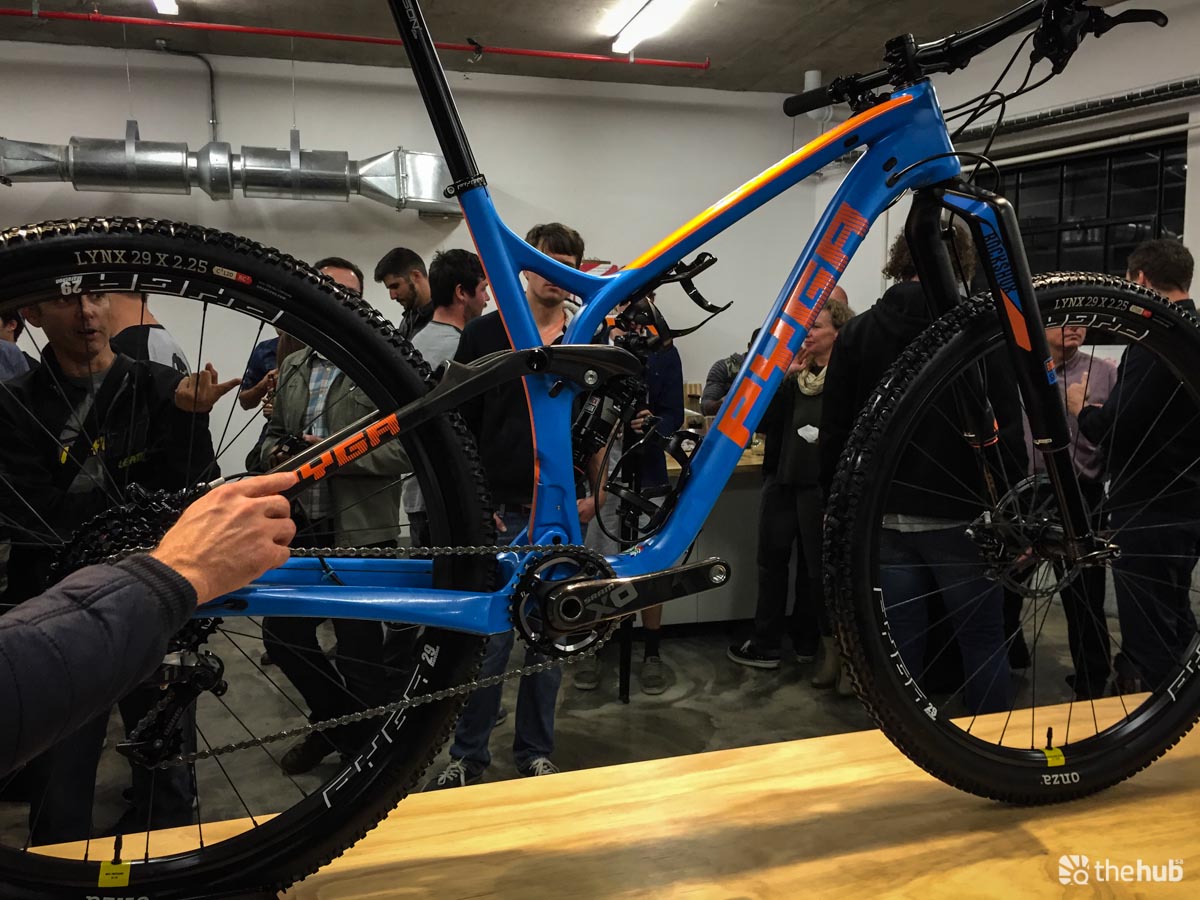
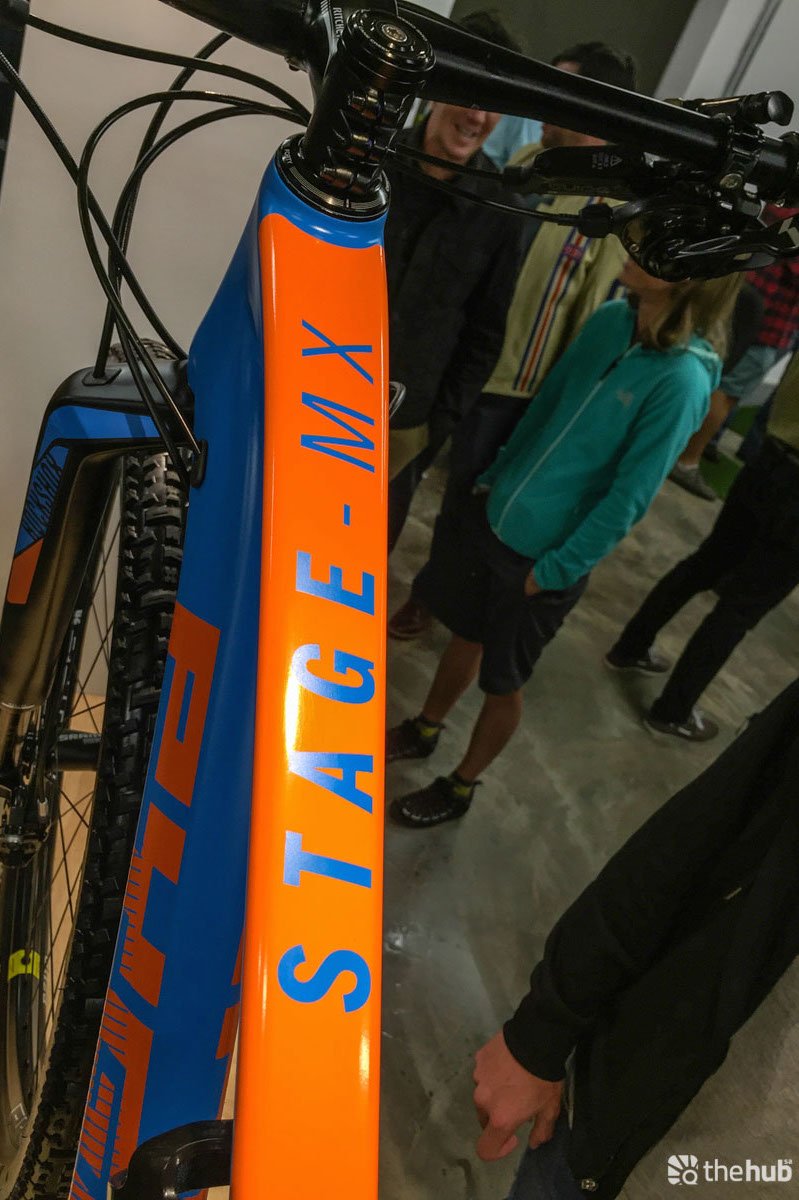
The Pyga Stage MX is the company’s entry into the world of full carbon 29er cross-country / marathon bikes. The Stage MX, though, challenges conventional frame design and cross-country / marathon oriented geometry. Starting with a clean slate they haven’t gone for any new crazy suspension designs. Instead sticking to their tried and tested platform with some slight kinematic changes to better suit race performance. What they have done is focus on the fundamentals of frame design. The result? Some seemingly subtle, yet potentially revolutionary tweaks.
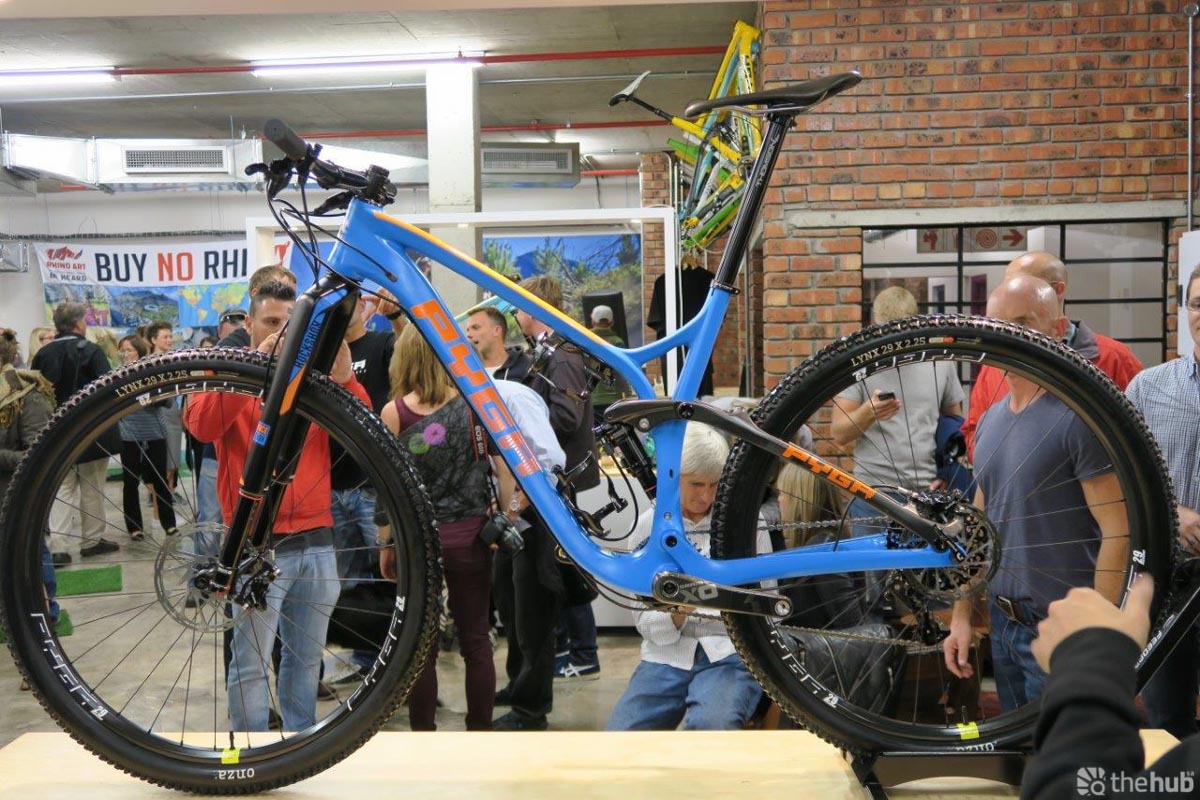
Meet the Pyga Stage MX, a full carbon dual suspension 29er marathon bike.
Slack ‘n Long (or Low)
The Stage MX (Marathon Cross Country) will be Pyga’s first bike to feature the new SNL (slack ‘n low or slack ‘n long, depending on whether you’re speaking to Pat or Mark). This means a slackish head angle (68.5° on a 120mm fork and 69.5° on a 100m fork), longer reach and a shorter stem, to make it feel more like a trail bike on technical terrain. Pyga reassure us that the bike still maintains the overall efficiency and power transfer needed for a marathon bike.

Pyga liken many top marathon bikes ridden by everyday riders to F1 cars: designed for top professionals and can be more than a handful to pilot, when a Lamborghini would be better suited for most people. The Stage MX is said to be stable in corners, grounded at high speed, yet still nimble and light in steering.
“Plus Five” rear end offset to improve chain angle on 1×11
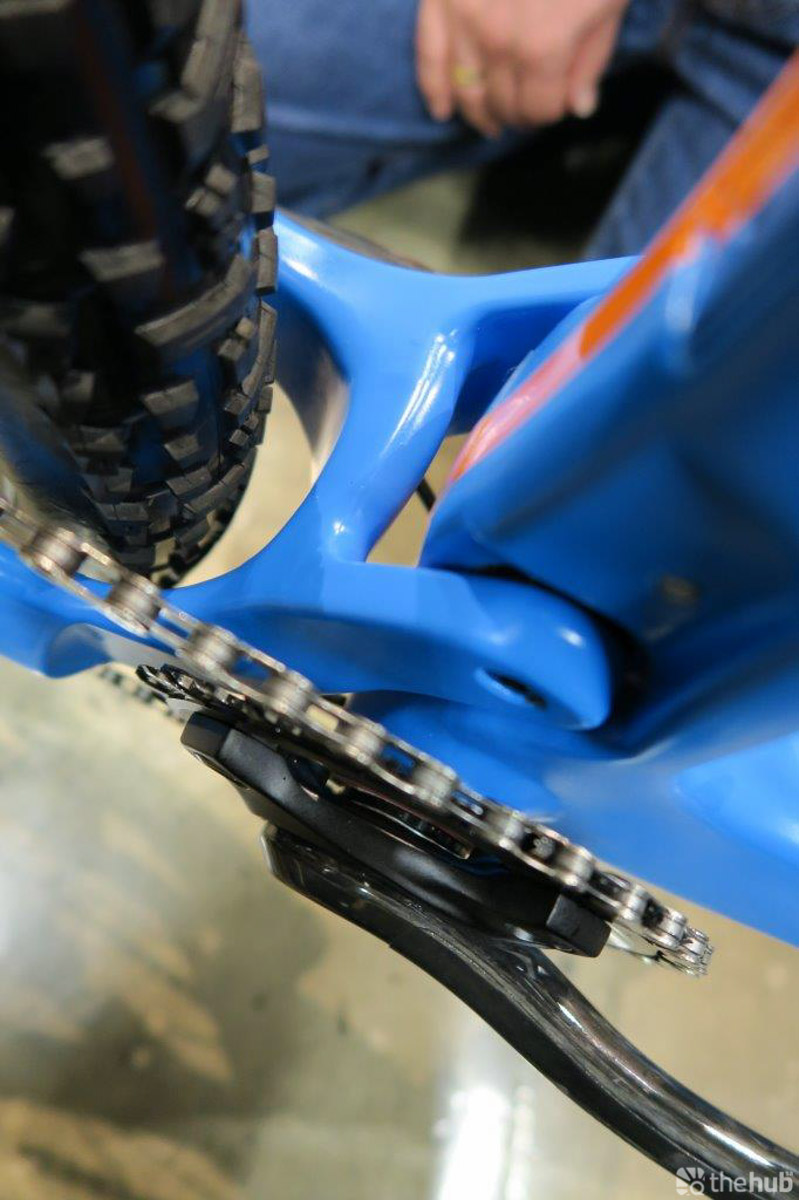
The biggest deviation from conventional design is what Pyga are calling Plus Five. A re-engineering of the rear end to correct what they believe is a huge flaw in bikes, the chainline offset. What they have done is offset the whole rear end of the Stage MX by 5mm on the drive side and in doing so reducing the chainline offset from 49mm to 44mm.
Why the change? Patrick Morewood explained that when the 49mm chainline offset was introduced mountain bikes were using 8 speed cassettes. The measurements then meant that the chainline was centred but as 9, 10 and 11 speed cassettes were introduced the centre chainline has shifted. The result on an 11 speed drivetrain with a 49mm offset is that the centre chainline is out by 2 gears.
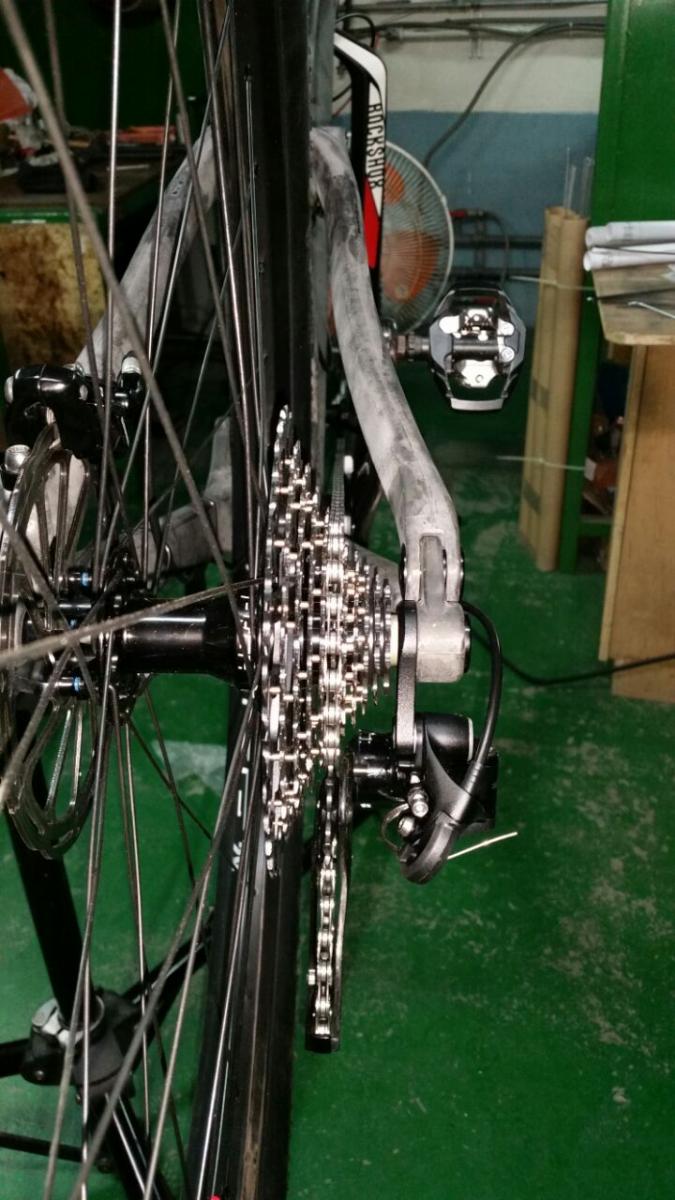 See how the chain is perfectly aligned with the front chainring when in the centre – 6th gear. Photo: Patrick Morewood
What are the advantages of the Plus Five chainline offset?
Better shifting: The centred chainline and less harsh chain angles improve shifting. Poor shifting is often blamed on the drive train manufacturers, when Pyga feel that as frame designers and engineers they should take responsibility by improving the frame design.
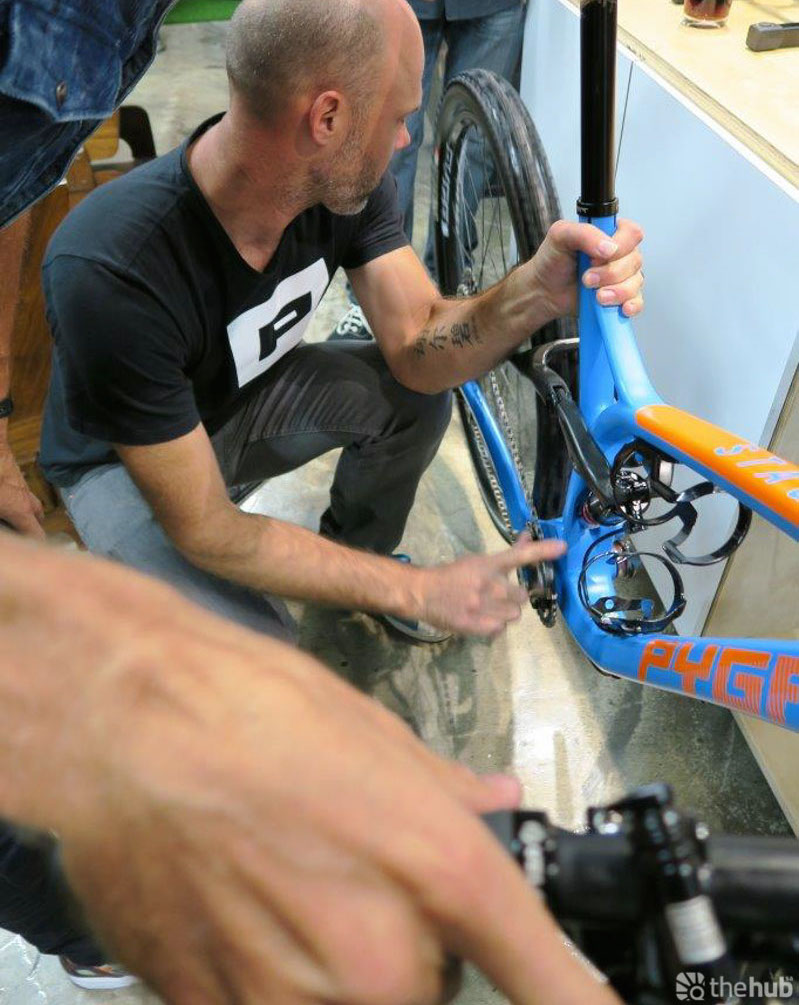 Patrick Morewood showing of the smooth shifting.
Less component wear: They were also concerned about excessive wear when riding on the 11th gear (the “granny”) on a 1×11 system. When riding the Stage MX in your 11th gear the chainline is equivalent to being in your 9th gear on other bikes sporting a 49mm chainline. This significantly decreases the angle at which the chain engages the front ring in the top gear.
Improved rear wheel strength: Plus Five also means that the rear wheel is no longer dished, with spoke length being equal on either side of the wheel leading to improved wheel strength.
No need to worry about a new standard, Pyga have emphasised that Plus Five is not a new standard, as all they have changed is their frames. The hubs, axle width and wheels (aside from a change to the dishing) all remain unchanged.
Our short road ride
In our brief test ride around the dark streets of Woodstock, shifting did feel improved across the full width of the cassette and the difference in chainline when in 42T was visible. The fit of the large sized frame was good with the short stem and wide bars installed.
Specifications, that we have learnt so far:
Chain stay length: 440mm
Head angle: 69.5° with a 100m fork; 68.5° with a 120mm fork
12x142mm Rear Axle
Internal routing including adjustable seatpost routing
Mounting for two bottle cages.
The bike is approved for forks up to 130mm travel.
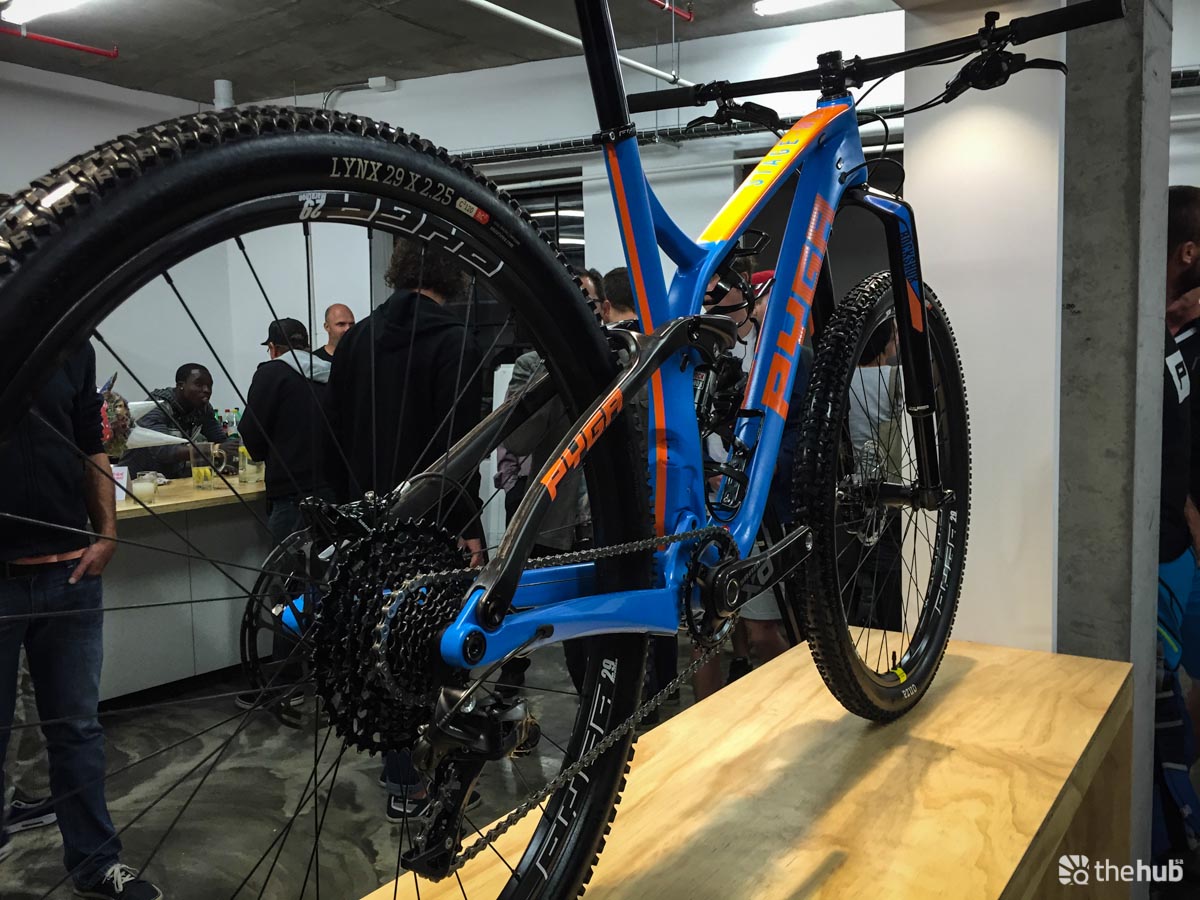
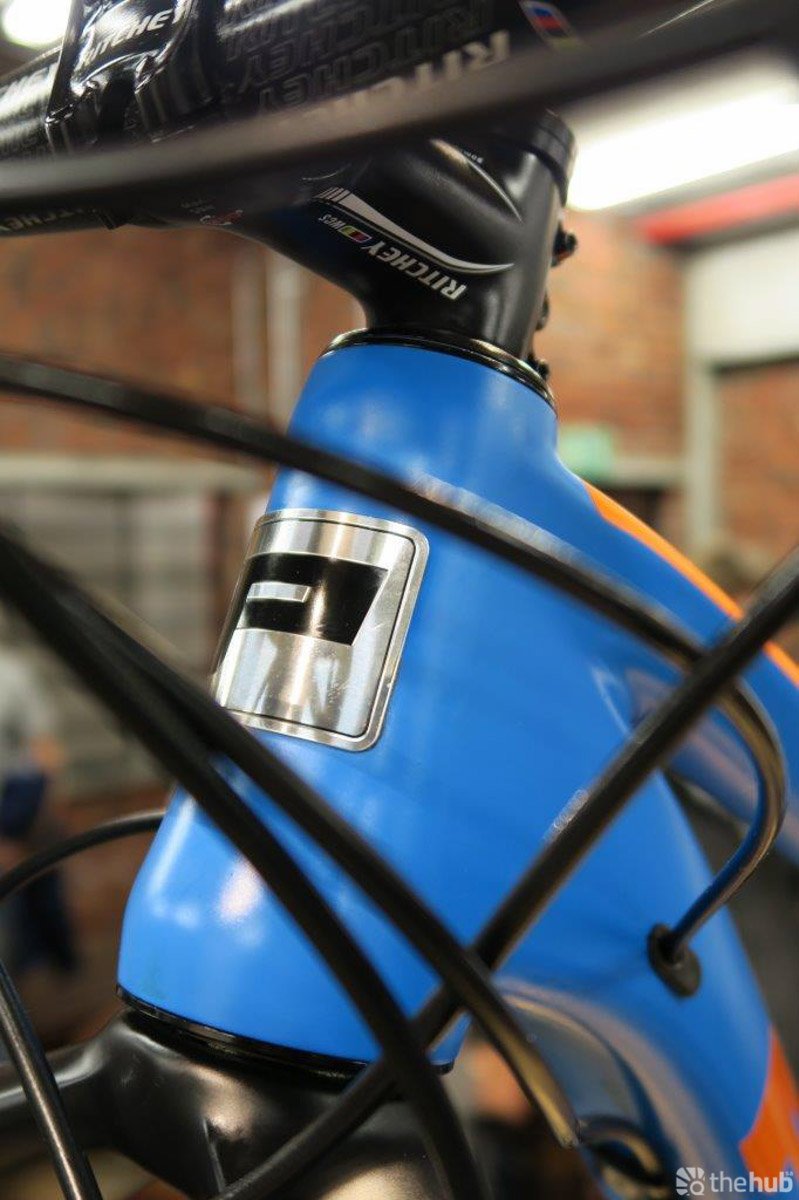
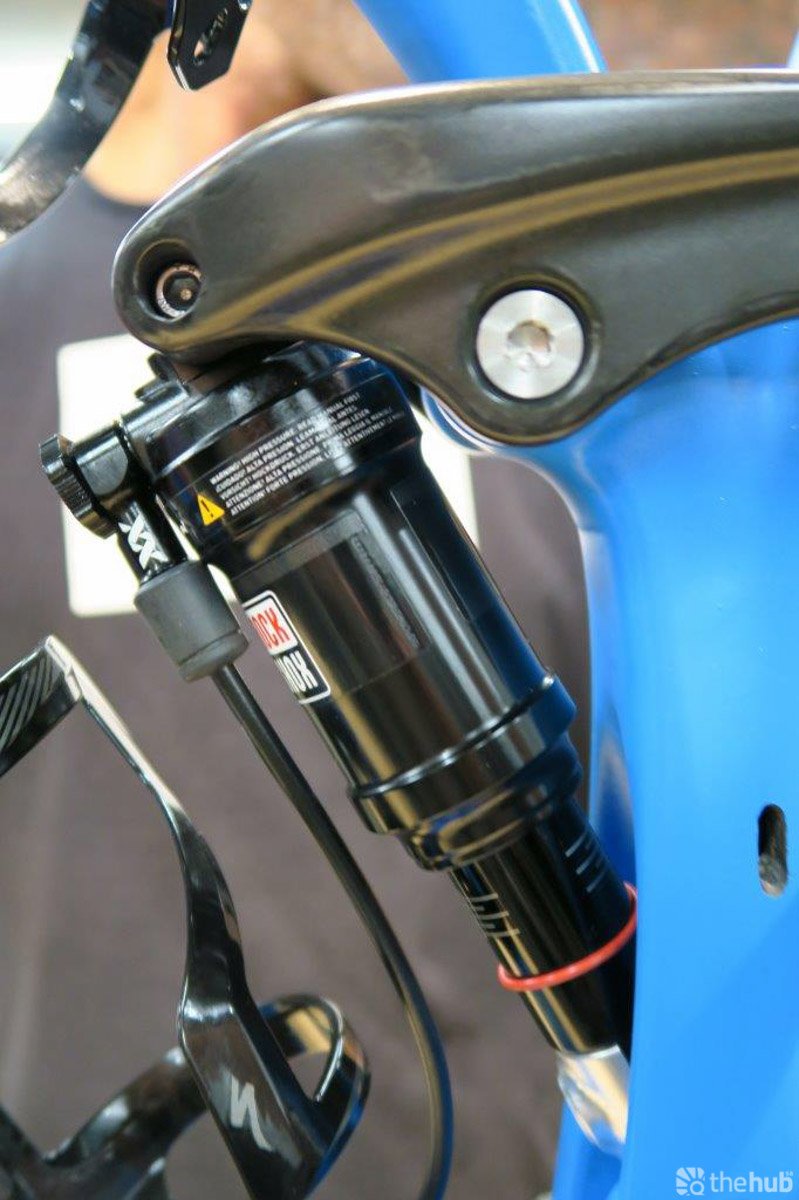
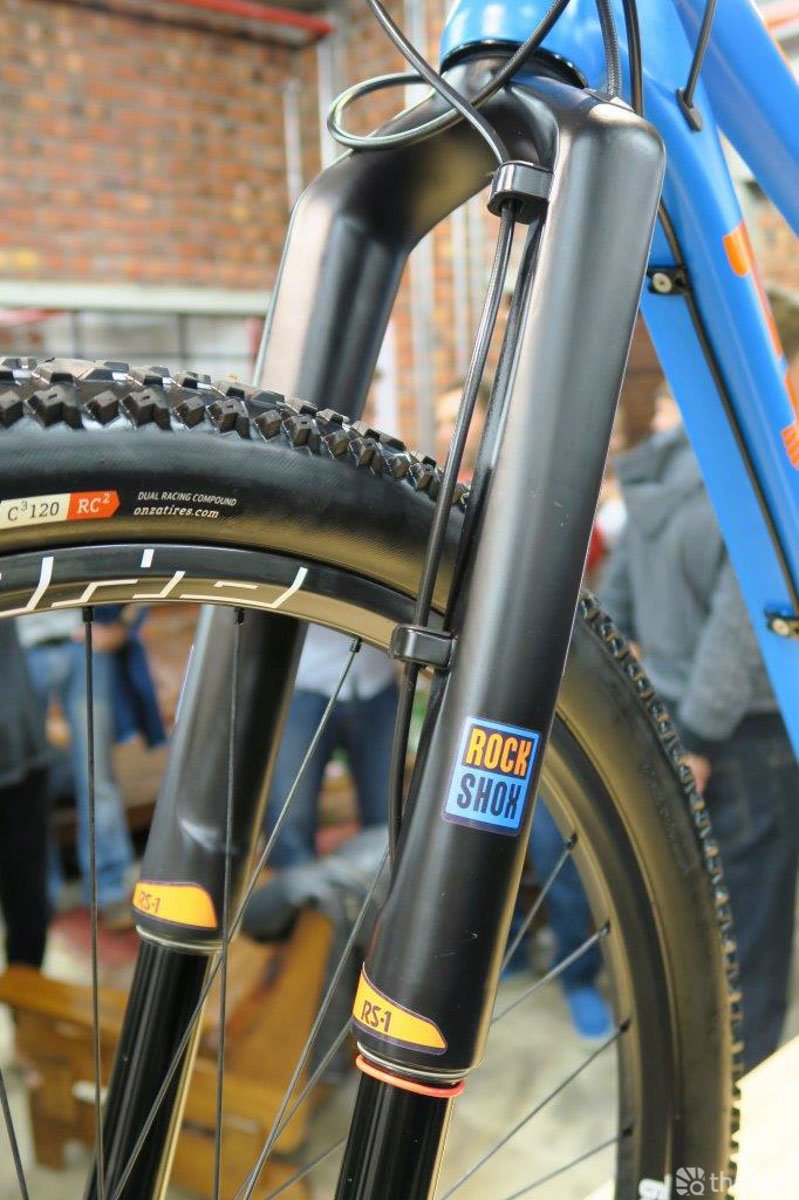
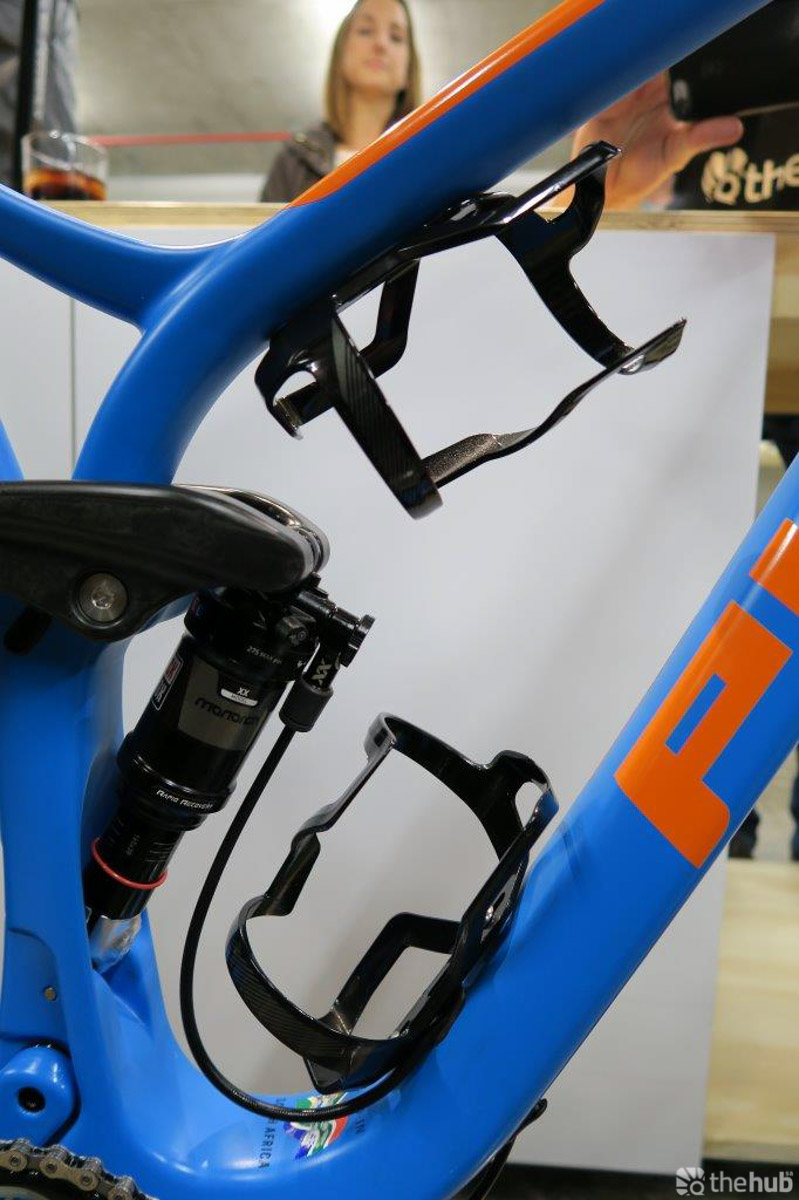
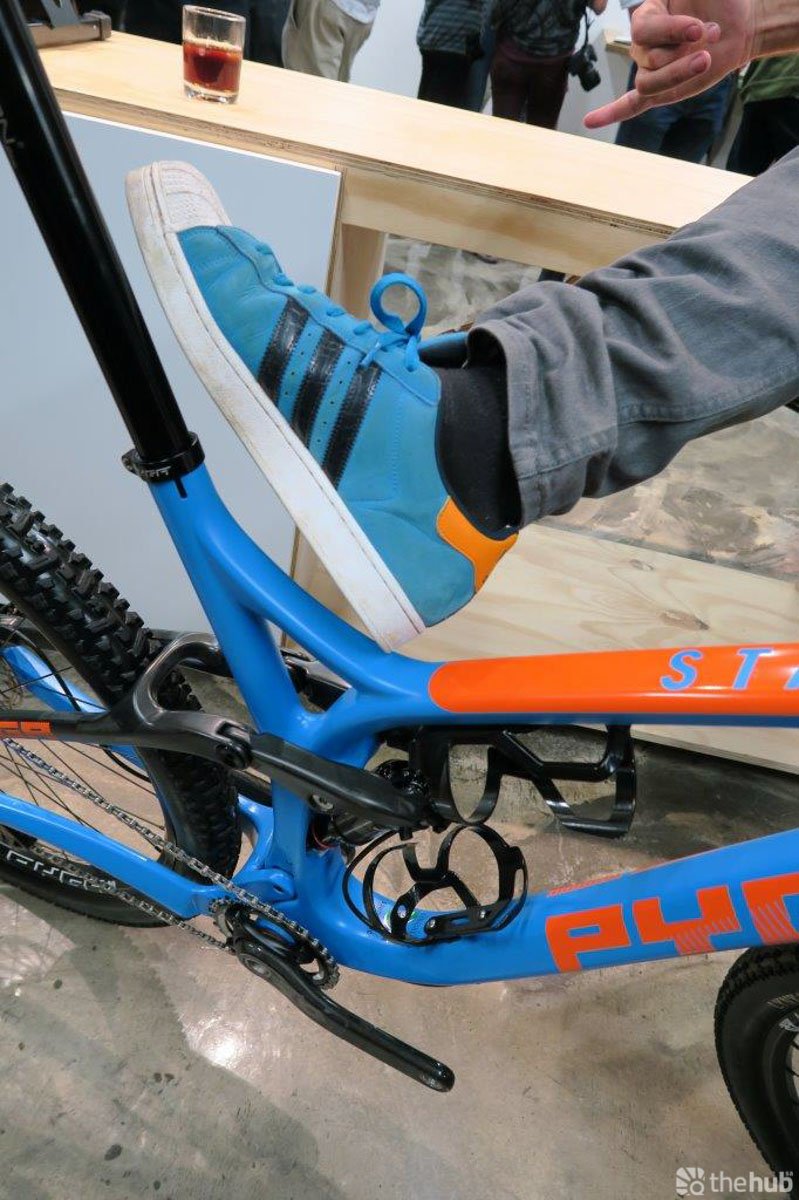
The Stage MX comes with the luxury of space for two bottle cage mounts.
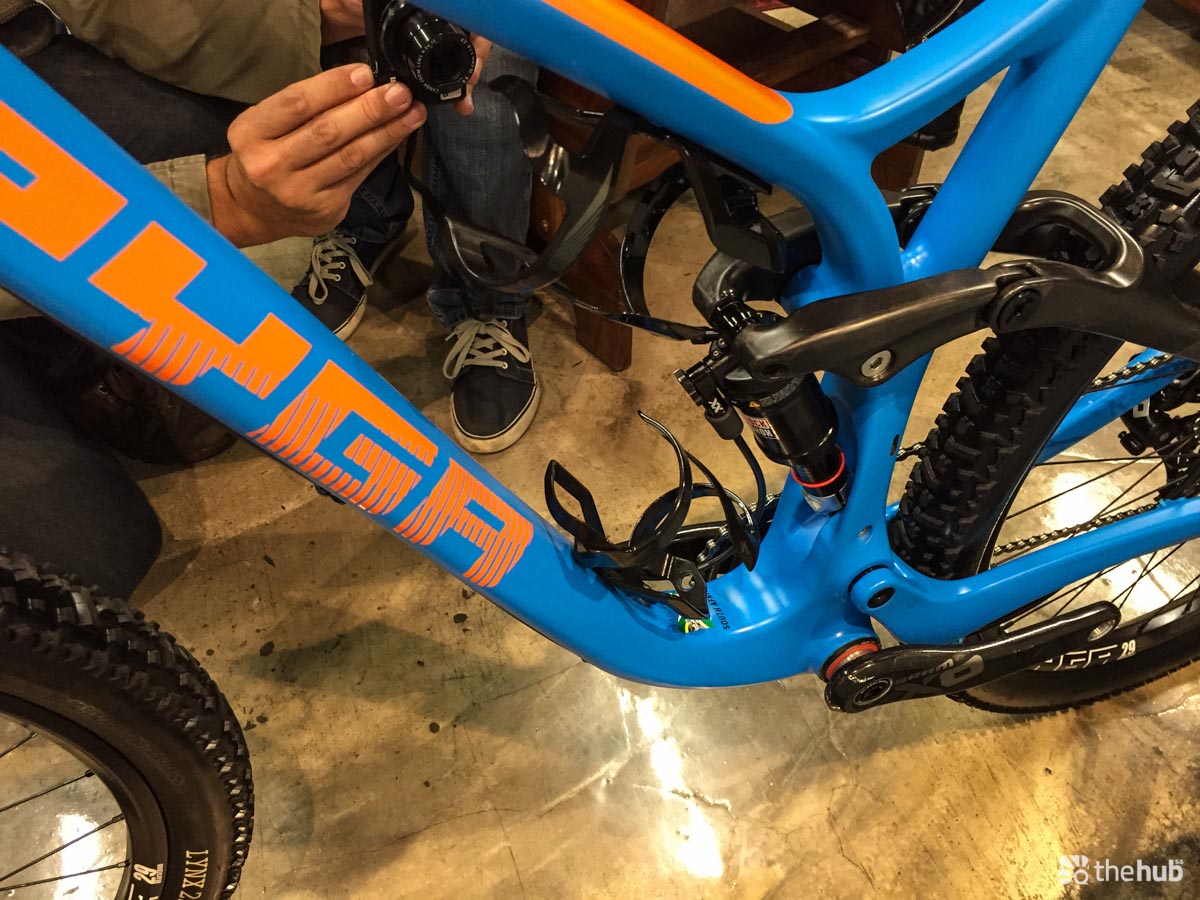
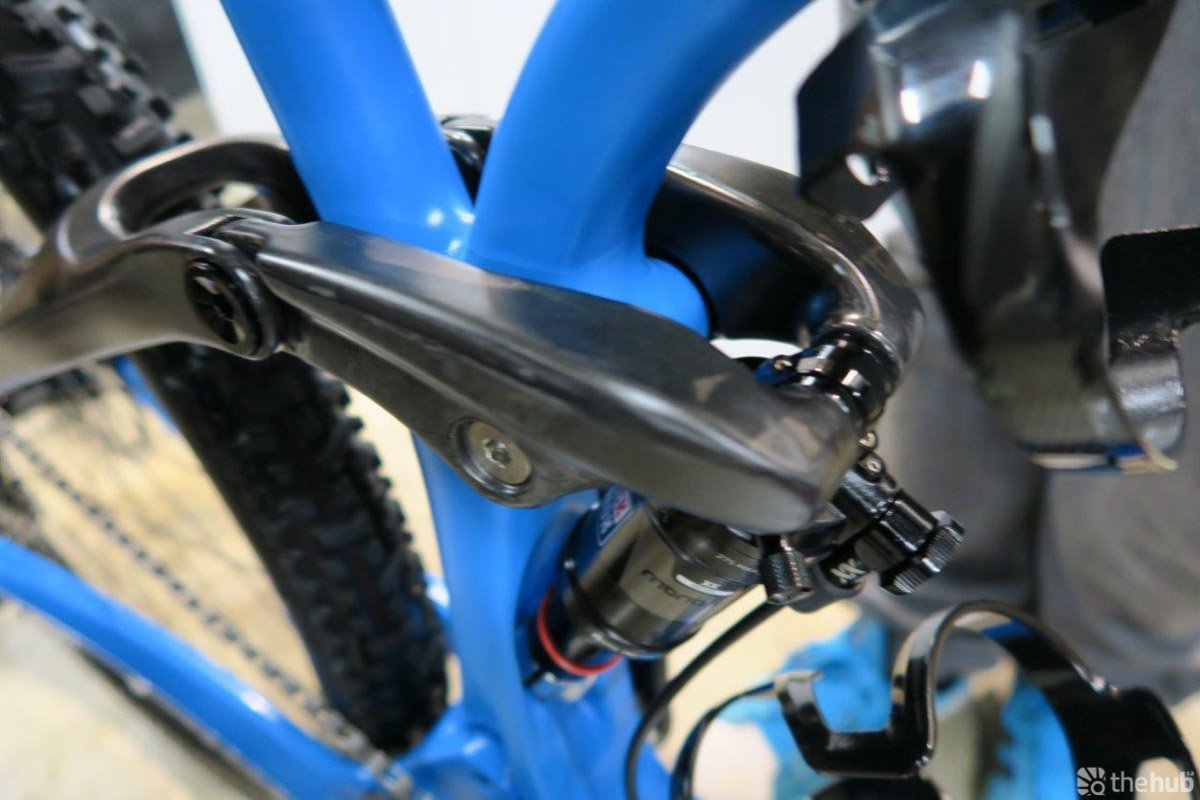
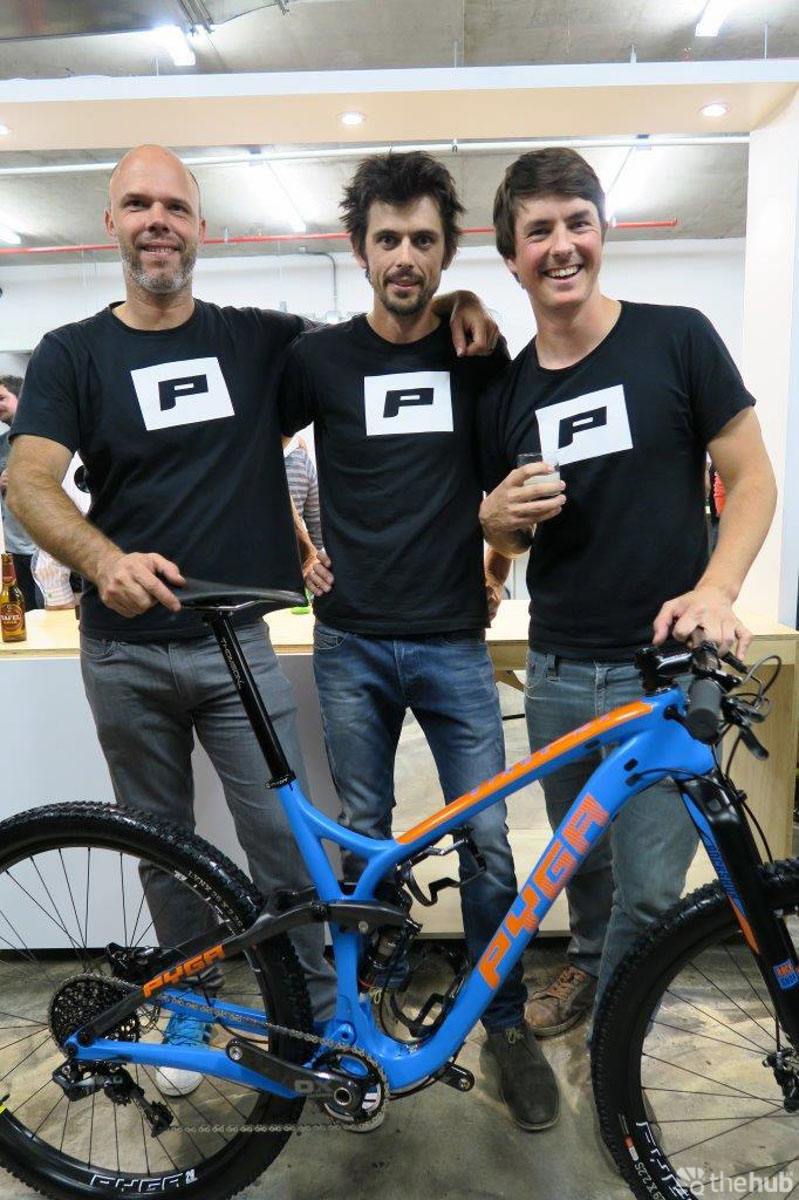
The men responsible for bringing this bike to life, Patrick Morewood, Mark Hopkins, and Cliff Beckett.






 ...
...


Boom! It's a beaut.