We followed the dots at the inaugural Rhino Run, and after seven days the race between Abdullah Zeinab and Kevin Benkenstein came down to the wire. Abdullah finished the brutal 2,741 km course across South Africa and remote Namibia in 7 days 20 hours and 4 minutes. Kevin finished just 17 minutes later.
Ultra-endurance racing is a novelty to us, so we asked Kevin a bunch of questions to get an idea of what goes into completing a race like this. We also took a closer look at the setup of his Curve Karoo prototype.
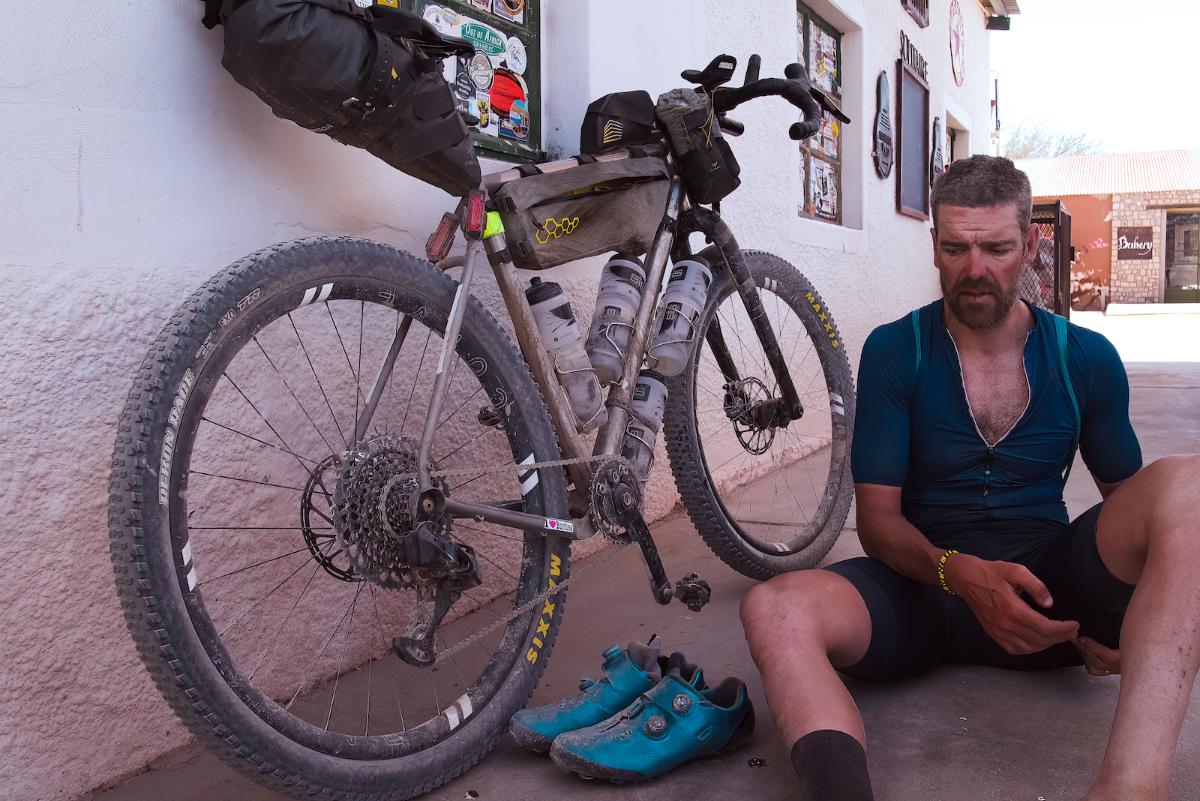 Image by Rae Trew-Browne
How do you charge your devices?
I use a Dynamo hub, which creates electricity as you ride. In the day this allows you to charge devices, a portable charger and cell phone in my case, and at night it powers a dedicated front light. I did use wall plugs once or twice but more for convenience than necessity.
Do you carry clean bibs?
No. I wore one set (Privateer ONE bibs) the whole way. I did wash them at the last sleep stop with 470km to go, they were fine still but I stank and needed some extra morale
Do you stop to shower?
I showered whenever one was available. I used to think not showering was hardcore or something but jeez it makes you feel better. I probably showered every 2nd day on average, it just makes you feel so much more human.
Where do you sleep?
There were loads of towns, so I booked a room whenever I could. I would phone ahead when I left the previous town. Sometimes that would mean being let in by a security guard at midnight, but all the accommodations were very helpful. It wastes a bit of time getting checked in and so on but 3 hours in a bed has to be better than 3 hours on the roadside in a sleeping bag! When I did sleep out it was just in the sleeping bag alongside the road.
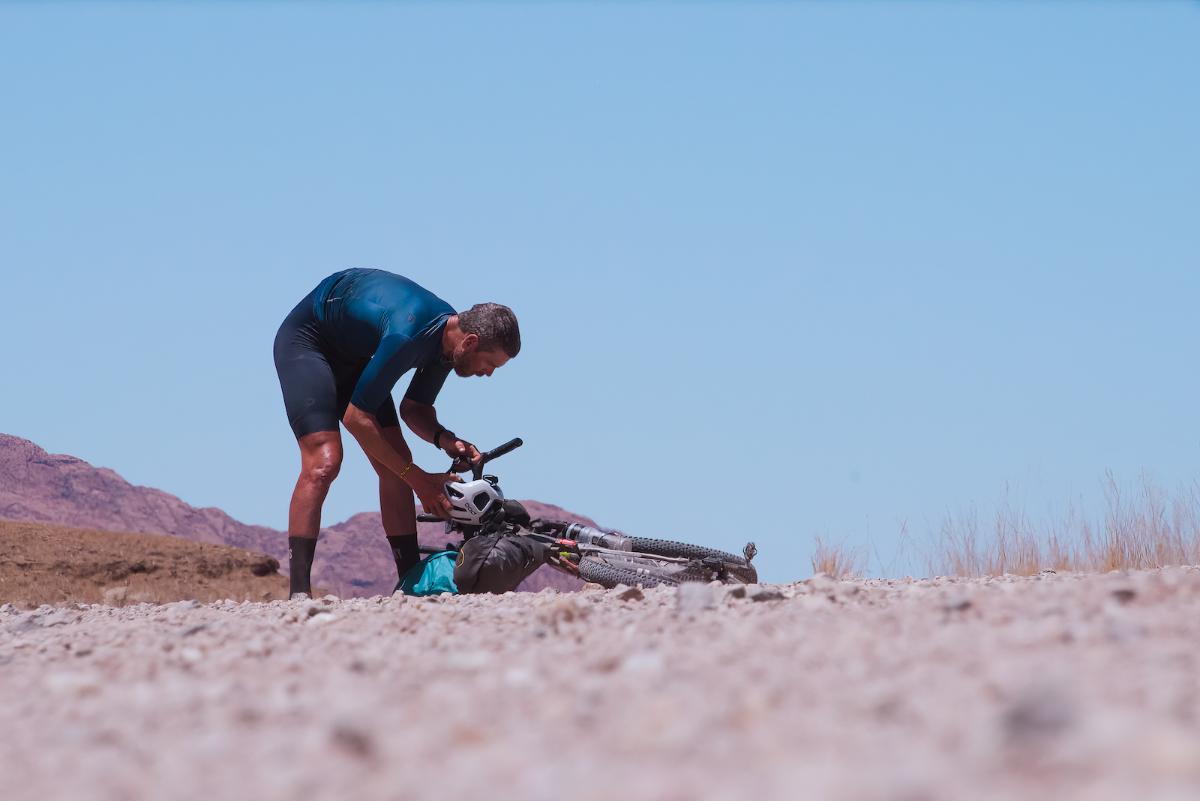
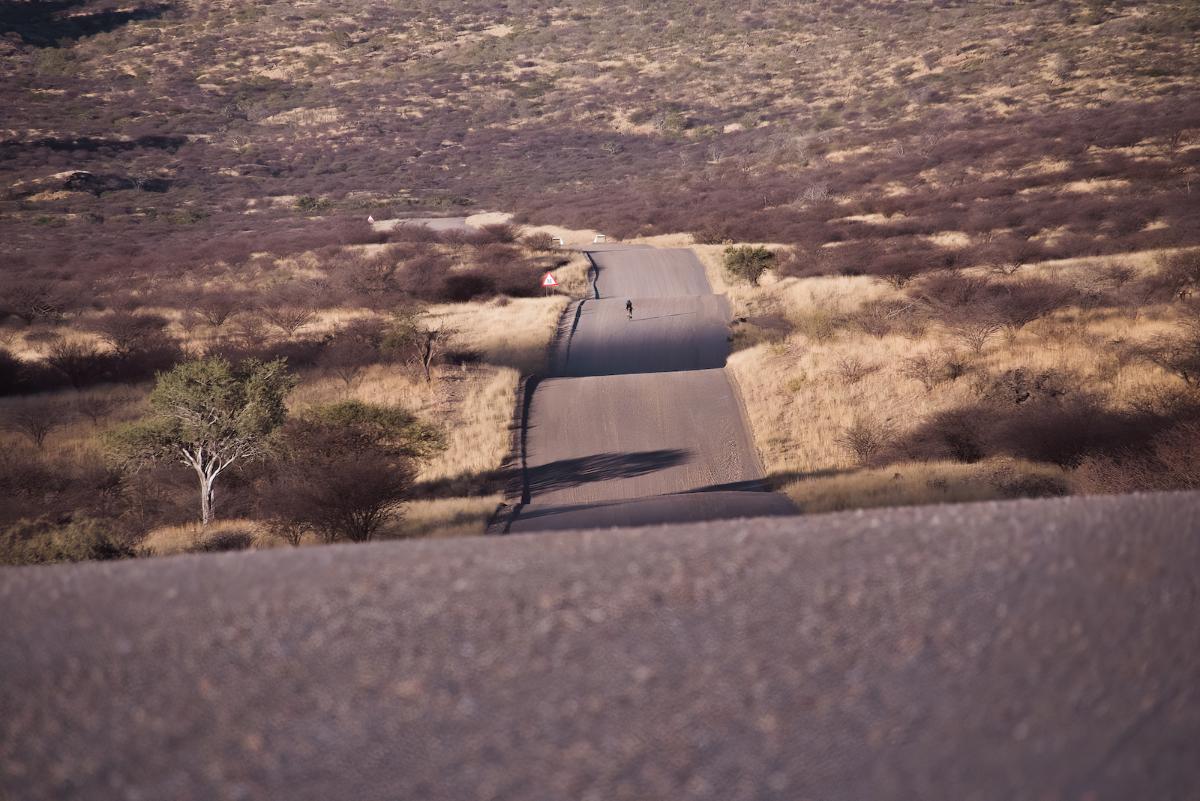
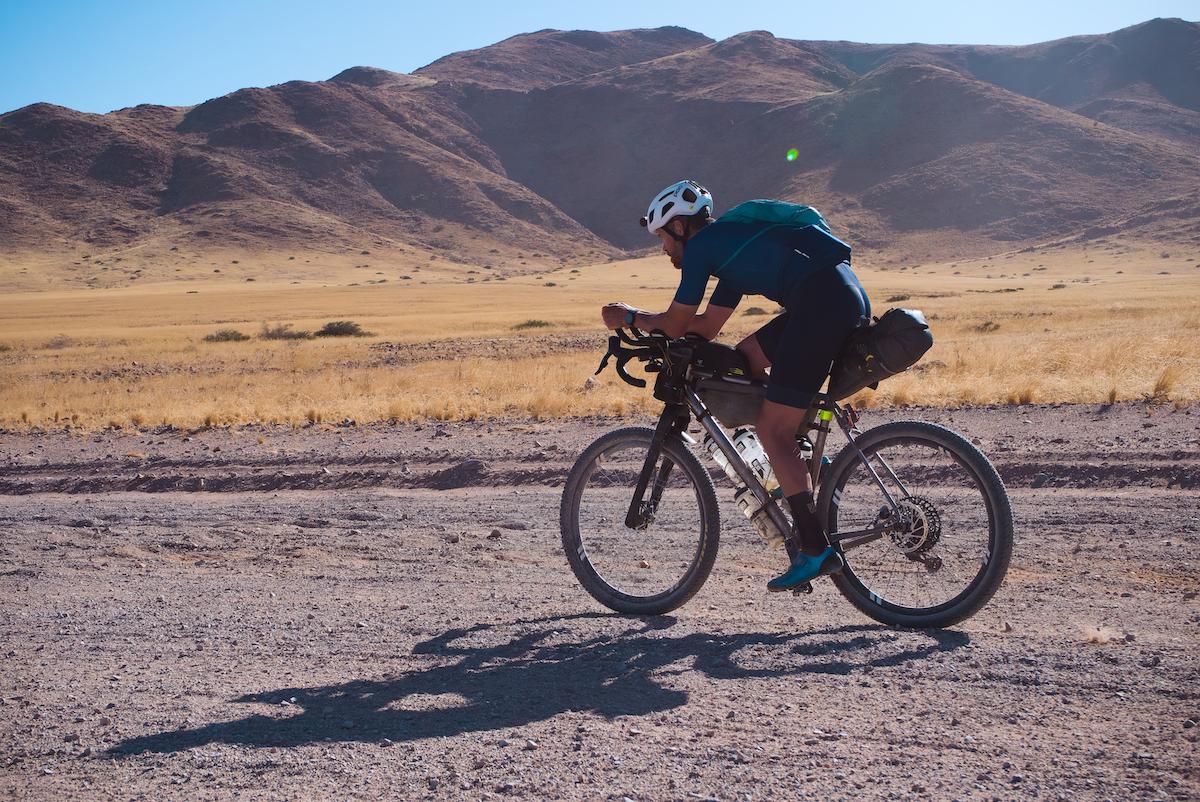 Riders have to contend with extreme temperature variations making equipment and clothing choices critical. Images by Rae Trew-Browne
How much does what you carry weigh?
Excluding food and water, it is about 7 to 8kg. I carried too much warm stuff and the sleeping bag could have been a lightweight bivvy bag instead. At max, you can add 2kg of food and 12 litres of water to that. So the maximum bike and ‘stuff’ weight was 25-27kg, I guess.
What keeps you coming back?
I really really like racing people perceived to be better than me. I am also quite driven to improve as a racer and you can only do that if you compete and push yourself outside of what is comfortable.
What was the best choice you made with regard to setup?
No individual item really, but I think riding a setup I was used to and comfortable on was a good call as I felt super confident in my equipment, which is important I think.
If you could go back and do it again, is there anything you would do differently on your setup?
I would just take fewer clothing items, but that’s really weather related which is hard to gauge perfectly before the race.
What did you carry with you?
Bags / Storage:
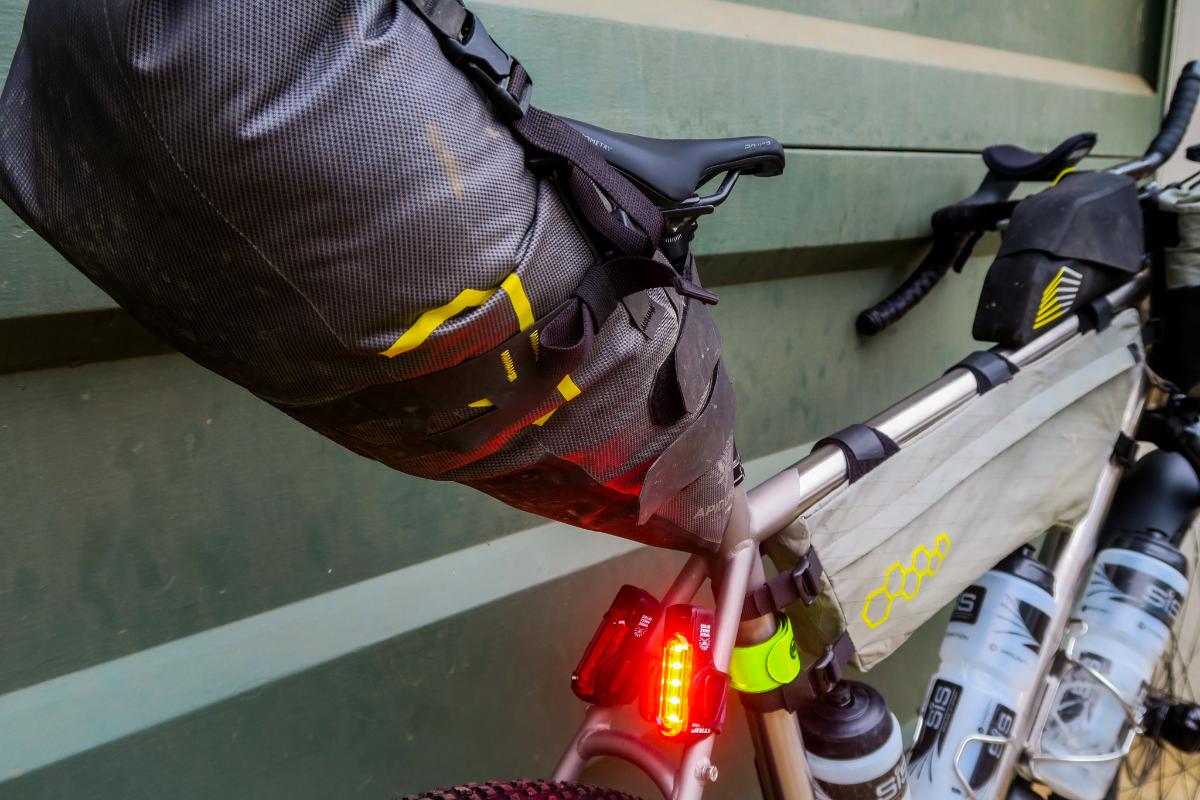
- Apidura Expedition Saddle pack
- Apidura Top tube bag
- Apidura Feed Bag x 2
- Apidura Frame Bag
- Bottles – Enough for 4L
- Apidura Hydration Vest (2l)
- Collapsible bottles x 5 (2,5l)
- Voile Straps x 4
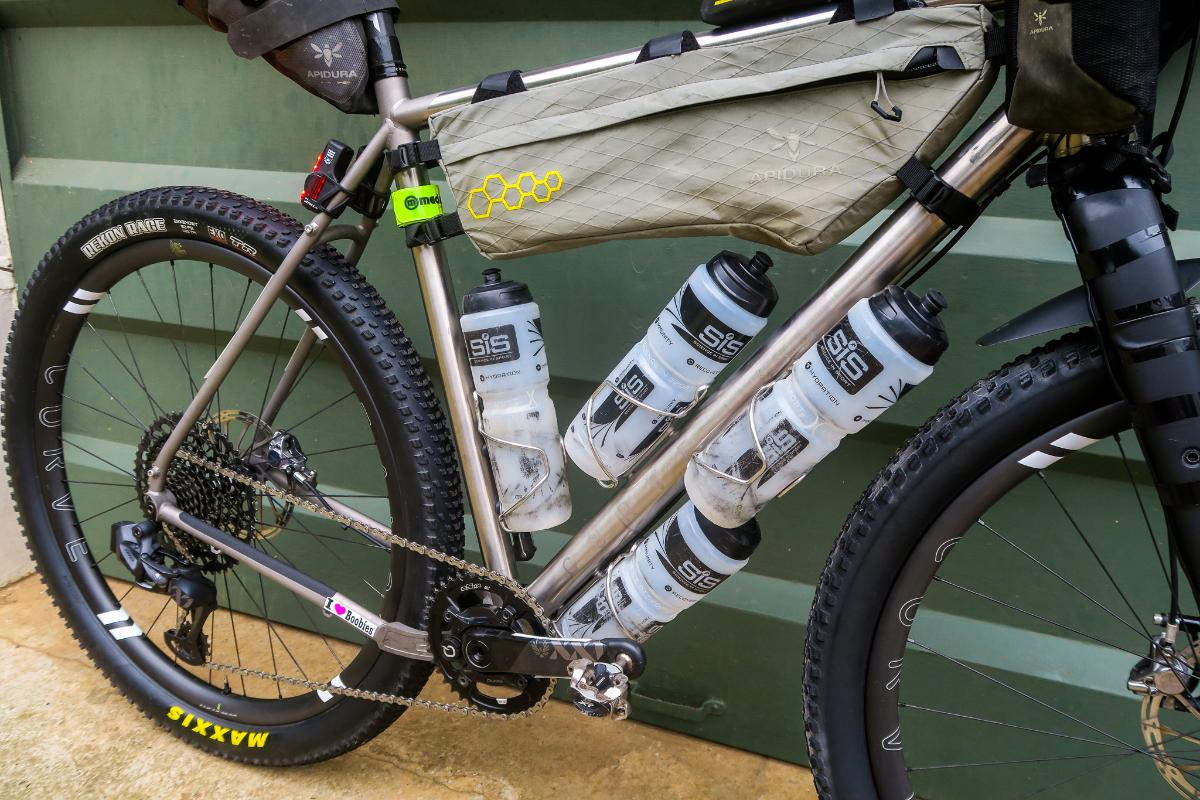 Kevin carried 4 litres in bottles on the bike, plus a 2 litre hydration vest and five collapsible bottles containing an additional 2.5 litres. It’s hard to fathom carrying that much weight.
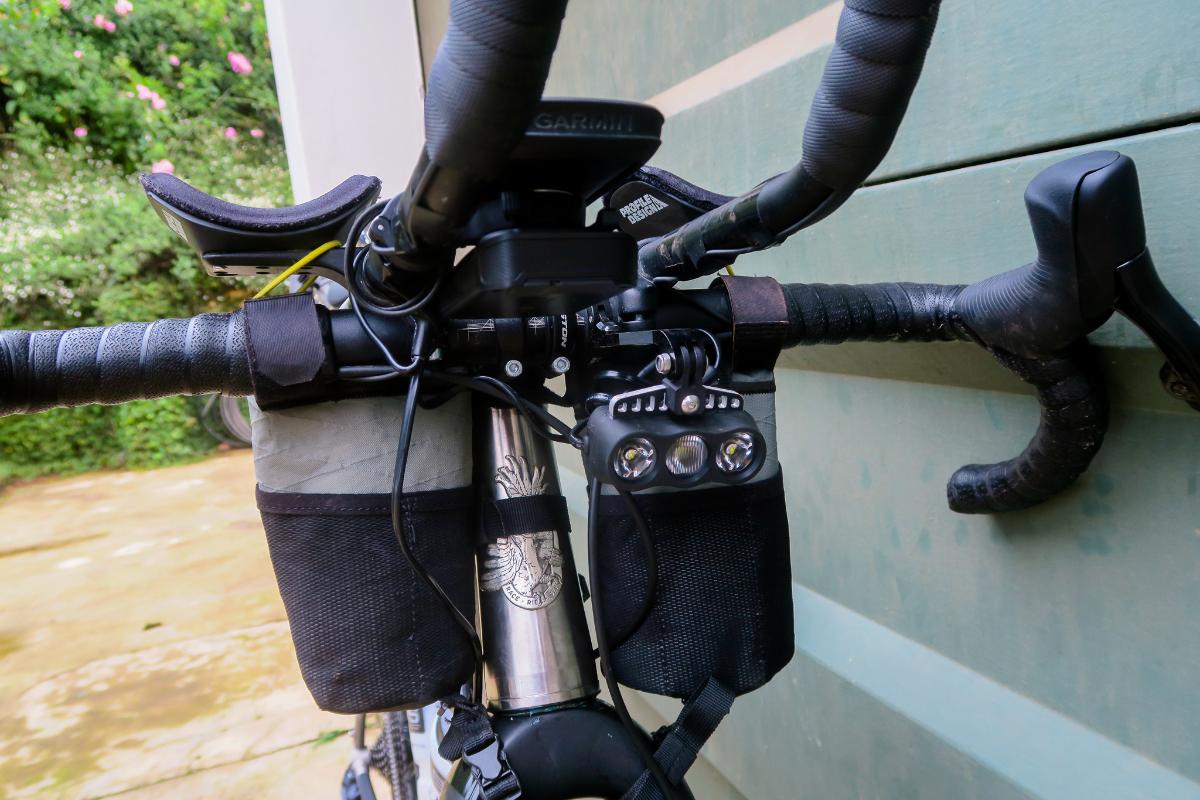 Kevin used a dynamo hub to charge a portable charger and cell phone, and a dedicated front light at night
Clothing:
- Cycling Jersey
- Bib Shorts
- Socks x 2
- Sunglasses with Transition lenses
- Mesh Spring Gilet
- Spring Gloves
- Perfetto short sleeve
- Gore Shakedry jacket
- Merino Base layer
- Arm Warmers
- Leg Warmers
- Winter Gloves
- Buff x 2
- Cycling Cap
Tools and Spares:
- Multi tool – with chain breaker
- Tyre levers (x2)
- Hand Pump
- Lube x 2 (Dry)
- Valve core remover
- Quick link x 2
- Head stem bolts
- Seat clamp bolt
- Spare valve stem
- Gorilla tape (Wrapped around seatp post)
- Spare cleat
- Spare cleat bolts
- Tyre boot
- Tube
- Hanger
- Plug kit
Lights / Visibility & Other Electrical:
- Garmin 1040 Solar GPS
- Garmin inReach Tracker
- Garmin Charge Power Pack
- Portable Charger (10,000MaH)
- Helmet Light + 5 Spare Batteries
- K-Lite Light, USB converter and switch plugged into a SON Dynamo Hub
- Garmin UT800 Front Light
- Rear light x 2
- Reflective Ankle Straps
- Reflective body straps
- Mains USB charger
- Cable – USB – iPhone
- Cable – USB – Garmin
- Cable – USB – Light / Battery Pack
- Axs Charger
- Axs Battery x 4
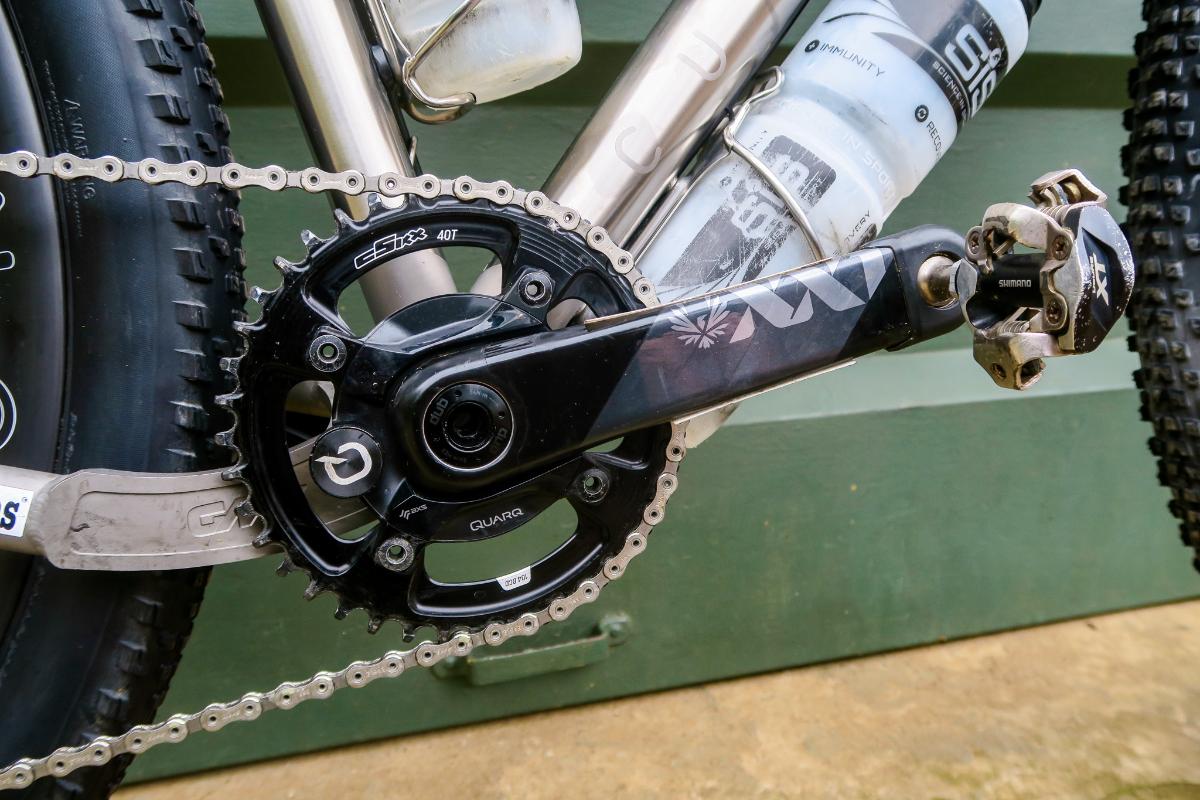 A Quarq powermeter keeps track of the watts being laid down
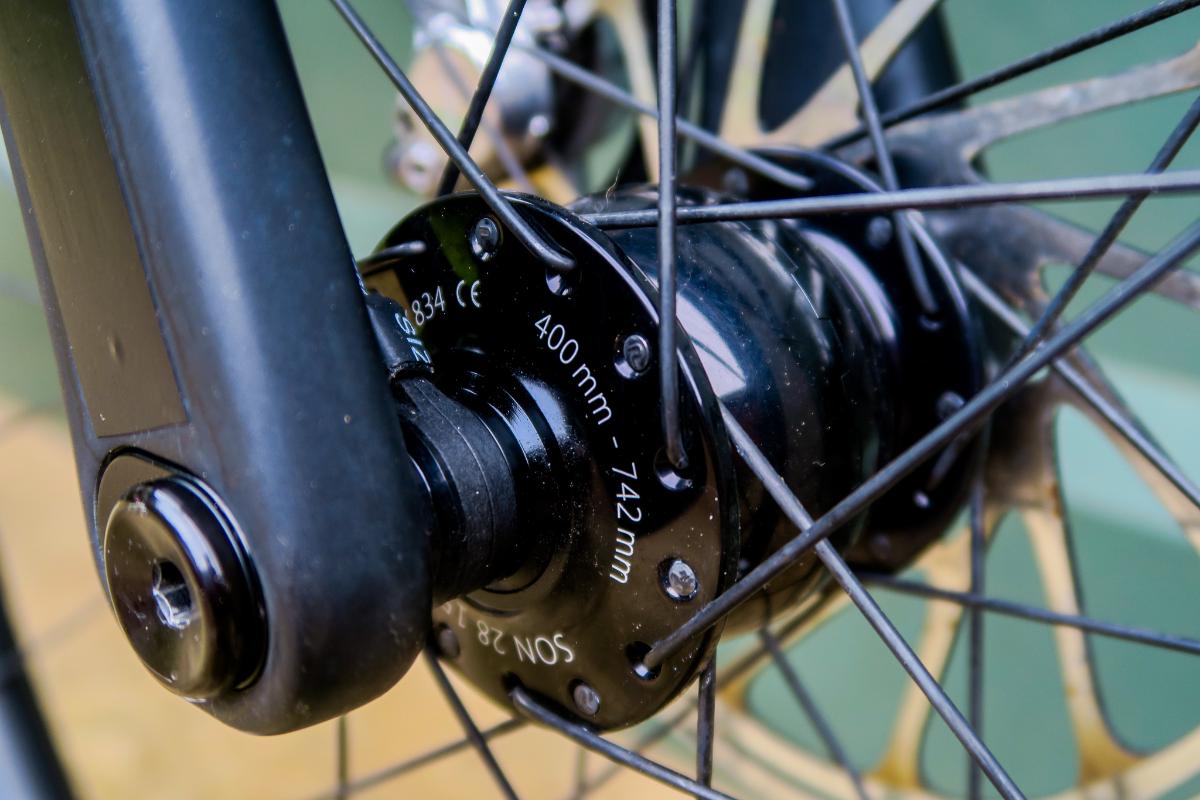 Kevin used a SON Dynamo front hub to charge devices
Basic Survival:
- Space blanket
- Sleeping Bag
Miscellaneous:
- Credit card
- Cash
- Mobile phone
- Route Cues x 2
- Passport
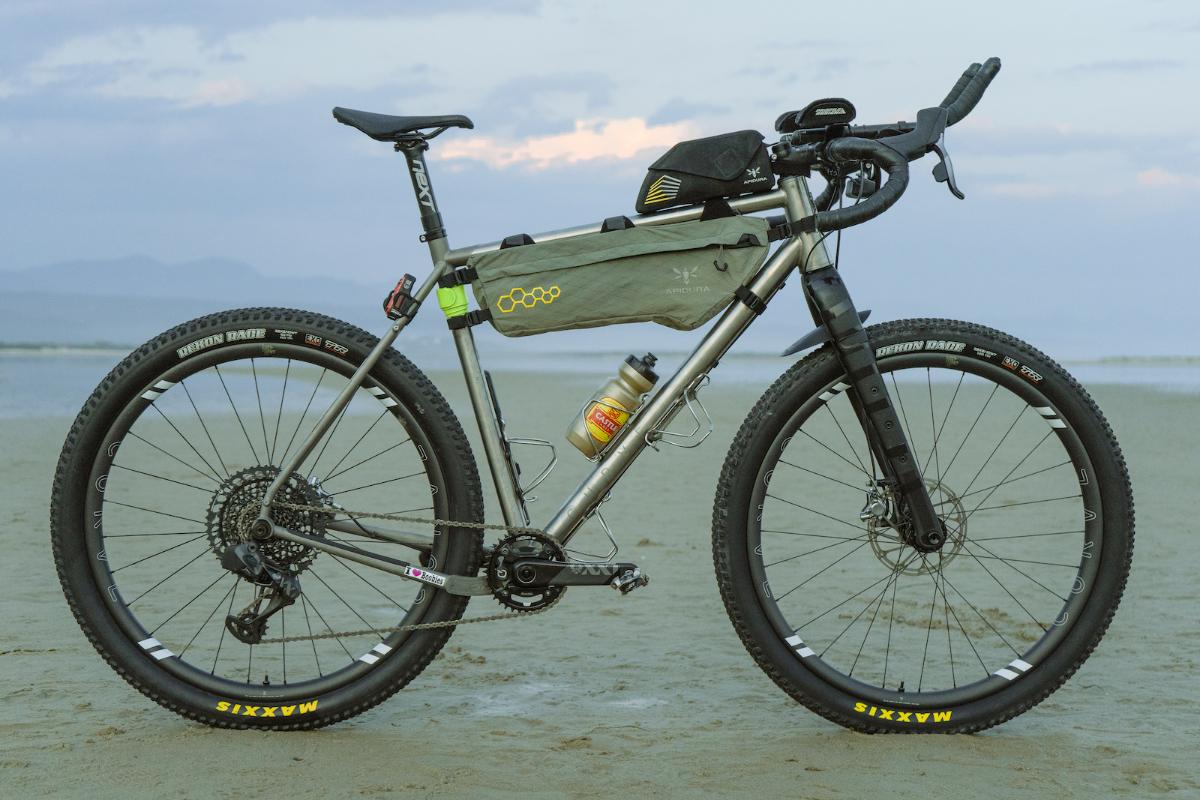
- Frame: CURVE Karoo Prototype
- Stem: Easton EA50
- Saddle: Specialized Power
- BB: Wheels MFG T47
- Hubs: Rear – DT Swiss 350; Front – SON Dynamo
- Fork: ENVE All Mountain Rigid
- Handlebar: CURVE Walmer Bar – 500/650
- Shifters: SRAM Force AXS
- Rear Derailleur: SRAM XX1 AXS
- Cassette: SRAM XO1 10-52
- Rims: CURVE Dirt Hoops 29 – 25mm Internal
- Headset: Cane Creek
- Seatpost: RaceFace Carbon
- Brakeset: SRAM Red Post Mount
- Crankset: SRAM XX1 Quarq – 36T
- Chain: SRAM XO1 Eagle
- Tyres: MAXXIS Rekon Race 29 x 2.4
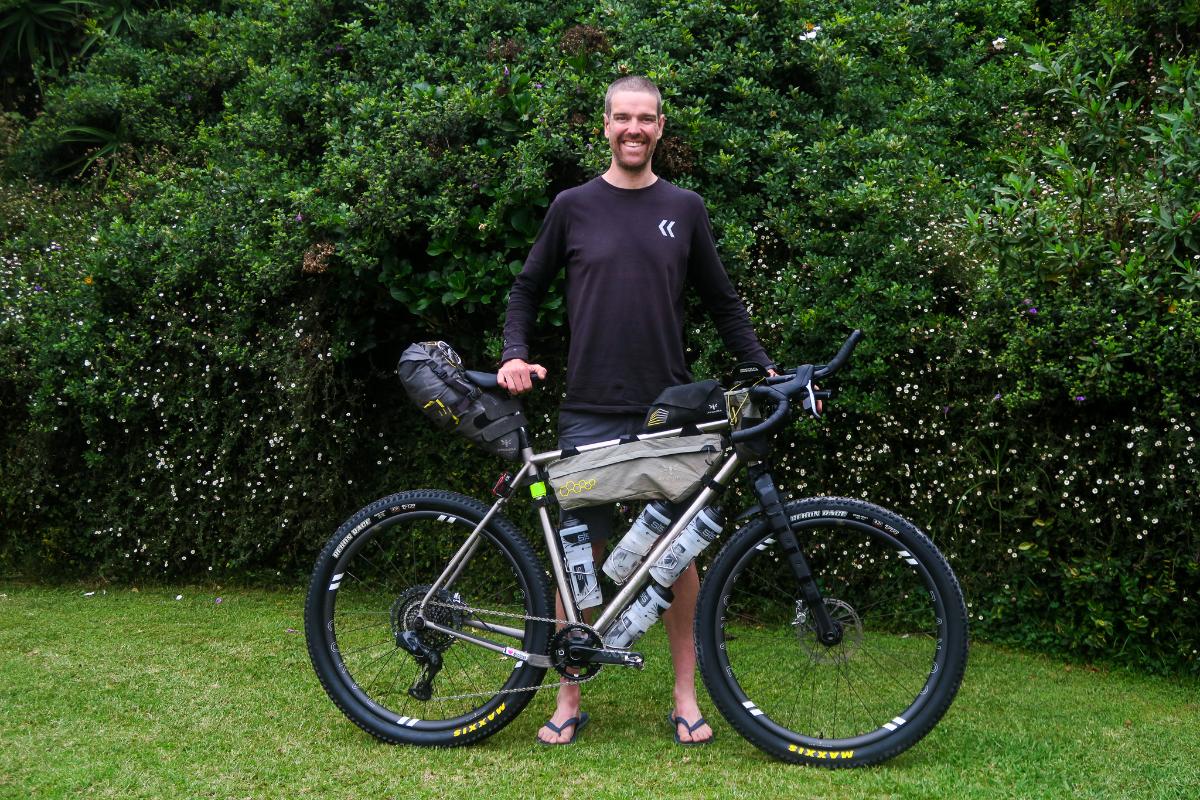 Kevin opted for “vet tekkies” with 2.4″ Maxxis Rekon Race on 29″ CURVE Dirt Hoops.
Keen to find out more?
If you have any questions for Kevin please drop them in the comments below, he’s kindly agreed to answer them.


How do you get your buttocks "trained" for these type of rides?