Every race that I have done has taught me something, about managing myself, managing those around me, managing adversity, and carrying on when things don’t quite go according to plan. Over the years, these lessons have become more and more applicable in real life, as I’ve come to realise that being blindsided by the unexpected is part of the game.
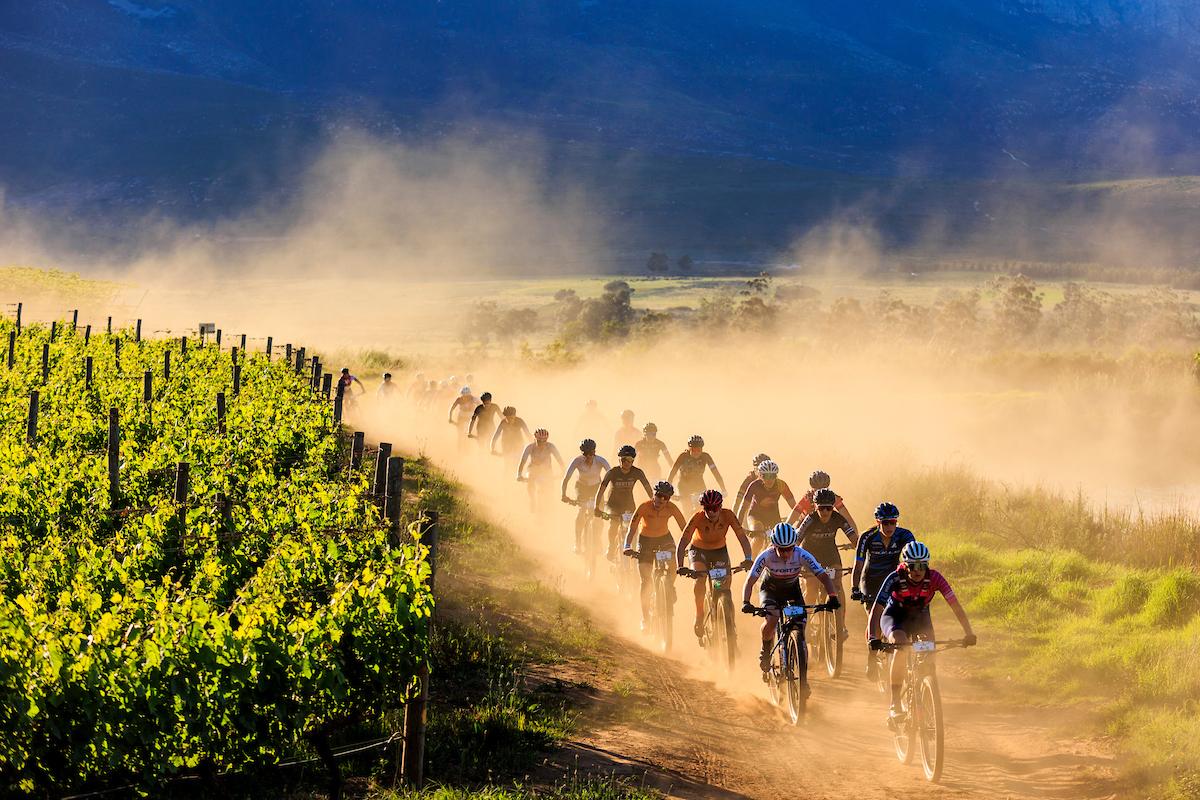 The Elite women set off into the Lourensford vineyards. Image by Sam Clark
This year’s Wines2Whales Chardonnay was a good example of how things don’t always work out the way you expect. Having ticked off a few Wines2Whales over the years, I am pretty blasé about the event, and tend to think of it as an awesome three day training camp. This year I was looking forward to riding it in a ladies team for the first time, in the biggest Elite women’s field the event has seen.
The unique thing about the Chardonnay, is that the organisers have dedicated it to the racing women: meaning we get our own start batch and the lion’s share of the media coverage. Although I am by no means a professional, I am part of a pool of the working class who are racing with the Elites, to help grow the field and the sport (and mostly because we just love racing bikes). It has been gratifying to see the size of the field grow over the years, and hopefully we can see this trend continue.
I lined up with power trail runner Marzelle van der Merwe, and after less-than-perfect preparation I was expecting to enjoy suffering horribly on her wheel. A series of unfortunate events meant this was not to be. But I learned a few important lessons which apply mainly to stage racing, but probably in real life too.
Stage 1 – Lourensford to Oak Valley
My favourite days are the two transfer days because of the sense of adventure and achievement that comes from riding from one geographic location to another. Stage 1 is also always the toughest for me because it begins with a significant climb straight out of the start chute. The rolling hills and single track that lead you to the infamous Gantouw pass portage take no prisoners. I’m also not gifted on my feet and the portage inevitably ends with me “puffing like an aged labrador” (thanks Seamus) with my heart rate shooting through the roof.
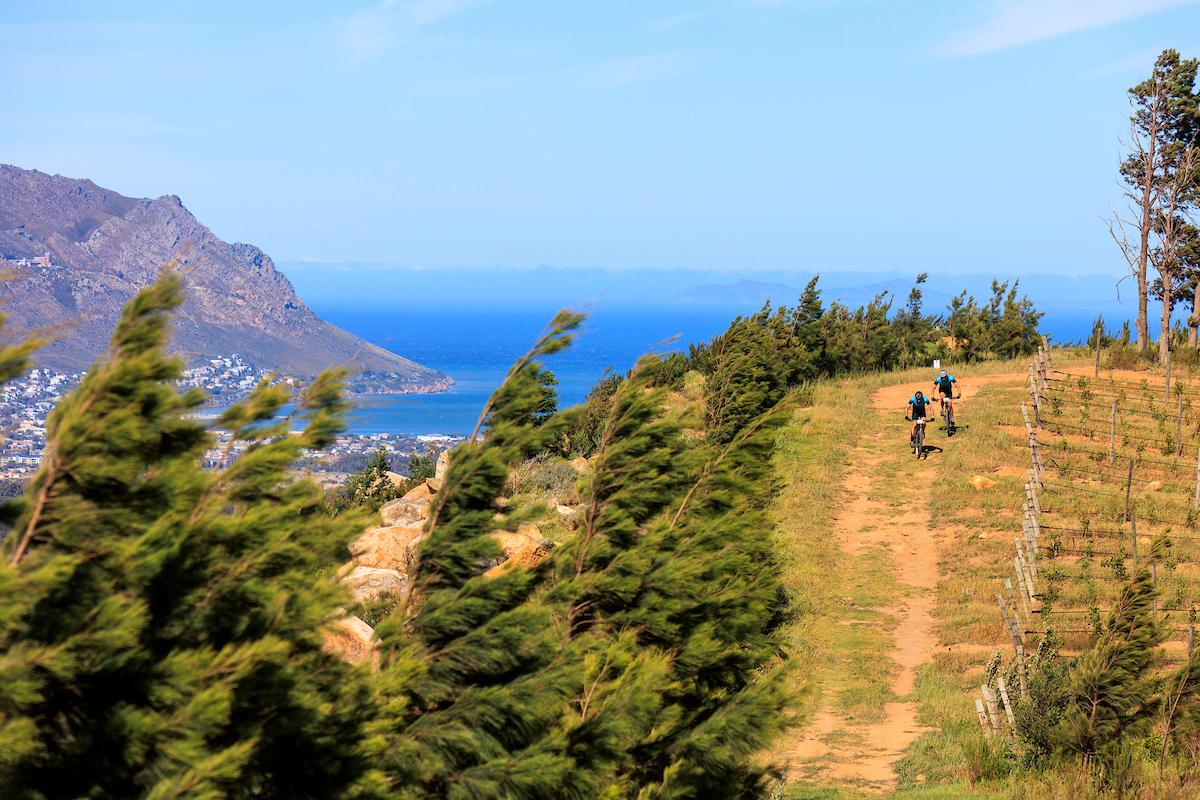 At some point on the climb above Lourensford things began to unravel for us. Image Sam Clark
This year things played out a bit differently. Some way up the first climb my phone rang, and I’d just realised that the person in blue behind me was not Marzelle. Which brings me to the first two hard lessons learned.
Lesson 1: Check your equipment
Marzelle started the first stage on binding brakes. Something I probably would have done. I always assume that if my bike was working when I left it last, it will be working again when I get on a few days later and rush to the start line. A two minute check before a race can save some time and massive stress later.
Lesson 2: Always know where your partner is
While Marzelle was puzzling with her brakes, I was blissfully unaware, and tackling the first big climb in Lourensford. I thought she was right behind me: I had even been speaking to her. The cherry on the top was that when she eventually got hold of me and I tried to retrace my steps, I missed an arrow and ended up in a field somewhere below the route. I was only saved by B-batch coming through on the road above me, which allowed me to reverse engineer my way back to her. I’ve never felt so stupid. You can’t make this s%*t up.
Having lost the group we took it easy, to the portage. I wasn’t feeling amazing and Marzelle did all the hard work on the front in a raging headwind. True to form she bounced up the portage like a gazelle, while I wheezed and puffed my way up cursing.
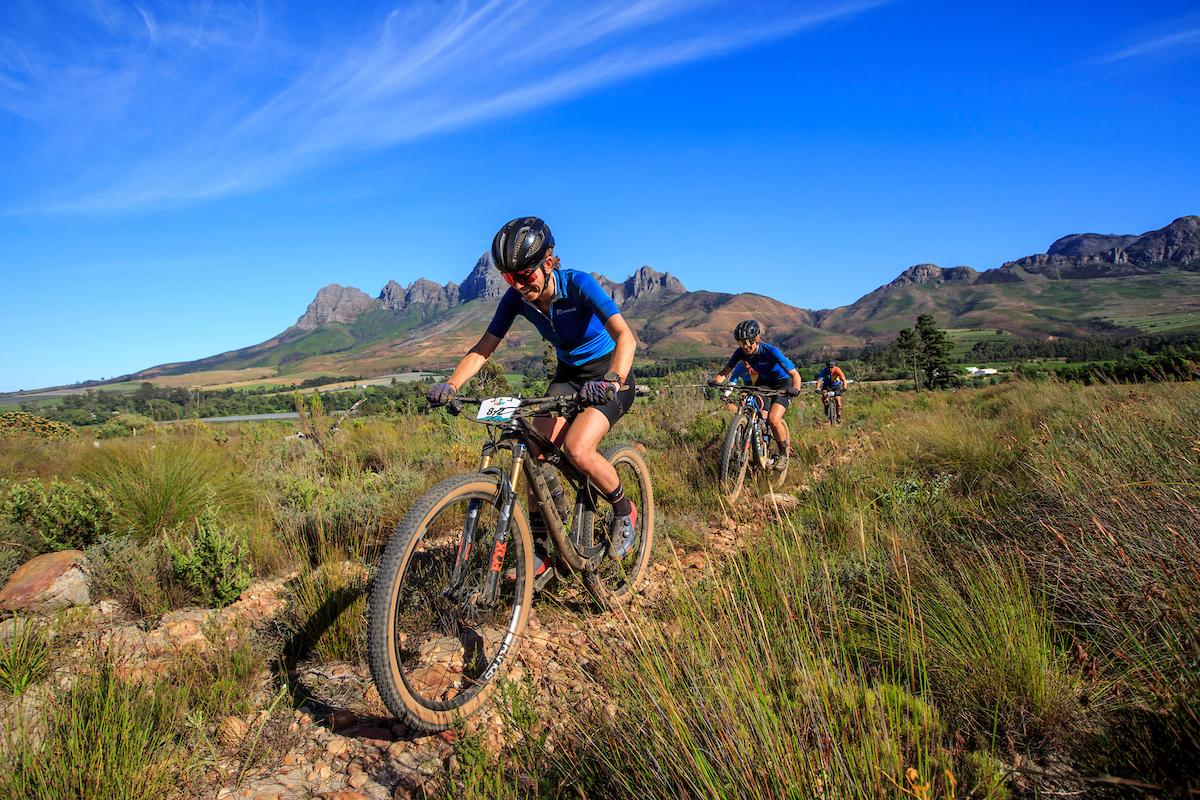 Marzelle saving the day in the headwind on Stage 1. Image by Sam Clark
It took a solid twenty minutes for me to find myself again post-portage. The A-Z trails in Grabouw began to work their magic. It was dry and super sandy, meaning there were no free kilometres, but the wind calmed down slightly making for a much happier ride once we were over Gantouw pass. A fun, flowing bermed downhill into the finish at Oak Valley meant we ended on a high note and in good spirits.
Stage 2 – Oak Valley to Oak Valley
Stage 2 is dubbed “Play Day”, because the route crams in a large amount of singletrack on Oak Valley and the surrounding farms.
We set out in the early morning chill, and the bunch soon splintered on the undulating jeep tracks. It was the first time I got to appreciate the ladies start batch, and we had the singletrack to ourselves for the most part, which was a pleasure. The iconic Vissie’s Magic and Sounds of Silence on Oak Valley were definitely the standout trails of the day.
The punchy nature of the course began to chomp away at our legs, and around the halfway mark Marzelle’s epic Otter trail run two weeks earlier caught up with her.
We limped home as best we could, but it was horrible seeing Marze suffer and not being able to be of any help. Everyone has a day like that at some point. Having had many of them myself I know you can only get it over with as quickly as possible, and hope that a rest and a good night’s sleep do the job. Unfortunately for Marze it didn’t and she made the difficult call to be safe rather than sorry.
I started Stage 3 alone. This leads me to lesson three.
Lesson 3: Talk constantly
There are two people in a team, and it is so important to understand where each person is: both physically and mentally. This was my first experience with a partner dropping out due to sickness and it didn’t feel great. I’m not sure what I could have done differently, but I can’t help feeling that I could have managed things better, and helped Marzelle more. Because I had a wobbly first stage and was expecting to be the nail, it never occurred to me to look out for her, and I wish I had been a bit more tuned in to how she was feeling on stage 2 and checked in more regularly.
Stage 3 – Oak Valley to Onrus
Stage three has always been my favourite, probably due to its relatively flat profile (I climb like a wounded buffalo), and the epic scale of the landscape we cover. Going point-to-point just feels good!
A highlight for me is the ride over Karwyderskraal into the Hemel en Aarde Valley, as the scenery changes so dramatically and very quickly from the open fields to towering green mountains. It’s a loose, sandy, energy-sapping climb, but the knowledge that it’s mostly downhill from the dam wall serves as a carrot.
The singletrack home down the gorge is always harder than I expect, and this year was no different. Rain started falling heavily halfway down, and every little rise in the trail felt monumental. It was with great relief that I rolled into the finish at Curro school in Onrus.
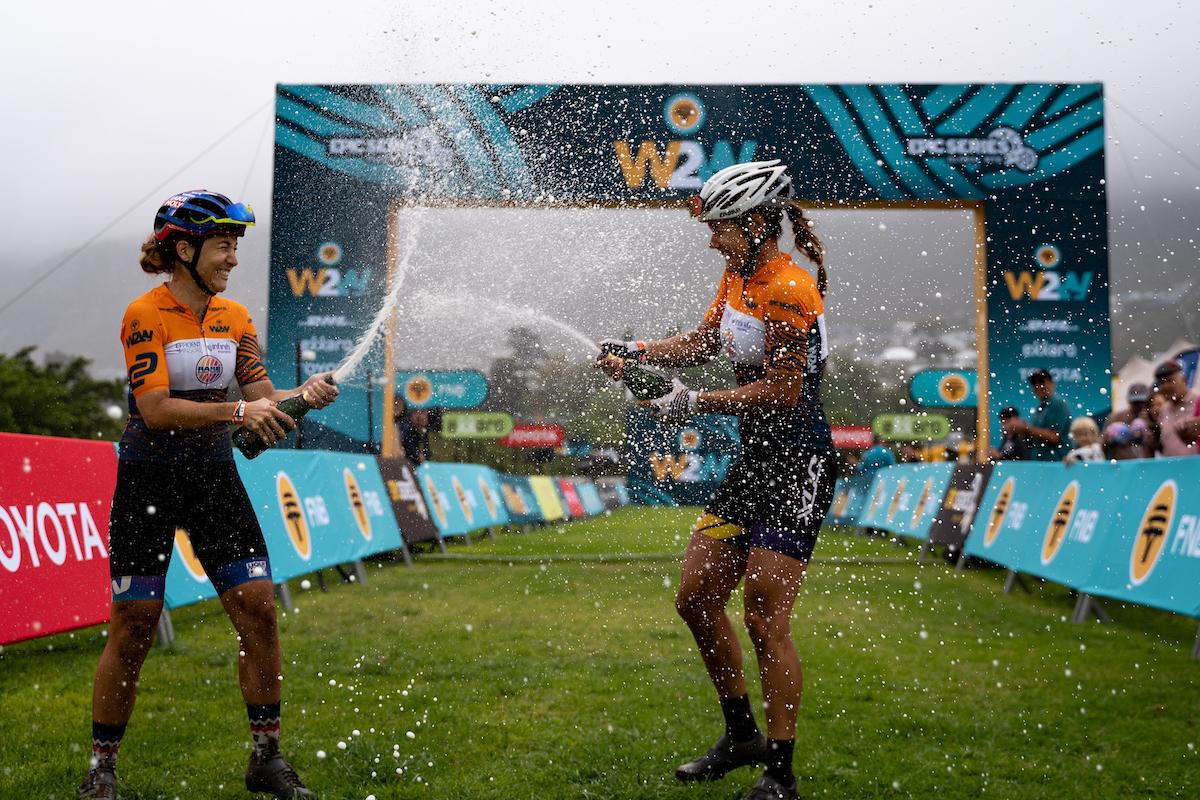 Kim le Court and Vera Looser celebrating their well-deserved win. For all the details from racing at the sharp end of the field click here. Image Simon Pocock
While I didn’t have the outrageously tough race I was expecting, in many ways this year’s event was one of the most challenging experiences I have had.
It reminded me that the team dynamic is the core of stage racing, that it takes two to finish a race successfully, and finally that no matter how many times you do something there is always more to learn. This brings me to the final lesson learned.
Lesson 4: It’s how you respond
Despite the challenges, and things going totally off-piste, it was an exceptional event to be part of, and I am so glad I had the opportunity. I was tempted to throw in the towel and enjoy a sleep-in on Sunday morning after Marzelle withdrew, but I decided to make the most of the chance to ride trails that are not normally open to the public. And I am so glad I did. In cycling, as with life in general you can only control things to a degree, but beyond a certain point, it is just about how you respond.
I’m looking forward to trying again soon!
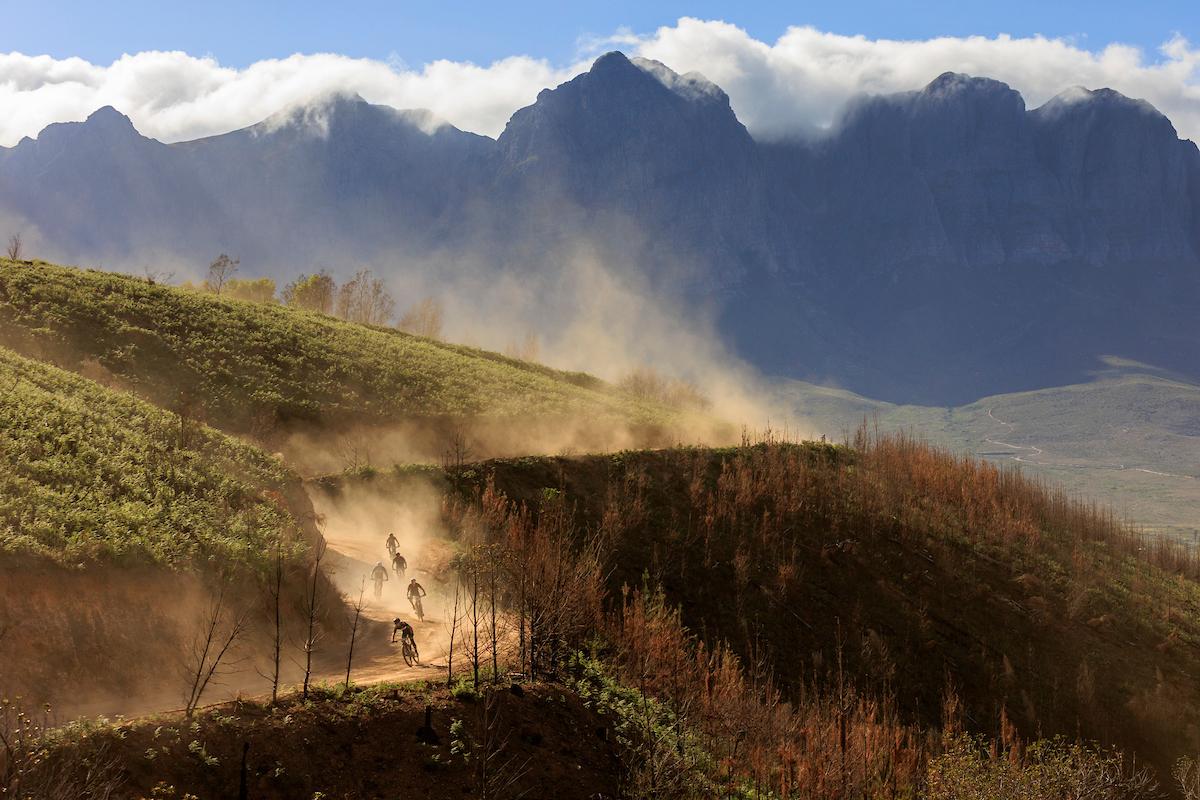 Ups and downs are part of the game. Image by Sam Clark

Lekker read and very pertinent lessons shared. Everybody who rides a stage race should read this report. Thanks for sharing