Events

Kevin Evans accepts doping charge

By Press Office · 1614 comments

Cycling South Africa reports that the South African Institute for Drug-Free Sport (SAIDS) has charged mountain bike cyclist, Kevin Evans with doping after identifying serious irregularities in his Athlete Biological Passport (ABP) – a profile of the athlete’s blood parameters.
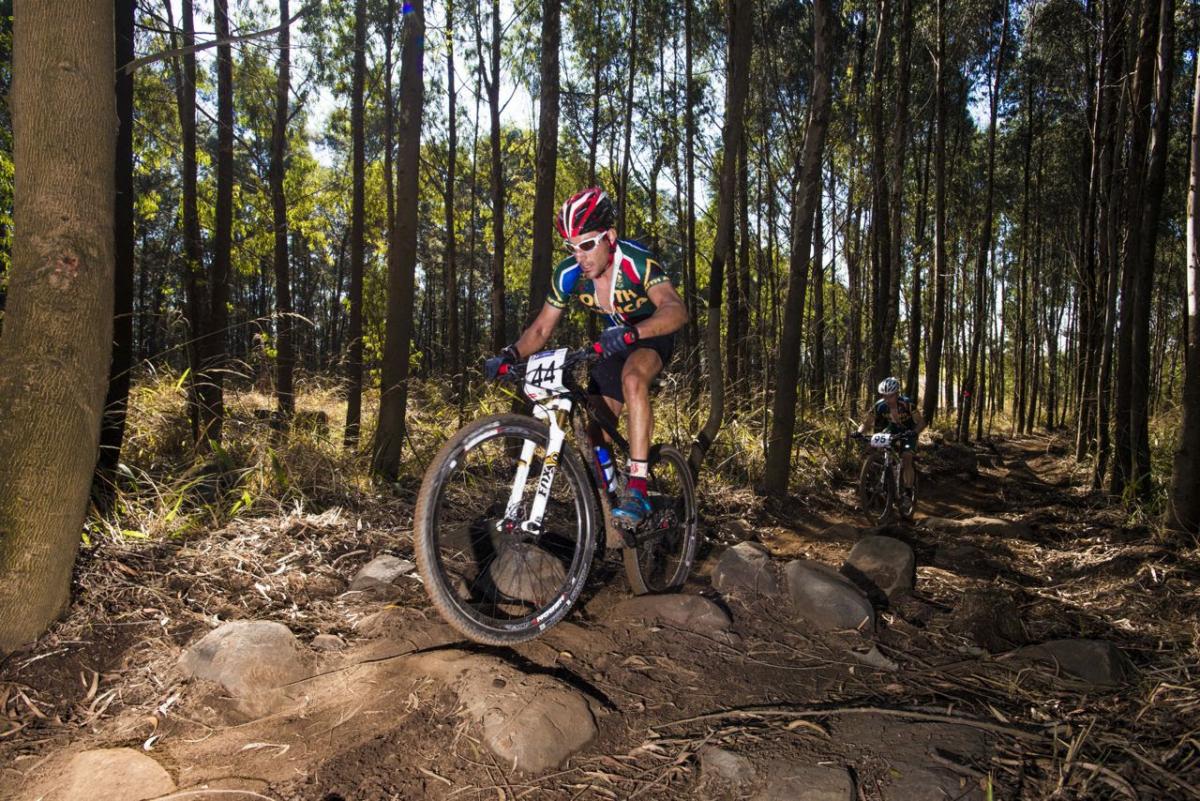
ccs-62657-0-90136700-1453116564.jpgPhoto credit: Dave Macleod/
Gameplan Media

Mr. Evans accepted the charge of doping and did not contest the findings. The ABP is a longitudinal analysis and the suspicious readings were identified over a period of time, therefore the athlete’s results extending back to 14 March 2014 will be disqualified, with all of the resulting consequences, including forfeiture of any medals, points and prizes.

He will be banned from sport for four years as of 4 March 2015 until 3 March 2019. The athlete has however indicated that he has retired from professional cycling.

Cycling South Africa respects the independence of the SAIDS process. Cycling South Africa further reiterates its zero-tolerance approach to doping in sport and will continue working with SAIDS in the promotion of a drug-free sport via its awareness and extensive testing programmes.


Comments

rock

Jan 22, 2016, 8:16 AM

Sure a couple of elite cyclists can help you out here. Didn't RC have a testing kit? 


check the classifieds :ph34r:  

jcza

Jan 22, 2016, 8:19 AM

No, he was just servicing his brakes. :ph34r:


check the classifieds :ph34r:  


You okes are non-believers. Like SOMEONE else I know  

Pure Savage

Jan 22, 2016, 8:27 AM

How many ex dopers now seem to have an opinion on dopers.....


38b3195.jpg

Who is this oke?

Martin PJ

Jan 22, 2016, 8:30 AM

interesting that you know what yours is.


How do one go about testing your own value?  Should be interesting to know.....


GP takes blood and sends to lab. I had this done a few times when I was sick. Mine was about 50 when I was resting for a few weeks.


If you google the problem, high iron levels in older males can be a hidden problem. Normally does not affect athletes, but something to monitor.

Spinnekop

Jan 22, 2016, 8:32 AM

Who is this oke?

Aaaahhhh...you live in the Cape.

The Super Cycling show will probably start there in a few months.  :P  :lol:  :lol:

Tumbleweed

Jan 22, 2016, 8:32 AM

Who is this oke?


A young Kevin Spacey?

BarHugger

Jan 22, 2016, 8:33 AM

Aaaahhhh...you live in the Cape.

The Super Cycling show will probably start there in a few months.  :P  :lol:  :lol:

Don't tell his boyfriend.....

SwissVan

Jan 22, 2016, 8:34 AM

The UCI originally proposed 53% which is 3 standard deviations above the norm but after consultation with the teams it was lowered to 50%. Not sure why teams wanted lower limit, apparently it was to catch more dopers.  


Ja i think i found the article...its seems to be even older (1997) than i thought


http://www.sportsci.org/news/news9703/AISblood.html


I'll post the full article in another post after this


Sounds like a case of faulty equipment.....


WOT!! Swiss Laboratories with faulty equipment...NEVER ^_^

SwissVan

Jan 22, 2016, 8:36 AM

Who is this oke?


Chubby cheeks like that, my guess he is some fun rider

SwissVan

Jan 22, 2016, 8:37 AM

Heres the article mentioned


BLOOD TESTING FOR PROFESSIONAL CYCLISTS: What's a fair hematocrit limit?


David T. Martin , Michael Ashenden, Robin Parisotto, David Pyne, Allan G. Hahn, Department of Physiology and Applied Nutrition, Australian Institute of Sport, Belconnen, Australia

The decision of the UCI to use blood tests to deter the use of rhEPO by professional cyclists is admirable, but the 50% hematocrit limit may be too strict. Ten years of data collected from road cyclists at the Australian Institute of Sport indicate that a 52% hematocrit limit would result in fewer false positive tests.


http://www.sportsci.org/updatered.GIFApril 97. See the end of this article for an update on the implementation of the 50% rule. 

Attempts to Discourage Use of rhEPO

http://www.sportsci.org/news/news9703/CYCSP.JPGThe news has made headlines on sport pages around the world. Both the Federation Internationale de Ski (FIS) and the Union Cycliste Internationale (UCI) have implemented random blood tests prior to competition to deter the alleged use of DNA-recombinant human erythropoetin (rhEPO), a hormone known to increase the rate of red blood cell production. These decisions have come after years of finger-pointing and unsubstantiated claims that some of the world's most competitive cyclists and cross-country skiers are receiving an illegal performance advantage by injecting rhEPO. The governing bodies for these two endurance sports have decided upon slightly different methods and cut-off values for screening blood samples. Whereas FIS have identified specific hemoglobin concentrations (16.5 g/dl women; 18.5 g/dl men), the UCI have decided to use a 50% hematocrit for male cyclists.

Seiler (1997) has recently reported on blood testing cross-country skiers to deter the use of rhEPO. This report will focus on similar issues faced by the international cycling community.

No More Hematocrits Higher Than 50%

At their annual meeting in Geneva (24 January 1997), UCI delegates, in consultation with medical professionals, decided to implement blood testing to deter the alleged use of rhEPO by selecting a 50% hematocrit as an upper limit. In an article entitled "Cycling Pro's Saddled with Blood Tests" appearing in The European (30 Jan - 5 Feb, 1997), it was reported that random blood tests would begin on March 22 at the Milan to San Remo Classic bike race. UCI president, Hein Verbruggen, has stressed that the testing is a " health check" and that a positive test does not imply rhEPO use. The testing has been primarily established to insure that professional cyclists will not begin a major road race with a dangerously high hematocrit. In contrast to a positive drug test, which can result in prolonged suspension from competition, riders with a hematocrit greater than 50% would be suspended only until values decreased to an acceptable level. But are there data indicating that a 51% hematocrit is dangerous for a professional road cyclist? And more importantly, what is the normal incidence of a hematocrit above 50% in professional cyclists not taking rhEPO? It appears that answers to these questions are currently not available.

RhEPO Can Be Dangerous

It is now well recognized that the uncontrolled use of rhEPO can be dangerous. Within the first four years of rhEPO's introduction, this synthetic hormone was suggested to have caused over 17 athlete deaths (Ramotar, 1990). Some news reports are now suggesting that over 20 competitive cyclists have died as a result of rhEPO administration (The European, 12-18 Dec, 1996). Never-the-less, international competition is fierce and many competitive cyclists desire the financial gains and prestige associated with being a champion. Perhaps this is why the suspected incidence of rhEPO use among professional cyclists in high. An article presented in The European (5-11 Dec, 1996) has summarized a controversial dossier prepared by Sandro Donati, an Italian professor of exercise physiology. Donati's reports suggests that, "rhEPO was being used by 60-70% percent of all professional cyclists." Additionally, the dossier presents the names of 21 professional riders including three well known cyclists. Donati also names seven Italian sport doctors who supposedly administered rhEPO to road cyclists for large annual fees ($50,000-$100,000). Some of those implicated have adamantly denied allegations indicating that there is no proof to support the outlandish claims.

Why a 50% Hematocrit?

Although the UCI should be congratulated for their efforts to prevent the illegal use of rhEPO, the 50% hematocrit limit (approximately 16.5 g/dl) may be too aggressive and result in many false positive tests. The UCI cut-off is obviously much lower than the 18 g/dl hemoglobin limit selected by FIS. In response to a query made by the Department of Physiology and Applied Nutrition at the Australian Institute of Sport, the UCI explained that the 50% cut-off valued was agreed to by sport doctors and team directors working for the major professional cycling teams. The UCI explained that, a 53% hematocrit limit was initially proposed (based on three standard deviations above the average hematocrit value for a normal population) but then decreased to 50% to ensure that all professional team delegates were in agreement. Why would doctors with professional cycling teams push for a lower detection limit? Maybe "clean" cycling programs want to insure that drug users will be caught or at least be more limited with their illegal activities. Or perhaps there is evidence indicating that a 51% hematocrit is dangerous for endurance athletes.

Hematocrits in Australian Road Cyclists

Unfortunately, the prevalence of a hematocrit greater than 50% in elite road cyclists not taking rhEPO is not well established. Additionally, the effects of body posture, dehydration and altitude training on the hematocrit of professional cyclists is not well documented. At the Australian Institute of Sport , top Australian Road Cyclists (including five Professional Australian Cyclists who are now racing in Europe) have participated in routine blood tests to monitor health and training stress. As part of the normal venous blood analysis, hematocrit is determined using routine laboratory equipment (a Coulter Counter). A retrospective analysis of 360 blood samples collected from Australia's top road cyclists between 1987-1996 resulted in 10 hematocrit values of 50% or more. Thus, 2.8% of blood samples from the Australian Road Cyclists exceed the 50% hematocrit value recently set by the UCI as an acceptable limit. It is believed that these cyclists were training and competing in a "clean environment" at the time of testing. In other words, it is unlikely that they were taking rhEPO. The maximum hematocrit 52.0%, recorded in one cyclist.

Hematocrits in Other Competitive Australian Athletes

In a much larger data set (12,359 blood samples) that including male and female athletes participating in a variety of sports (e.g., swimming, athletics, water polo, weight lifting, rowing, tennis, soccer, basketball, netball, gymnastics) 3.4% of blood samples had a hematocrit value greater than 50%. The percentage of hematocrit scores greater than 50% is therefore similar between the Australian cyclists and other Australian athletes competitive at the national level. A more detailed examination of the hematocrit data from all sports determined that the percentage of tests where hematocrit was greater than 50% ranged from 0.3% in netball to 25.7% in weight lifting.

Effects of Posture on Hematocrit

Hematocrit reflects the balance between red blood cell production and destruction but is also known to be influenced by dehydration and body posture. Heart rate and blood pressure are higher when standing compared to sitting or lying down. The higher blood pressure when standing is associated with the movement of intravascular fluid (i.e., plasma) into interstitial compartments. This causes plasma volume to decrease and hematocrit to rise. Gore and Colleagues (1992) have reported a 6% decrease in plasma volume associated with 30 minutes of standing following 30 minutes of sitting. The following example illustrates how body position could determine whether a cyclist is disqualified or not based on the 50% hematocrit UCI ruling. If a cyclist has a blood volume of 6.0 liters and a hematocrit when sitting of 49%, then the blood would be composed of 2.94 liters of red blood cells and 3.06 liters of plasma. If the cyclist stands for 30 minutes and undergoes a 6% reduction in plasma volume, hematocrit would now rise to 50.5% and under the new UCI ruling the cyclist would be disqualified. It is worth noting, that at the Australian Institute of Sport venipucture blood draws were performed on athletes in the morning in a fasted state after remaining in a supine position for 5-10 minutes. If blood was collected from the Australian cyclists in a seated or standing position, it is likely that more than 2.8% of the blood samples would have a hematocrit greater than 50%. In attempts to control for extraneous variables such as posture, the UCI has established that blood will be taken from cyclists in the morning, before breakfast, in a seated position.

Direct Detection of rhEPO

Techniques have been developed to test for rhEPO use but thus far, none have proven to be completely satisfactory for screening athletes. Wide et al. (1995) have demonstrated that rhEPO can be distinguished from endogenous EPO in both urine and serum samples using electrophoretic techniques. The electrophoretic technique is based on the observation that endogenous EPO generally has a greater negative charge than rhEPO. Although no false positive tests are detected using this technique, it appears that the use of rhEPO can only be confirmed up to three days after injections have stopped. The success of this technique would therefore depend upon random "out-of-competition" sample collections.

Indirect Detection of rhEPO

Another potential method for determining whether an athlete is using rhEPO has been suggested by Casoni et al., (1993). Using sophisticated scattering laser technology Bayer has introduced a series of hematology analyzers that allow for red blood cell volume and hemoglobin content to be evaluated on a cell by cell basis. The Technicon Bayer H*1, H*2, and H*3 analyzers allow for the distribution of cell size to be plotted against cell hemoglobin content resulting in a nine quadrant cytogram. Casoni and colleagues (1993) observed that the percentage of cells that were macrocytic (>120fl) and hypochromic (<28 pg) was greater than 0.6% only in those subjects who underwent rhEPO therapy. A limitation to this technique was is that more than 0.6% macrocytic-hypochromic cells could only be observed towards the end of, and for 10 days following a 45 day course of rhEPO. Also, approximately 60% of rhEPO treated subjects tested below the 0.6% cut-off value.

Recently, Bayer Health Care Australia has entered into a sponsorship agreement with the Sports Haematology and Biochemistry Laboratory at the Australian Institute of Sport. This sponsorship has resulted in the acquisition of a Technicon H*3 analyzer which is currently being used to analyze athletes' blood. A retrospective analysis of blood samples provided by 50 male endurance athletes (8 swimmers, 12 cyclists, 30 rowers) was performed to evalute the incidence of macrocytic-hypochromic red blood cells. In all but one sample the percentage of macrocytic hypochromic cells was equal to or less than 0.2%. The highest value measured in this group was only 0.3%. It should be noted that all of these athletes were tested during the initial phases of a competitive season in the summer. As mentioned by Wide and co-workers (1993), a combination of direct and indirect techniques will likely emerge in the near future to enable rhEPO use to be confidently detected.

In Conclusion

The decision of the UCI to test the blood of professional cyclists to deter the use of rhEPO is admirable. However, the 50% hematocrit limit appears too aggressive on the basis of 10 years of data collected from road cyclists tested at the Australian Institute of Sport. A 52% hematocrit limit would result in fewer false positive tests and could still deter the suspected use of rhEPO. While elite athletes wait for sensitive rhEPO detection techniques to emerge, measurements of hematocrit may represent a temporary deterrent. However, prior to implementing blood testing for hematocrit it would seem worth while to carefully evaluate the cut-off level and also consider the influence of body position, altitude training and dehydration on hematocrit values in professional cyclists. It is now possible that the leader in the Tour de France could be prevented from competing in the final stage because his hematocrit is "dangerously" high. With lucrative salaries at stake, it will be interesting to see if the 50% hematocrit rule will last throughout the 1997 professional cycling season.

 
http://www.sportsci.org/updatered.GIFApril 97. The UCI 50% Hematocrit rule has been implemented at the 1997 Paris-Nice Road Race. Three out of the 20 professional cyclists tested registered hematocrit measures greater than 50%. Their fate? An individual fine of 1,000 Swiss Francs and a team fine of 10,000 Swiss Francs. In addition, the riders with the "dangerously high" hematocrits were removed from competition for a period of 15 days. Erwan Mentheour (Fra, La Francaise des Jeux), Luca Colombo (Ita, Batik-Del Monte) and Mauro Santaromita are the riders who have lost money and a chance to win UCI points in Paris-Nice despite any evidence of rhEPO use.

intern

Jan 22, 2016, 8:46 AM

They did their best to sweep it under the carpet while pretending to discuss it. 


They then had a feature which include Roel Paulissen and sung his praises. Ex doper, who came back to the EPIC a few weeks after his doping banned was lifted and then his EPIC partner gets bust. They had a feature on a local race and the new team Telkom and sung Nolan Hoffmans praises, ex doper. 


Are we surprised it continues? 


Altech team hired a doper and weeks after his ban was lifted went and race J2C, and have stated their target race for the year is J2C.


Are we surprised it continues?


How many Ex Dopers get welcomed back with open arms bu sponsirs, fellow 'pros", race organisers and Fanboi's.


And we surprised it continues? 


The media needs to play their part in ostracizing these Dopers.


No coverage, no value.

No such thing as an 'ex doper'. Either you're a doper, or you are not a doper. Kla, ekse.

Edgar

Jan 22, 2016, 8:50 AM

While we are on the topic.


Anybody know when RC is going to be sentenced and any idea why the delay?


Is there more to this than meets the eye or am I being overly sensitive?  :ph34r:

intern

Jan 22, 2016, 8:51 AM

interesting that you know what yours is.


How do one go about testing your own value?  Should be interesting to know.....

Ask Rourke Croeser.


EDIT I see that was already pointed out. Kleva, me.

raptor-22

Jan 22, 2016, 8:54 AM

Ask Rourke Croeser.


EDIT I see that was already pointed out. Kleva, me.

Lance a saddle sore?

andydude

Jan 22, 2016, 8:55 AM

interesting that you know what yours is.


How do one go about testing your own value? Should be interesting to know.....

When I had to do the medical for the epic two years back I also asked the doc to include some blood tests out of interest. Some of my results:


Type, Result, Reference


Haemoglobin, 15.7 g/dl, 14.3-18.3

Red cell count, 5.14 10*12/l, 4.89-6.11

Haematocrit, 45.7%, 43.0-55.0


Interesting that the reference for haematocrit goes to 55.0 confirming that it's normal for > 50.0.


If you want I can send you my report and you can check all the other things tested like white blood cells and lots if others.

Odinson

Jan 22, 2016, 8:56 AM

Just a general observation of this thread: it is surprising to see how many hubbers seem to have a near encyclopedic knowledge of the doping rackets and methods. First hand knowledge or enthusiastic (non-)doping fundis? Secondly, it is interesting to see hubbers who come out of the woodwork to exclusively participate in doping threads, such as Lancesball. 


Just my Zim 2c.

Patchelicious

Jan 22, 2016, 8:58 AM

This raises another very real question.


Is Super Cycling setting a good example by employing guys who have served doping bans?


They also do not really condem it strongly enough, this is something they can actively do to help the situation. Not just the usual "ag its sad" statements.


#dopersmustfall

Tumbleweed

Jan 22, 2016, 8:59 AM

Just a general observation of this thread: it is surprising to see how many hubbers seem to have a near encyclopedic knowledge of the doping rackets and methods. First hand knowledge or enthusiastic (non-)doping fundis? Secondly, it is interesting to see hubbers who come out of the woodwork to exclusively participate in doping threads, such as Lancesball. 


Just my Zim 2c.


NSBB had an interesting take on that some pages back... 

GLuvsMtb

Jan 22, 2016, 9:01 AM

Just a general observation of this thread: it is surprising to see how many hubbers seem to have a near encyclopedic knowledge of the doping rackets and methods. First hand knowledge or enthusiastic (non-)doping fundis? Secondly, it is interesting to see hubbers who come out of the woodwork to exclusively participate in doping threads, such as Lancesball. 


Just my Zim 2c.

In many ways doping is more relevant to the sport than other non-racing news. It like watching Rally racing. We all watch for the crashes, and when it happens, we ask why the sport is so dangerous.

GLuvsMtb

Jan 22, 2016, 9:02 AM

This raises another very real question.


Is Super Cycling setting a good example by employing guys who have served doping bans?


They also do not really condem it strongly enough, this is something they can actively do to help the situation. Not just the usual "ag its sad" statements.


#dopersmustfall

thats like asking our Pres to have a zero-tolerance stance on corruption. The pot... the kettle... the colour black (and this is not a racist thread).

intern

Jan 22, 2016, 9:03 AM

Lance a saddle sore?

I think these days saddle sores are held in slightly higher regard than Captain America.

Odinson

Jan 22, 2016, 9:03 AM

NSBB had an interesting take on that some pages back... 


200.gif


Seems great minds think alike (or is it the part about "fools never differ"?)  :ph34r: 

intern

Jan 22, 2016, 9:04 AM

Just a general observation of this thread: it is surprising to see how many hubbers seem to have a near encyclopedic knowledge of the doping rackets and methods. First hand knowledge or enthusiastic (non-)doping fundis? Secondly, it is interesting to see hubbers who come out of the woodwork to exclusively participate in doping threads, such as Lancesball. 


Just my Zim 2c.

Fascinating subject Odinson; I solely read cyclingnews and velonews for the doping stories. I don't watch those skinny frauds racing the TdF or anything else, it's too 'unreal' for my liking (I also don't like movies which require one to 'will the suspension of disbelief'.

Martin PJ

Jan 22, 2016, 9:07 AM

In many ways doping is more relevant to the sport than other non-racing news. It like watching Rally racing. We all watch for the crashes, and when it happens, we ask why the sport is so dangerous.


For me the issue is that I clapped and cheered most of these guys on the podium many times. There has never been a time in cycling when doping was not considered cheating. Turning a blind eye is one thing, but I think everyone always new it was wrong.

NelAndre

Jan 22, 2016, 9:09 AM

This raises another very real question.


Is Super Cycling setting a good example by employing guys who have served doping bans?


They also do not really condem it strongly enough, this is something they can actively do to help the situation. Not just the usual "ag its sad" statements.


#dopersmustfall

Yip I agree. I did not watch the show but reading the feedback here just suggest it is actually not worth it in the future. Nothing authentic and real it seems. The only thing left to do today is knock off early and go for a ride.....water, biltong, nuts and a lekker koffie afterwards.

Add a comment

You must log in to comment