Events

Tour de France legends to ride in Absa Cape Epic

By Press Office · 115 comments

Cadel Evans and George Hincapie to ride for BMC Absa Racing Team in Masters category.
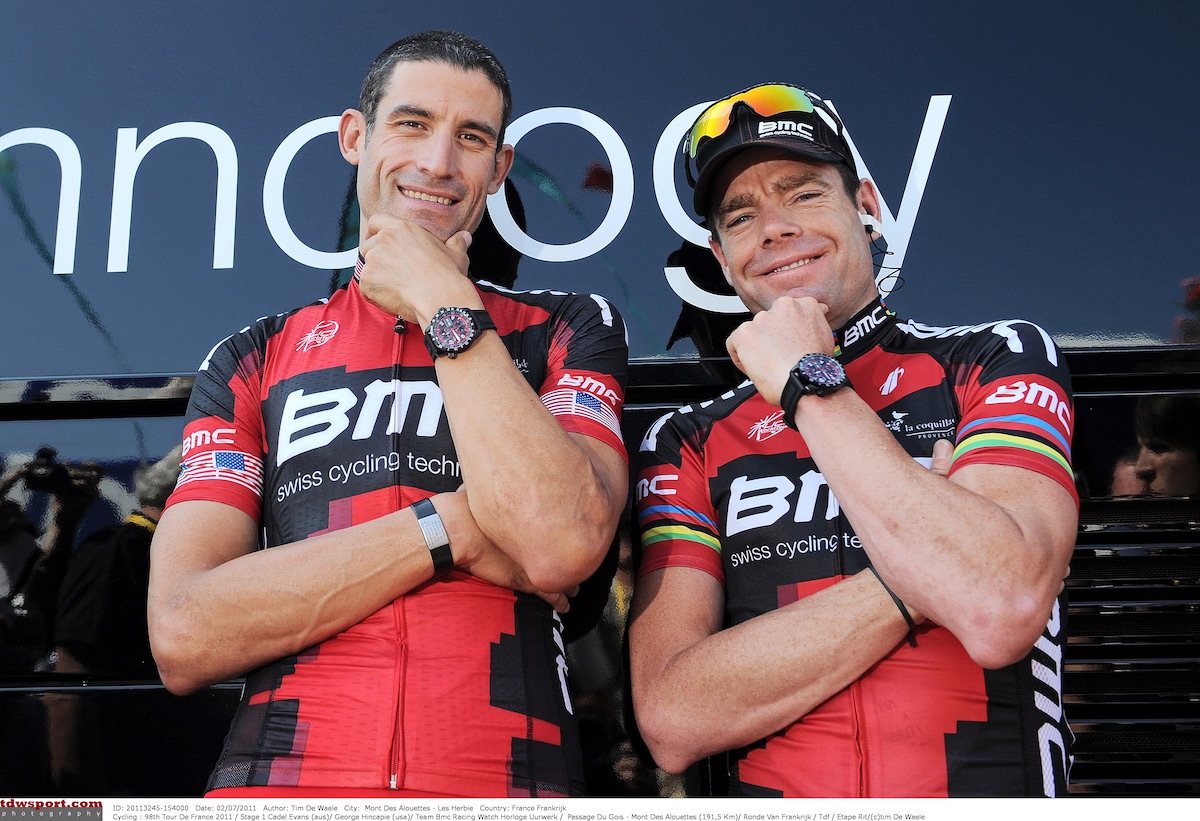
ccs-62657-0-42862400-1479715766.jpgGeorge Hincapie with Cadel Evans. tdwsport.com photography.

The BMC Absa Racing Team has been considerably boosted by the news that two Tour de France legends, Cadel Evans and George Hincapie, will be riding for them in the 2017 Absa Cape Epic.

Evans (40), from Australia, is the 2011 Tour de France winner while America’s Hincapie (43) is a 17-time Tour de France finisher. They will compete in the Masters category.

“Ever since I first heard about the Absa Cape Epic, I have wanted to try it. But they tell me it’s very hard,” said Evans about the grueling 8-day mountain bike stage race which starts at Meerendaal, Western Cape, on 19 March 2017.

“We are extremely excited to welcome two of the world’s leading cyclists into our Absa Pride family and I know that the support and camaraderie they will experience during their first tilt at the Absa Cape Epic will inspire them to ‘Conquer As One’,” said David Wingfield, Head of Marketing: Barclays Africa.

Evans, nicknamed ‘The Lung’, started his career as a mountain biker and won the World Cup in 1998 and 1999. He turned to road racing after placing seventh in the men’s cross-country mountain bike race at the 2000 Summer Olympics in Sydney. After two second-placed finishes in the Tour de France, Evans won the event in 2011.

“I am a racer, but we are competing against far more experienced riders so we have to be realistic,” Evans said. “If George and I can put up with each other, and race hard without any major mishaps, that will be good.”

Hincapie is one of the most legendary riders in the world, with numerous world championships, national championships and professional victories to his credit.
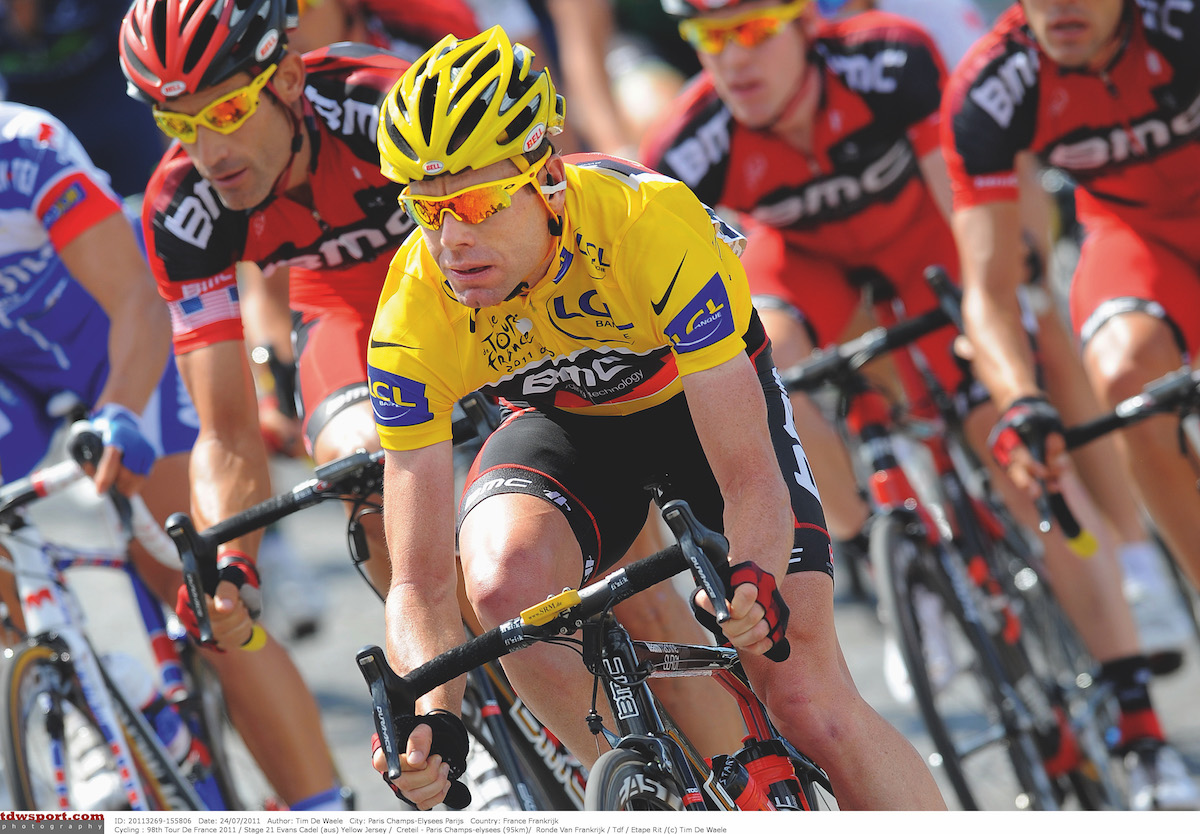
ccs-62657-0-65711800-1479715765.jpgEvans and Hincapie during the 2011 Tour de France. tdwsport.com photography.

During his 19-year professional career Hincapie was regarded as the premier American classics rider of his generation. He competed in a record 17 Ronde van Vlaanderen races and finished second at the grueling Paris-Roubaix – the best ever for any American. Beyond the classics he rode in the Tour de France 17 times and won three US National Road Race championships.

Asked why he had chosen to do the Absa Cape Epic, Hincapie laughed: “Cadel made me do it … and it looks like it’s going to be an amazing adventure.”

“Troy (de Haas, their BMC team manager) sent us some videos on the race to start visualising and preparing over the next months, but that’s about it.”

Evans has been back on his mountain bike since retiring. “Yes, I came into cycling through mountain biking. I stayed away from the trails for most of my road career, but as soon as I stopped competing I started riding off-road again.”

“I have not competed seriously since February 2015. For training reasons, I will try to get some competition in before the Absa Cape Epic.”

Hincapie admits he has no experience racing mountain bikes. “| have always enjoyed riding off-road but have never really raced it, except just with mates at home.”

Neither have ever raced in a team event either.

“Should I be worried?” Evans laughed. “It will be my first time in South Africa. That alone will be a great experience.”

Hincapie has also never visited South Africa, but says it’s always been on his bucket list and that “to do it as a part of this team is very exciting”.

Wingfield promises that the Absa Pride riders will make the visit of Evans and Hincapie “special and memorable”. “We look forward to hosting them and according them a proper Absa Pride welcome with full access to our world class facilities and a premium hospitality experience.”

He added that as part of Absa’s continued partnership with the Absa Cape Epic, the bank will once again recognise and reward teamwork and perseverance at next year’s race with the popular #ConquerAsOne campaign.

“We will be fully supporting Cadel and George as the newest members of our Absa Pride family but wish to assure them that the unity and spirit among all racers will help them dig deep and conquer the eight challenging days – as one,” concluded Wingfield.
Related posts

Comments

Bonus

Feb 22, 2017, 9:22 PM

Agreed. The vituperative moral outrage is interesting to see. This same reaction led us to completely annihilate hansie cronje. I believe we treated him very badly indeed.


People make mistakes. . . .


I understand what you are saying, but does a career of systematic doping and the destroying of the lives of people trying to expose you really fall under the category "mistake"?

intern

Feb 23, 2017, 2:39 AM

Yeh a mistake is forgetting where you left the car keys, spending decades mainlining your own blood isn't quite in the same sort of league. Also, all these confessed dopers continue their careers at the same level but quit the dope conveniently 'years ago'. Yes, they seem trustworthy, don't they?

Thor Buttox

Feb 23, 2017, 5:24 AM

Agreed. The vituperative moral outrage is interesting to see. This same reaction led us to completely annihilate hansie cronje. I believe we treated him very badly indeed.


People make mistakes. I wonder how many of us, in similar positions, facing similar levels of demand, desire, ambition and pressure might not make similar decisions that so many elite athletes have made. Condemnaion and the desire for extreme punishment is easy. It allows us to feel superior, justly aggrieved and it suggests punitive remedy ti restore the illusion of the moral order. In reality I think these situations are more complex and full of human frailty and our propensity for error.


Maybe when we judge so harshly it expresses the almost universal frustration that the world is not as we want it to be, not even in the sprint for the finish line which we want so much to be pure and separate from the rest of messy humanity.


Hate to disagree with you, but a would think that a mistake has a couple of broad characteristics:


1) it was done with atleast some degree of unintentionality

2) that the consequences can be reasonably easily ascertained

3) some learning/growth is done that prevents a recurrence of the mistake

4) most importantly, acceptance of the mistake, and recompense and restitution is done in good faith, because the parties recognise 1) above.


Perhaps it may even take a series of mistakes by an individual, but then expand that to a series of murders and the mistakes aren't considered as clear cut. While I agree that it it not black and white as to where a mistake ends and a crime begins there is at least some reason to believe that systematic fraud over decades, without acceptance, nor recompense to innocent parties, is not just a mistake.


I have read tons on the subject and am busy with 'The End of the Road' about the Festina affair. They made an active, comprehensive decision to cheat using defined processes and methods. As did our friend Lance Armstrong (allegedly, out of his own mouth).


Perhaps you said it best about the 'punitive remedy to restore order'. In this case, as in so much of society at the moment, there is none. Just a vindication for the truth eventually.

Mamil

Feb 23, 2017, 5:37 AM

I don't really know enough about how people have made the decision to dope - I think I can understand though how a pro sportsperson might make the decision to dope to reach the goal that they spend every waking hour pursuing. That's different to a systematic policy of cheating. 


What I know about Lance A. is that he behaved abysmally for years and years which is also a different story. 


I reckon I just question the wave of indignation and outrage and the ease and sometimes even delight with which we condemn athletes. We move very easily from revering a hero to reviling a villain and that makes me suspicious. 


Having said that - everything I know about Armstrong says he behaved like a proper villain.


I have to say, I'm very interested to see how Cadel Evans does in the Epic. I think it makes for interesting sport. 


Hate to disagree with you, but a would think that a mistake has a couple of broad characteristics:

1) it was done with atleast some degree of unintentionality
2) that the consequences can be reasonably easily ascertained
3) some learning/growth is done that prevents a recurrence of the mistake
4) most importantly, acceptance of the mistake, and recompense and restitution is done in good faith, because the parties recognise 1) above.

Perhaps it may even take a series of mistakes by an individual, but then expand that to a series of murders and the mistakes aren't considered as clear cut. While I agree that it it not black and white as to where a mistake ends and a crime begins there is at least some reason to believe that systematic fraud over decades, without acceptance, nor recompense to innocent parties, is not just a mistake.

I have read tons on the subject and am busy with 'The End of the Road' about the Festina affair. They made an active, comprehensive decision to cheat using defined processes and methods. As did our friend Lance Armstrong (allegedly, out of his own mouth).

Perhaps you said it best about the 'punitive remedy to restore order'. In this case, as in so much of society at the moment, there is none. Just a vindication for the truth eventually.

Thor Buttox

Feb 23, 2017, 5:56 AM

I don't really know enough about how people have made the decision to dope - I think I can understand though how a pro sportsperson might make the decision to dope to reach the goal that they spend every waking hour pursuing. That's different to a systematic policy of cheating.


What I know about Lance A. is that he behaved abysmally for years and years which is also a different story.


I reckon I just question the wave of indignation and outrage and the ease and sometimes even delight with which we condemn athletes. We move very easily from revering a hero to reviling a villain and that makes me suspicious.


Having said that - everything I know about Armstrong says he behaved like a proper villain.


I have to say, I'm very interested to see how Cadel Evans does in the Epic. I think it makes for interesting sport.

That's just because there are many shades of grey, and some shades are darker than others. Whereas you might see an issue as merely a bit of moral slap and tickle, I might feel the need to whip up the baying thong.*


There have been many previous discussions on other threads covering our personal predilections for punishment of the guilty athlete.


But yes, watching Evans and Hincapie could be fun.


Edit: * - throng

Goodbadugly

Feb 23, 2017, 10:42 AM

I just wonder how ACE will handle this if one of the ex dopers are caught doping AGAIN on the Epic. (common things occurring commonly?)

Or are the doping officials kind of advised not to test some of the riders?

andydude

Feb 23, 2017, 11:07 AM

I just wonder how ACE will handle this if one of the ex dopers are caught doping AGAIN on the Epic. (common things occurring commonly?)

Or are the doping officials kind of advised not to test some of the riders?

What is the protocol in the Epic. How many tests per day? Only elite podiums or all category podoums at least every day?
Mamil

Feb 23, 2017, 11:50 AM

I've also wondered what kind of result I'd get if I got tested - I mean things are fierce down in HIJK - there are Savages there amongst other brutes .... would the pseudoephidrine in my occasional sinus med trigger a positive? How about my antihistamine (allergies a big thing in my respiratory tract) ... should I get a TUE before the Tour de PPA?

Patchelicious

Feb 23, 2017, 12:15 PM

Cadel can just hide the shame deep in that chin dimple if needed.


Come to think of it, doesnt need a SWAT box either....

MTBeer

Feb 23, 2017, 12:23 PM

Agreed. The vituperative moral outrage is interesting to see. This same reaction led us to completely annihilate hansie cronje. I believe we treated him very badly indeed.


People make mistakes. I wonder how many of us, in similar positions, facing similar levels of demand, desire, ambition and pressure might not make similar decisions that so many elite athletes have made. Condemnaion and the desire for extreme punishment is easy. It allows us to feel superior, justly aggrieved and it suggests punitive remedy ti restore the illusion of the moral order. In reality I think these situations are more complex and full of human frailty and our propensity for error.


Maybe when we judge so harshly it expresses the almost universal frustration that the world is not as we want it to be, not even in the sprint for the finish line which we want so much to be pure and separate from the rest of messy humanity.


seriously?


yes people make mistakes ( and I agree with Thor Buttox's definition of a mistake), but we don't all blame the devil and roll out our religious beliefs as a proof of innocence.

Raemondo

Feb 23, 2017, 12:58 PM

seriously?


yes people make mistakes ( and I agree with Thor Buttox's definition of a mistake), but we don't all blame the devil and roll out our religious beliefs as a proof of innocence.


Also, some 'mistakes' are career ending and rightly so, regardless of how much innocence or ignorance was involved, both in commerce and in sport. 

NGM

Feb 23, 2017, 1:12 PM

Hate to disagree with you, but a would think that a mistake has a couple of broad characteristics:


1) it was done with atleast some degree of unintentionality

2) that the consequences can be reasonably easily ascertained

3) some learning/growth is done that prevents a recurrence of the mistake

4) most importantly, acceptance of the mistake, and recompense and restitution is done in good faith, because the parties recognise 1) above.


Perhaps it may even take a series of mistakes by an individual, but then expand that to a series of murders and the mistakes aren't considered as clear cut. While I agree that it it not black and white as to where a mistake ends and a crime begins there is at least some reason to believe that systematic fraud over decades, without acceptance, nor recompense to innocent parties, is not just a mistake.


I have read tons on the subject and am busy with 'The End of the Road' about the Festina affair. They made an active, comprehensive decision to cheat using defined processes and methods. As did our friend Lance Armstrong (allegedly, out of his own mouth).


Perhaps you said it best about the 'punitive remedy to restore order'. In this case, as in so much of society at the moment, there is none. Just a vindication for the truth eventually.

I feel like an amnesty/truth and reconciliation approach to the 90s and 00s era of cycling would be pretty productive. By all accounts, riding clean during that area was so rare that they had a special phrase for it ("Pan y agua"). I'm pretty sure the imminent outcome of the operation puerto investigation will show us that most of the guys we loved were doping. 


And the more top riders that are shown to have been dopers, the less likely it becomes that the remaining "clean" riders at the top of the pile were actually clean, because it must have meant they were superhuman. I loved miguel indurain, but honestly, that he was able to dominate so many other riders during the glorious days of EPO when it existed but there was no test for it? To blindly assume he was clean is naive. 


In the 1950s and earlier riders were open about their use of performance enhancing drugs. Fausto Coppi (who won several Giri and a couple of tours) famously said that he took amphetamines all the time, simply because it was necessary. It wasn't a big deal. Riders used drugs, and continued to do so through the decades - the drugs just got better. Then it got secretive, and then it got ugly. 


I don't judge them. I think doping was par for the course. The riders from that era just need to lay it all out on the table in the same way that Tyler Hamilton and few others already have. I think it would be really interesting and good for everyone involved. I'd love to read Jan Ulrich's account of that period. 


But where all that leaves one with regard to ex-dopers riding the epic? I have no idea. Using them to publicise the race does seem wrong. But I do think they should be allowed to ride. We would probably love it if pantani (RIP) could ride the epic - somehow he is one of the "cool" dopers. 


Obviously all just my opinion.

N-I-N-J-A

Mar 9, 2017, 2:24 PM

428 others

Mar 22, 2017, 1:48 PM

428 others

Mar 22, 2017, 1:48 PM

nonky

Mar 22, 2017, 1:55 PM

I feel like an amnesty/truth and reconciliation approach to the 90s and 00s era of cycling would be pretty productive. By all accounts, riding clean during that area was so rare that they had a special phrase for it ("Pan y agua"). I'm pretty sure the imminent outcome of the operation puerto investigation will show us that most of the guys we loved were doping. 


And the more top riders that are shown to have been dopers, the less likely it becomes that the remaining "clean" riders at the top of the pile were actually clean, because it must have meant they were superhuman. I loved miguel indurain, but honestly, that he was able to dominate so many other riders during the glorious days of EPO when it existed but there was no test for it? To blindly assume he was clean is naive. 


In the 1950s and earlier riders were open about their use of performance enhancing drugs. Fausto Coppi (who won several Giri and a couple of tours) famously said that he took amphetamines all the time, simply because it was necessary. It wasn't a big deal. Riders used drugs, and continued to do so through the decades - the drugs just got better. Then it got secretive, and then it got ugly. 


I don't judge them. I think doping was par for the course. The riders from that era just need to lay it all out on the table in the same way that Tyler Hamilton and few others already have. I think it would be really interesting and good for everyone involved. I'd love to read Jan Ulrich's account of that period. 


But where all that leaves one with regard to ex-dopers riding the epic? I have no idea. Using them to publicise the race does seem wrong. But I do think they should be allowed to ride. We would probably love it if pantani (RIP) could ride the epic - somehow he is one of the "cool" dopers. 


Obviously all just my opinion.


Great comment!

Add a comment

You must log in to comment